The Winter Car Checklist
One pass over the whole car, done in an afternoon in October, that removes almost every problem this site exists to solve. Ordered by how much each item saves you.
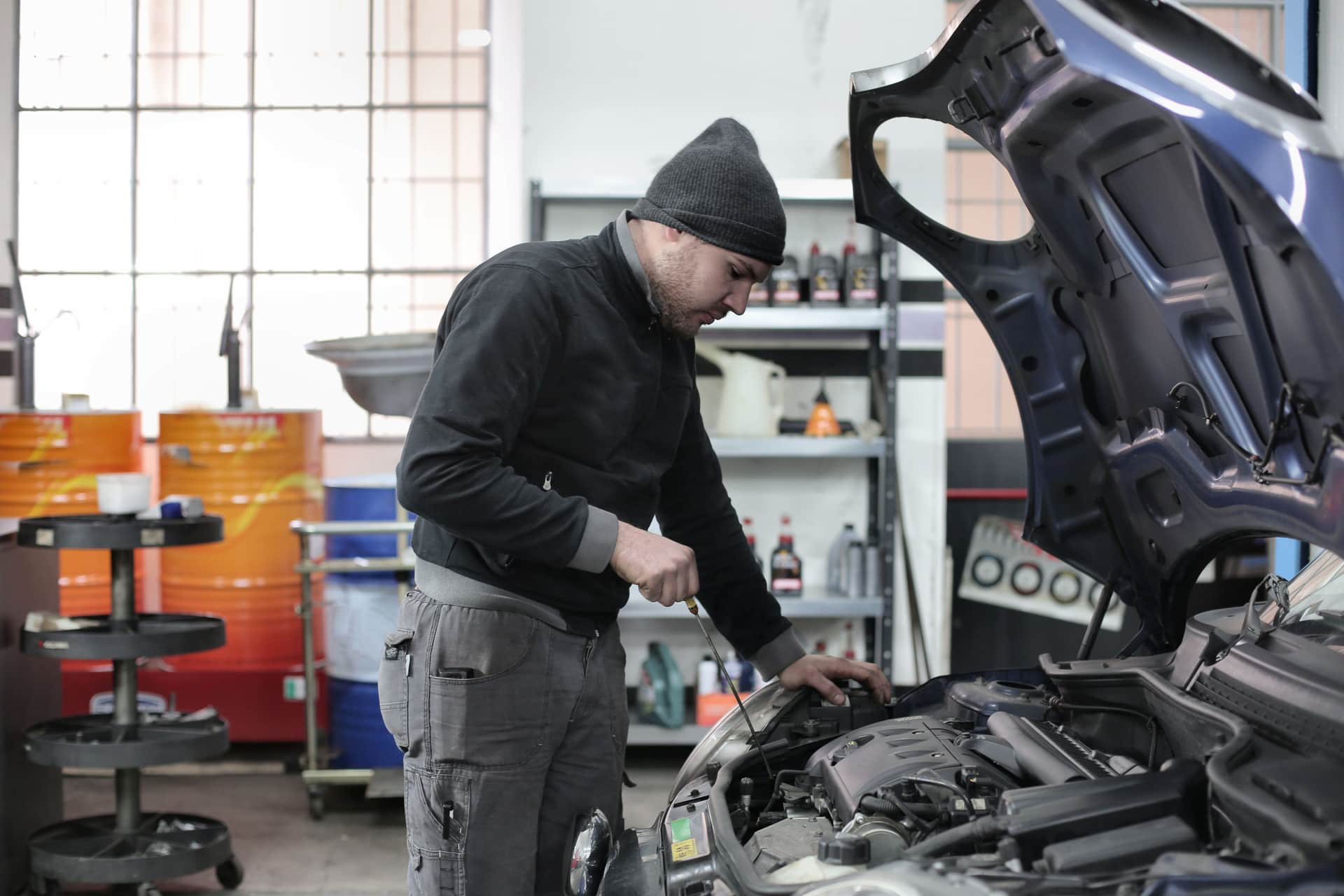
Nine jobs, most of them under two minutes, done once before the first frost: test the battery, change the washer fluid, replace the wipers, check the tires, treat the door seals, lubricate the locks, buy a cover and a scraper, stock the trunk, and check the lights.
Everything on this list is cheaper, easier and more available in October than in January. That is partly seasonal retail - the good scrapers sell out in the first cold week and the covers that fit your car go first - and partly that a warm garage is a better place to change a battery than a parking lot at 7am.
It is ordered by how much each item saves you, not by how the car is laid out. Do the first three and you have removed most of the problem.
1. Buy a windshield cover
Highest return of anything on this list. Ten seconds the night before removes five to ten minutes of scraping every morning for four months, and it prevents the wipers bonding to the glass if the design covers them.
The only thing that decides which one you can buy is your body panels. Take a fridge magnet to the hood and both front fenders before you order: if it sticks, magnetic covers work; if it slides off, the panels are aluminum or composite and you need straps or door flaps.
The cover picks are here, and if you are not sure the whole category works, the mechanism is explained here. If the car is going to sit rather than be driven this winter, a full car cover is the version of this job that protects the paint as well as the glass.
2. Test the battery
Free, takes five minutes, and it is the difference between replacing a battery on your own schedule and replacing it in a parking lot in January.
Any parts store will load-test a battery at no charge. A load test applies a realistic current draw and measures whether the voltage holds - which tells you something a voltage reading does not.
- Get it load-tested. If it is marginal, replace it now.
- Replace anything over four years old that cranks noticeably slower than it used to. Cold does not kill healthy batteries; it exposes the ones that were already going.
- Clean the terminals with a wire brush and make sure both clamps are tight. Corrosion produces symptoms identical to a dying battery and costs nothing to fix.
- If the car sits for days at a time and you have power where you park, buy a maintainer. It is the cheapest intervention in this whole guide.
The mechanism behind cold-weather starting failures is in why cars do not start in the cold, and the battery specifications that matter are in the battery roundup.
3. Change the washer fluid
This is the cheapest item on the list and the one that causes the most expensive damage when skipped. Summer washer fluid is mostly water, and water expands when it freezes - in a plastic reservoir, a small electric pump, and thin nylon lines.
The pump is the part that dies, and it is usually behind a wheel liner, so the labor costs more than the component.
You do not need to drain anything. Run the reservoir low by using the washers, then top up with a fluid that has a printed temperature rating at least 20F below your coldest night. Repeat over a couple of weeks and the mix moves toward the winter rating.
The rated fluids are here, and winter vs all-season explains why all-season is a marketing category rather than a specification.
4. Replace the wiper blades
If they are more than a year old, replace them. Rubber degrades from UV, ozone and heat as well as from use, so a blade that spent the summer baking on a windshield is already compromised before winter starts.
The specific winter failure is mechanical: snow packs into the joints of a conventional steel frame and freezes it rigid, so the blade cannot follow the curve of the glass and leaves a smeared arc in your eyeline. Beam blades have no frame for that to happen to.
Blades are fitment parts and the two sides are frequently different lengths on the same car - measure both. The winter blade comparison is here.
5. Check the tires
Two things, and neither takes long.
Tread depth
The classic penny test - insert a penny with Lincoln's head down into the tread groove, and if you can see the top of his head the tread is at or below 2/32 in, which is the legal minimum in most states. For winter driving, 2/32 in is not adequate. Snow traction depends on the tread being deep enough to bite and to clear packed snow out of itself.
Pressure
Tire pressure falls roughly 1 psi for every 10F drop in temperature. That is why the pressure warning light comes on for half the drivers in the country on the first genuinely cold morning - it is gas physics, not a puncture.
Check pressures against the door-jamb sticker, not the number on the tire sidewall, which is a maximum rather than a recommendation. Check them cold, before driving.
If your routes get posted chain control, this is also when to establish whether your owner manual permits chains at all - and whether AWD changes it (it usually does not).
6. Treat the door seals
Ninety seconds a car, once, and it prevents the single most annoying morning of the winter.
A door freezes shut because water sits on the rubber weatherstrip and freezes it to the painted body. Pulling the handle then tears the weatherstrip off the door, which is an expensive repair for a problem a small bottle of silicone conditioner prevents.
- Pick a dry day in October, before the first freeze.
- Wipe every door, trunk and hatch seal clean and let it dry.
- Apply a silicone rubber conditioner to the rubber with a cloth - not to the paint.
- Reapply through the season per the bottle, especially on doors you use daily.
What to do if it has already happened is in frozen car doors and locks.
7. Lubricate the locks, and find the hidden keyhole
A lock cylinder is a small metal cavity with nowhere for water to drain. Very little water needs to get in for it to freeze solid, which is why a lock can be frozen on a morning when the doors open fine.
- Apply a graphite or PTFE lock lubricant to each cylinder in the fall so water cannot sit on the internals.
- Buy a small lock de-icer and put it in a coat pocket, a bag or by the front door. NOT in the car - that is the one place it cannot help you.
- Find your car's mechanical keyhole now. Almost every keyless car has one, usually under a cap on the driver's door handle, plus a physical key blade hidden inside the fob. Both exist for the day the fob battery dies, and both freeze like any other lock.
8. Stock the trunk
Three problems to equip for: you cannot see out, you cannot move the car, or you cannot leave it. The third is the one prebuilt kits ignore and the one that matters most when it matters at all.
The full reasoning for each item is in what to keep in your car in winter, and whether to buy a bundle or build it yourself is in prebuilt vs DIY.
9. Check the lights, and clean them
Winter is dark at both ends of the commute and road salt films over lenses within days. A headlight covered in salt film puts out dramatically less usable light than a clean one, and nobody notices because it happens gradually.
- Walk around the car with the lights on and check every bulb, including both brake lights, the high-mount brake light and the reverse lights.
- Clean the lenses properly - salt film is not removed by rain.
- Check the rear fog light works if your car has one, since that is exactly what it is for.
- Clear snow off the lights every time you clear the car. Snow-covered tail lights are a common cause of winter rear-end collisions.
What to skip
A checklist that tells you to do everything is a checklist nobody finishes. These are the winter jobs commonly recommended that we would not prioritize:
- Antifreeze testing, unless the coolant is old or the system has been opened. Modern long-life coolant does not degrade quickly, and if the cooling system has not been disturbed the mix is what it was.
- An oil change specifically for winter. Change it on the schedule. What is worth checking is whether the grade is appropriate for your climate - a lower first number, like 0W or 5W, stays thinner when cold - and that is a conversation for the next service rather than a job in itself.
- Winter tires, if you rarely drive in snow. They are the single biggest safety improvement available in snow, and if you get two snowy days a year the storage and swap costs may genuinely not be worth it. Be honest about your own driving.
- Anything sold as a fuel additive for winter starting. Modern gasoline is already winter-blended by the supplier for the season and region.
Do notwait until it is cold to do any of this
Every item on this list is easier, cheaper and more available in October. The scrapers sell out in the first cold week, the covers that fit your car go first, and the battery you replace in a warm garage is the same battery you would otherwise replace in a dark parking lot with cold hands.
If you only do three things
- Buy a windshield cover. It is ten seconds a night against ten minutes a morning, and nothing else on this list has that ratio.
- Get the battery load-tested. Free, five minutes, and it converts a January surprise into an October decision.
- Change the washer fluid to something with a printed rating. The cheapest item here, and skipping it is what cracks reservoirs and kills pumps.
Those three take an afternoon between them and remove most of what goes wrong. The rest of the list is genuinely worth doing, and it is the difference between a winter that is fine and a winter you do not think about at all.
Where to go next
- Scrapers and brushes - reach, blade width and the paint question.
- Windshield covers - fastening, wiper coverage and the fridge-magnet test.
- De-icers, washer fluid and wipers - rated temperatures and what the labels commit to.
- Cold starts, batteries and jump starters - cold cranking amps, and the lithium storage rule.
- Emergency kits, traction and recovery - cable gauge, mat length and load ratings.
What to buy, and what to skip
We haven't tested these
No lab, no borrowed units, no free samples. What we did do: pull every published spec into one table and work out what the numbers mean on a cold morning. Everything below traces to a published spec sheet, a manual, or a standard we can point you at - and if a figure isn't published, we say so instead of estimating it. The full method is here.
Heads up: we earn a commission if you buy through the links on this page, at no extra cost to you. It never changes a ranking - here is how we pick and how the site is funded.
1. Highest return of anything here
FrostGuard Deluxe Full-Coverage Windshield Cover, XL, 41 x 68 in

The one cover here that prints its dimensions on the listing, and the only one that covers the wipers and the side mirrors as part of the same product. Security panels tuck inside the doors so it cannot be lifted off the glass.
Best for: Almost everyone who parks outside
What the maker publishes
- Size
- 41 x 68 in, published by the maker
- Covers
- Windshield, wiper blades and side mirrors
- Material
- Polyester, per the maker
- Anchoring
- Fit-Fast straps plus security panels that shut in the doors
- Fits
- Described as ideal for SUVs and trucks of most makes
- Warranty
- One year, per the maker
- Rated temperature
- Not published by the maker
What works
- A published measurement is the single most useful thing in this category, and most competitors give you a vehicle list instead
- Wiper and mirror coverage in one product removes the two jobs a plain windshield cover leaves you
- Security panels inside the doors are what stop a cover leaving in the wind or with a passer-by
What doesn't
- At 41 x 68 in it is generous for a compact car - measure your glass before assuming bigger is better
- Polyester holds water, so it wants somewhere to dry rather than going straight into the trunk
- No published cold-temperature rating
Skip this if: you park in a garage. This solves an outdoor problem and nothing else.
2. For the reservoir
Prestone AS253 De-Icer Winter Windshield Washer Fluid, 1 Gallon

Prints a rated melt temperature on the label, which is the whole decision in this category and something most fluids never print. Read the figure off the jug in front of you - published ratings for this line have not been consistent between listings, so the label is the authority, not us.
Best for: The one number that matters
What the maker publishes
- Rated temperature
- Printed on the label - check the jug, reported figures vary between listings
- Volume
- 1 gallon
- Type
- Pre-mixed de-icer washer fluid
- Active ingredient
- See the product label and SDS
- Water-repellent additive
- None claimed
What works
- A published rated temperature is the only spec in this aisle worth comparing, and this one prints it
- Pre-mixed, so there is no dilution mistake to make in a cold garage
- Whatever the jug prints, a rated winter fluid sits well below the point where summer blue fluid turns to slush and splits a reservoir
What doesn't
- A printed rating is not a guarantee at any temperature - if your nights go past what the jug says, this is not your fluid
- A gallon jug is heavy and awkward to pour into a cold engine bay without a funnel
Skip this if: your winters are mild and your existing fluid has never frozen. All-season fluid is cheaper and does the same job above freezing.
3. For the blades
Bosch Snow Driver Winter Wiper Blade
Bosch publishes a tested temperature: -20F. In a category where almost nobody prints a number, a blade that does is the one worth starting from.
Best for: A published cold rating
What the maker publishes
- Rated temperature
- Tested to perform at -20F, per Bosch
- Construction
- Beam - no joints, hinges or exposed metal brackets
- Spoiler
- Aerodynamic grooved spoiler, resists snow and ice buildup
- Fitting
- Click-On adapter system
- Sizes
- 13 in through 26 in - buy your own size
What works
- A jointless beam has no exposed hinge for ice to pack into and lock solid, which is the whole failure mode of a conventional blade in winter
- -20F is a published, checkable figure rather than the word winter on a package
- Made in the sizes you actually need rather than one universal length
What doesn't
- Beam blades cost more than a conventional blade, every time
- You must look up your own driver and passenger sizes - they are frequently different on the same car
Skip this if: your car is due for a new windshield or your wiper arms have weak springs. New blades will not fix chatter caused by a tired arm.
4. For the battery you have not tested
Weego 44s 2100A 12V Lithium Car Battery Jump Starter

The only pack we have found that publishes cranking amps as well as peak amps - 440 CA against 2100 peak - which is the figure that actually predicts a start. It also publishes a weight under one pound and engine ratings of 7L gas and 3.5L diesel, so you can check it against your own car rather than trusting a headline number.
Best for: Most cars, and a glovebox
What the maker publishes
- Peak amps
- 2100A
- Cranking amps
- 440 CA, per the maker
- Gas engines
- Up to 7L, per the maker
- Diesel engines
- Up to 3.5L, per the maker
- Weight
- Under 1 lb, per the maker
- Charge retention
- Holds a charge for months, per the maker
- Protection
- Anti-spark, reverse polarity and surge protection
- Build
- Stated to resist water, dust and dirt
What works
- Publishing a cranking amps figure is almost unheard of in this category, and cranking amps is the number that decides whether a cold engine turns - peak amps has no standard behind it at all
- Under a pound means it genuinely lives in the glovebox, which is inside the heated cabin - and where a lithium pack is stored matters more than any number on the box
- Holding a charge for months addresses the real failure of these packs, which is reaching for one in January and finding it flat
What doesn't
- 3.5L diesel is a car-and-van ceiling, not a truck one, and the gas figure of 7L is mid-pack rather than generous
- Priced right at the top of the sub-$100 bracket, which buys fewer amps than the cheap packs claim
- Lithium still delivers least current when it is cold, so the published figures assume a pack that has not been sitting in a freezing trunk
Skip this if: you drive a diesel pickup. The 3.5L diesel ceiling is the number that matters and it is not close.
5. The ninety-second job
Silicone Rubber Seal Conditioner
The actual fix for doors freezing shut. Water sits on a bare rubber seal and freezes it to the body; a silicone film stops the water sitting there in the first place.
Best for: Doors that freeze shut
What the maker publishes
- Type
- Silicone treatment for rubber weatherstrip
- Applied to
- Door, trunk and hatch seals
- When to apply
- Before the first freeze, on a dry seal
- Reapplication
- Per the product instructions, typically through the season
- Rated temperature
- Not published by the maker
What works
- Treats the cause rather than the symptom - a seal that sheds water cannot freeze to the body
- One bottle does every door on several cars
- Also slows the perishing of rubber seals generally
What doesn't
- Must be applied before the freeze, on a dry seal, which means doing it in October rather than in January
- Silicone overspray on glass is a smeary nuisance to remove
Skip this if: your doors are already frozen shut this morning. This is a prevention product; today you need warm hands and patience.
Questions people actually ask
What should I do to prepare my car for winter?
Test the battery, change to rated winter washer fluid, replace wipers over a year old, check tire tread and pressure, treat the door seals with silicone, lubricate the locks, buy a windshield cover and scraper, stock the trunk, and clean and check every light.
When should I winterize my car?
October, before the first frost. Everything is cheaper and more available then, the scrapers and covers that fit your car have not sold out, and replacing a battery in a warm garage is a different experience from doing it in a parking lot in January.
What is the most important winter car preparation?
A windshield cover, a battery test and rated washer fluid. Those three take an afternoon between them and remove most of what actually goes wrong, and the cover alone saves five to ten minutes every morning for four months.
Do I need to check antifreeze before winter?
Only if the coolant is old or the cooling system has been opened. Modern long-life coolant does not degrade quickly, so if nothing has been disturbed the mix is what it was when it went in.
What tire pressure should I run in winter?
Whatever the door-jamb sticker specifies, checked cold before driving. The number on the tire sidewall is a maximum rather than a recommendation. Expect the pressure to fall about 1 psi for every 10F drop in temperature.
Is a winter oil change necessary?
No - change oil on the normal schedule. What is worth checking is the grade: a lower first number such as 0W or 5W stays thinner when cold, which reduces the load on the starter. That is a conversation for your next service.
Sources
Read next
- Scrapers and brushes
- Windshield covers
- De-icers, washer fluid and wipers
- Cold starts, batteries and jump starters
- Emergency kits, traction and recovery
- How we pick
- The best winter floor mats
- Washing a car in winter
- Winter car care for EVs and hybrids
- The best windshield chip repair kits
- Are 12V car heaters worth it?
- The best car battery testers
- The best diesel anti-gel additives
- The best coolant testers
- The best car wax and sealants for winter salt
- Should you add air to your tires in winter?