Best emergency kits
The Best Winter Car Emergency Kits
Cable gauge, shovels and visibility gear - how to tell a winter kit from a general kit in a snowy box.
You are stuck, or you are stranded
Two different problems wearing the same coat. Being stuck is an equipment problem you can usually solve yourself. Being stranded is a warmth problem, and it is the one people are least prepared for.
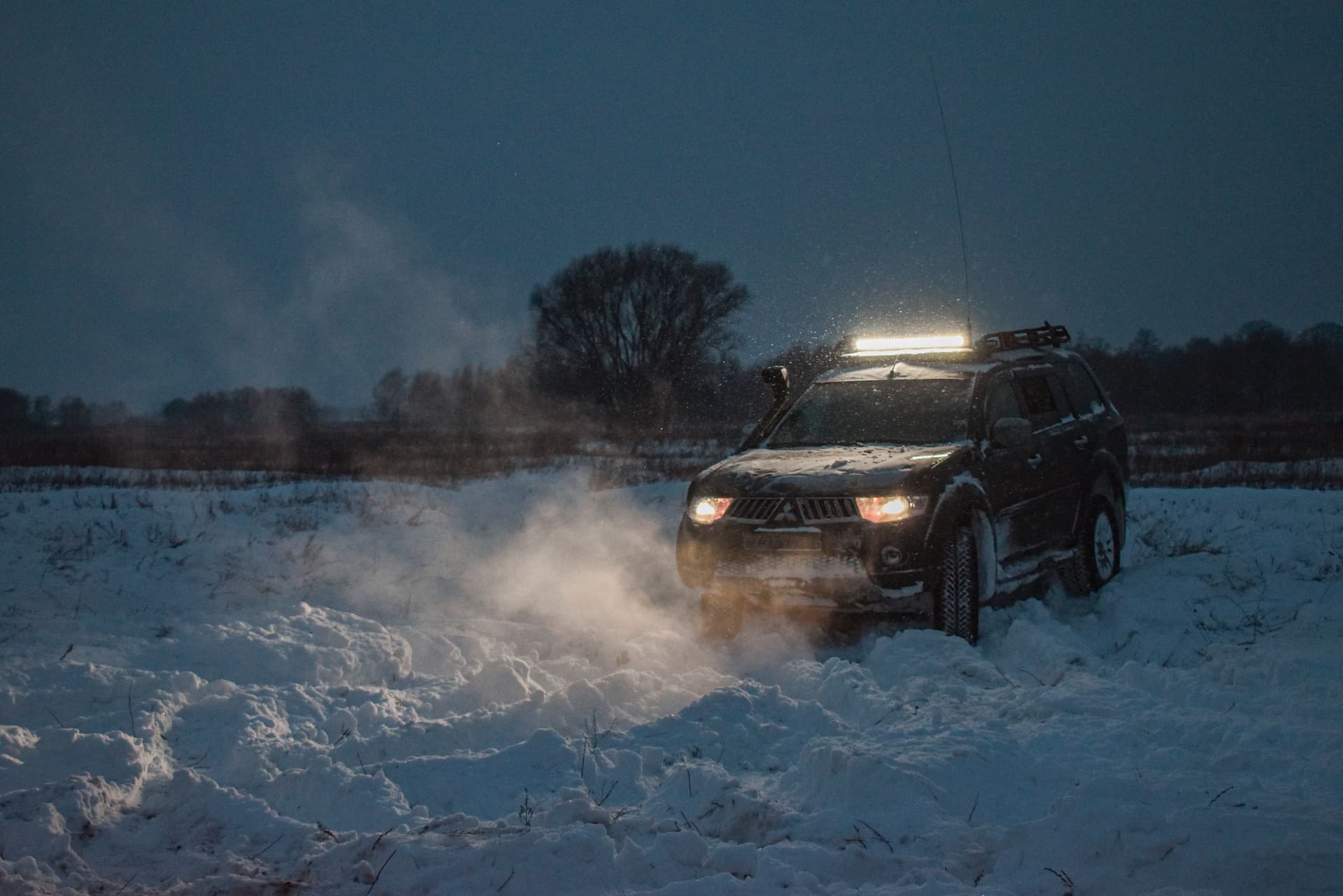
This section covers two situations that get bundled together and should not be. Being stuck means the car is fine and the tires will not grip - a shovel and a set of mats fix that in ten minutes. Being stranded means you are not going anywhere for a while, and the thing that matters is staying warm until somebody arrives.
The equipment for the first is cheap and specific. The equipment for the second is mostly a blanket, a phone charger and enough fuel to run the engine in bursts. Most prebuilt kits are excellent at the first and almost silent about the second.
A "126-piece emergency kit" contains perhaps eight things you would ever use and a hundred and eighteen adhesive bandages. Piece count is a marketing number. The things worth checking are these:
Whether to buy a kit at all, or build your own from better individual parts, is worked through in prebuilt vs DIY winter car kit.
Three products, three genuinely different jobs, and a lot of confusion between them.
The head-to-head is in traction mats vs snow chains, and if you are stuck right now, start with how to get a car unstuck from snow instead of buying anything.
A traction mat has to be long enough to give you more than one wheel revolution of grip. On a typical car tire, one revolution is roughly 78 in of ground travel. A 13 in mat gives you a nudge. A 39 in mat gives you half a revolution and enough momentum to reach ground that grips. Two mats, one per driven wheel, is the normal configuration.
Load rating is the second spec, and the one that separates a board that bridges a rut from one that folds into it. Some makers publish it; most do not. We list it where it exists and say so where it does not.
All-wheel drive helps you accelerate. It does nothing at all for braking or cornering, both of which are limited by the tires. That is why AWD cars are so often the ones in the ditch - they get up to speed confidently and then discover that stopping is a separate problem. The detail, including whether you still need chains, is in do you need snow chains with AWD.
The single most useful page in this section is the checklist of what to keep in the car: what to keep in your car in winter. It costs nothing to read and most of it you already own.
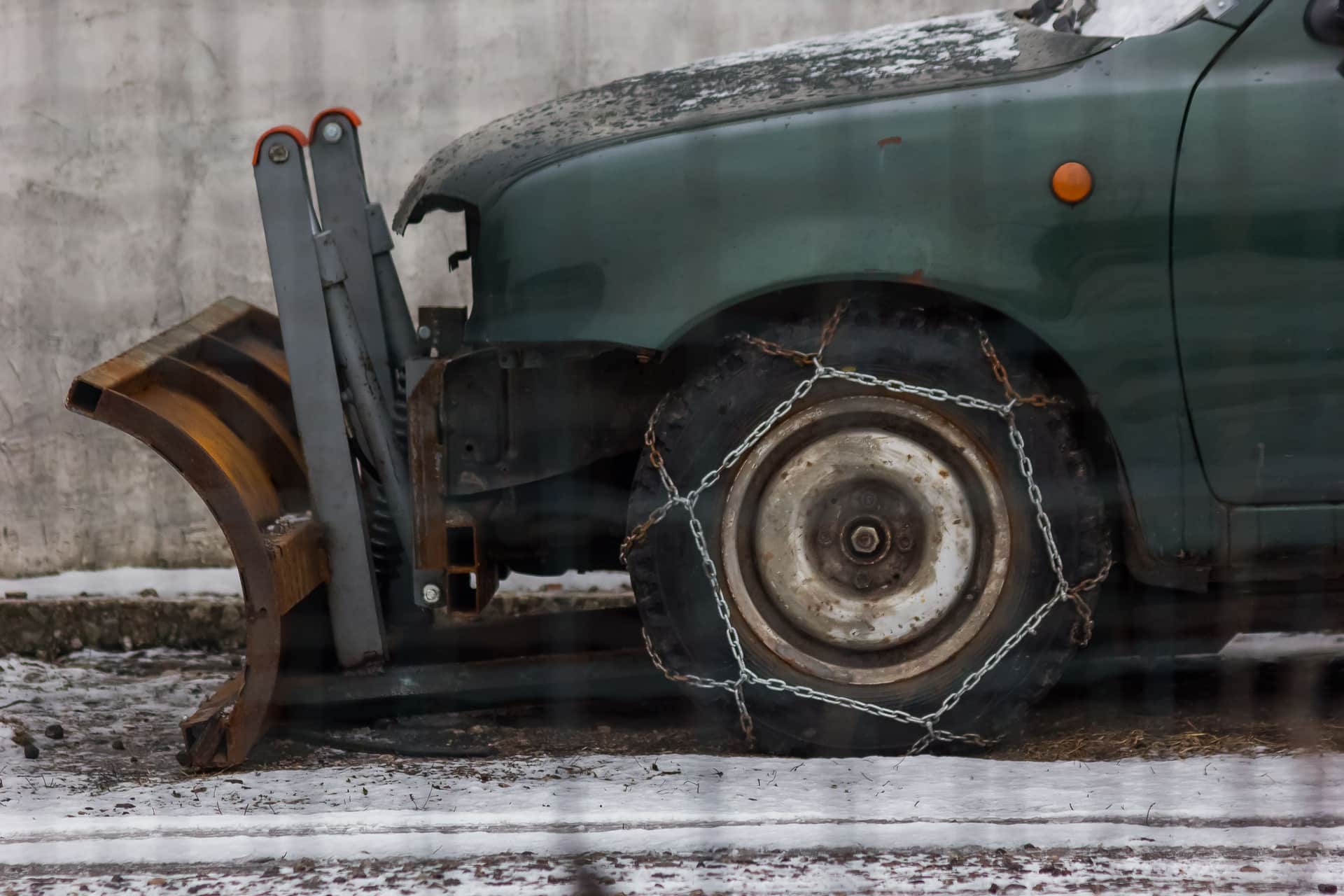
Chains are the answer when the road itself is the problem rather than one stuck wheel, and buying them starts with the owner manual rather than the product page - a significant number of cars either prohibit chains or require a low-profile type. The snow chain picks lead with the clearance figure for that reason.
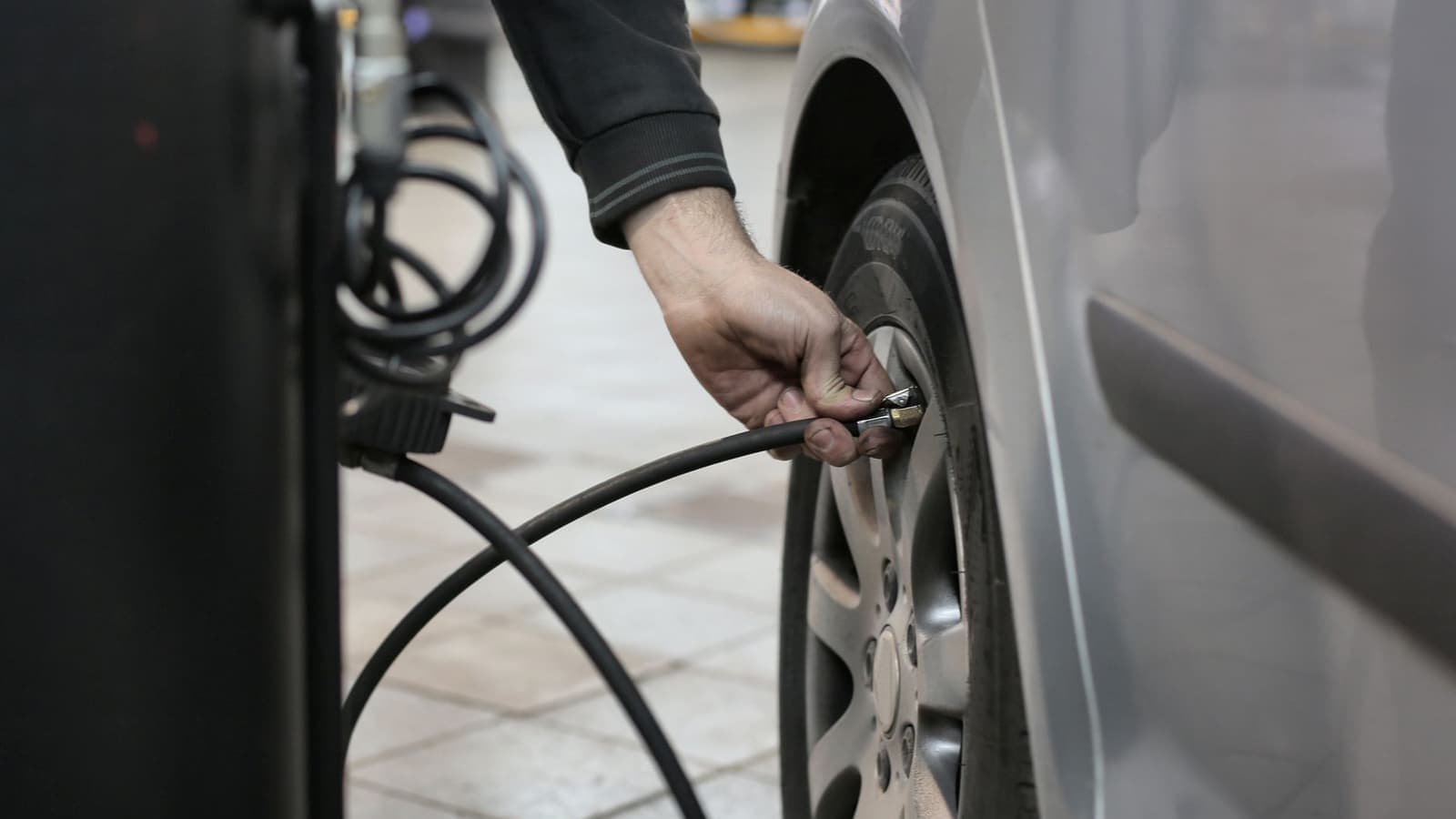
The other one gets used far more often than anything else in the trunk. Tires lose roughly one PSI for every ten-degree drop in temperature, so the warning light on the first freezing morning is usually physics rather than a puncture. The tire inflator picks compare published flow rates rather than headline PSI ceilings.
There is a third option in the traction category that most people never consider, and for a lot of cars it is the only one the owner manual allows: textile snow socks pull over the tire in a few minutes and need almost no clearance. Snow socks vs snow chains compares fitting time, ice performance and how quickly bare pavement destroys each one.
If socks are the answer for your car, the next question is which brand - and that is less obvious than it looks. Only one maker claims its socks meet road traction standards, which is the whole point if you might meet a posted chain control, while several others publish word-for-word identical specifications at prices differing by more than double. The snow sock picks sort out what you are actually paying for.
SUVs and pickups are their own chain problem. Most run light-truck tire sizes a car chain will not close around, a loose chain on a heavy vehicle does more damage, and modern crossovers often have car-sized wheel wells despite the SUV shape. Snow chains for SUVs and trucks ranks on light-truck sizing, self-tensioning and published clearance - and explains why four-wheel drive does not replace chains.
One item in almost every pre-built kit deserves a second look. The mylar space blanket reflects radiated heat and provides no insulation at all, which is the wrong kind of help when you are sitting on a freezing seat in a stationary car. The emergency blanket picks explain the difference between reflecting and insulating, and why the right answer is one of each.
Mats and a shovel get most cars out of most snow. When they do not, and somebody with a truck has stopped to help, the strap between the two vehicles is the highest-consequence item in the trunk. Nylon straps stretch and snatch a car free; polyester straps barely stretch and are the safer choice for a steady pull; and the listings publish break strength far more often than the working load limit you are meant to work at. The tow and recovery strap picks compare both numbers, and explain why the strap with metal hooks on the ends is ranked last.
And if the sock question comes down to whether the expensive one is worth it, the AutoSock HP697 review takes that single product apart - what the HP part number means, what its standards claim does and does not cover, and the two cases where a sock at half the price is the better buy.
Tires lose roughly 1 PSI for every 10F drop in temperature, so a car set correctly on a mild October afternoon can be 6 to 7 PSI down on a hard January morning - and the dashboard warning will not usually tell you, because it waits until a tire is about 25 percent below the placard figure. Should you add air to your tires in winter has the loss table, the reason not to add a winter margin on top, and the two tools that do the job - one of which costs seven dollars.
The picks, the head-to-heads and the answers to the questions that stop people buying. Prices come from the live layer, so a button that shows a number is showing today's number.
Best emergency kits
Cable gauge, shovels and visibility gear - how to tell a winter kit from a general kit in a snowy box.
Best snow shovels
Length decides everything. Three shovels compared, and why plastic blades snap in real cold.
Best traction mats
Length against one wheel revolution, load rating, and the mats that publish neither.
Traction head to head
Recovery tool, driving aid, or legal requirement - the three are not interchangeable.
Bundle vs build
What a bundle is good at, what it is bad at, and the hybrid that costs about the same.
The checklist
The full list, grouped by problem - cannot see, cannot move, cannot leave.
The recovery method
Stop spinning first, then clear, straighten and rock. What to do with no shovel, and when to stop.
The AWD answer
What AWD does and does not do, and why the chain-control sign does not care either way.
Best snow chains
Clearance first, tire size second, everything else third. Four sets compared, including the only one that publishes its clearance figure.
Best tire inflators
Flow rate over PSI ceiling, power source over features. Four inflators compared, including the cordless one you should probably not buy.
The head-to-head
Fitting time, clearance rules, what each survives, and the legal check that decides it before preference does.
Best chains for SUVs
Light-truck sizing, self-tensioning, crossover clearance and the car chain that will not close around an LT tire.
Best emergency blankets
Reflection versus insulation, what wet does to each, and why the right answer is one of each.
Best snow socks
Road-standards claims, identical spec sheets at different prices, and the tire-size rule that decides every purchase.
Best recovery straps
Kinetic nylon vs static polyester, working load limit vs break strength, and the hook-end trap nobody warns you about.
Guide
A single-product review: fitment by HP code, the standards claim, the 30 mph rule, and when a cheaper sock is the better buy.
The cold-pressure answer
About 1 PSI per 10F lost, back to the door-jamb number. When to measure, why not to overinflate, and the two tools.
New here? Start with the winter car checklist - it covers the whole car in one pass and points at the right section for each job. Or read how we pick before you trust a word of this.