Emergency Kits, Traction & Recovery
The Best Emergency Blankets for a Car
The mylar blanket in every roadside kit costs about a dollar and reflects your own heat back at you. In a stationary car in freezing air, that turns out to be the wrong kind of help.
Heads up: we earn a commission if you buy through the links on this page, at no extra cost to you. It never changes a ranking - here is how we pick and how the site is funded.
Quick picks
The short answer, before the detail. Tap any row to jump to that write-up, or go straight to the listing to check today's price.
| # | Product | Best for | Price |
|---|---|---|---|
| 1 |  Arcturus wool blanketWool, and the reason it leads this page is one property no foil blanket has: it still insulates when it is wet. In a stationary car with your breath condensing on everything, that is the difference between a blanket and a novelty. | Best overall | $42.99 - Check on Amazon |
| 2 | 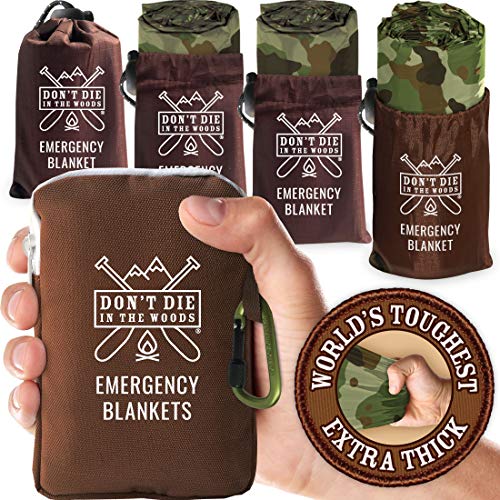 DDITW emergency blanketA heavier-gauge take on the space blanket, aimed squarely at the thing that makes cheap mylar frustrating - they tear the first time you unfold them in the cold with gloves on. | Best packable | $24.95 - Check on Amazon |
| 3 |  Mylar blankets, 6 packSix blankets for less than ten dollars, each 82 by 52 inches. At this price the right strategy is distribution rather than selection - one in every glovebox, one in every coat, and no agonizing over which to buy. | Best value, with limits | $9.99 - Check on Amazon |
Nearly every pre-built roadside kit contains a mylar space blanket, and nearly everyone assumes that ticks the blanket box. It does not, and the reason is a distinction that almost no listing makes: reflecting heat and insulating against cold are different jobs.
Understanding which one you actually need in a stranded car is most of this page.
Reflection versus insulation
You lose heat four ways, and in a cold car three of them dominate:
- Radiation - your body radiating heat into the space around you. This is the one a foil blanket addresses, by reflecting it back.
- Conduction - heat draining straight out of you into whatever you are touching, which in a car is a cold seat. Foil does essentially nothing here; it is a thin sheet with no thickness to slow the transfer.
- Convection - cold air moving across you. A foil sheet blocks drafts if it is wrapped tightly and you stay still, which is not how people actually sit in a car for two hours.
A wool blanket has loft - thickness full of trapped air - so it slows conduction and convection, which is where most of your heat is going while you sit on a freezing seat. That is why it leads this page despite being bulkier and more expensive.
How we judged these
- Does it insulate or only reflect? The single distinction that matters, and the one the category obscures.
- What happens when it gets damp? A stranded car fills with condensation from your own breath. Most insulation stops working wet. Wool does not.
- Will it survive being opened in the cold? Thin mylar tears on first unfold with gloved hands, and a torn blanket is not repairable in a cold car.
- Does it publish size? Blanket size is the difference between covering one person and covering two, and a surprising number of listings are vague.
What each one publishes
Note the wet performance column. One product makes a claim there and the others say nothing, which in a scenario defined by condensation is the gap that matters most.
About the 90 percent figure
Nearly every mylar blanket listing claims it retains around 90 percent of body heat. It is worth being precise about what that figure is and is not.
It refers to reflecting radiated heat, under ideal conditions, with the blanket wrapped closely. It is not a claim about total heat loss, it comes with no published test conditions, and it does not account for the seat you are conducting heat into or the gaps where air moves. Treat it as marketing rather than a specification - which is exactly how we treat unpublished figures everywhere else on this site.
None of that makes foil blankets useless. It makes them a supplement.
Why the answer is two types
The honest recommendation is not one blanket, it is one of each, and they do different jobs:
- Wool, in the trunk. The thing you actually wrap up in. Bulky, and the bulk is the insulation.
- Foil, in the glovebox and every coat pocket. It weighs nothing, costs almost nothing, and it is with you when the wool blanket is in a trunk you cannot get to or a car you are not in.
A six-pack of foil blankets costs less than a takeaway coffee and covers every vehicle and coat you own. That is the right way to buy them - by distribution, not by selection.
A blanket is one item in a larger answer
Being stranded in winter is a heat problem, and a blanket is only part of it. The things that matter alongside it:
- The engine, run intermittently - and only after checking the tailpipe is clear of snow. A blocked exhaust puts carbon monoxide into the cabin, which is the one genuinely lethal mistake in winter driving.
- Staying in the vehicle. It is shelter, it is visible, and walking for help in a storm is how people get into serious trouble.
- A charged phone and a way to charge it - a jump pack with a USB output doubles as this, which is covered in the jump starter picks.
- The rest of the kit. What to keep in your car is the full list, and the pre-built kits cover what the boxed versions include and omit.
Do notrun the engine for heat without checking the exhaust
If snow has drifted around the back of the car, clear the tailpipe before running the engine, and crack a window. Carbon monoxide has no smell and the first symptom is drowsiness in a warm car, which is indistinguishable from simply feeling better. This is the one mistake on this site that is genuinely dangerous rather than expensive.
The short version
Buy the wool blanket for the trunk - it insulates, it works when damp, and it is large enough for two people. Add a multipack of foil blankets and distribute them, because their real advantage is that they weigh nothing and can be everywhere. If your budget only stretches to one, buy the wool: reflecting your own heat is no substitute for insulation when you are sitting on a freezing seat in a stationary car.
The picks, one at a time
We haven't tested these
No lab, no borrowed units, no free samples. What we did do: pull every published spec into one table and work out what the numbers mean on a cold morning. Everything below traces to a published spec sheet, a manual, or a standard we can point you at - and if a figure isn't published, we say so instead of estimating it. The full method is here.
1. Best overall
Arcturus Military Wool Blanket, 64 x 88 in
Wool, and the reason it leads this page is one property no foil blanket has: it still insulates when it is wet. In a stationary car with your breath condensing on everything, that is the difference between a blanket and a novelty.
Best for: Actually staying warm
What the maker publishes
- Material
- Wool blend
- Size
- 64 x 88 in
- Wet performance
- Wool keeps you warm even when wet, per the maker
- Care
- Machine washable
- Construction
- Loom-woven, hemmed on all sides with lock stitching
What works
- Insulates when damp, which is the condition a stranded car reliably produces
- Large enough at 64 by 88 in to cover two people, which a personal-size blanket does not
- Machine washable, so it survives living in a trunk rather than being ruined by it
What doesn't
- Bulky - it takes real trunk space, which is why people buy foil instead and regret it
- Several times the price of a pack of mylar blankets
- Wool is heavy when wet, and it takes a long time to dry out afterwards
Skip this if: trunk space is genuinely the constraint. Carry a foil blanket as well, not instead.
2. Best packable
Don't Die In The Woods Emergency Blankets
A heavier-gauge take on the space blanket, aimed squarely at the thing that makes cheap mylar frustrating - they tear the first time you unfold them in the cold with gloves on.
Best for: A foil blanket that survives being opened
What the maker publishes
- Type
- Reinforced thermal emergency blanket
- Positioning
- Sold as a toughest-in-class emergency blanket
- Reusable
- Designed to be refolded and reused
- Published thickness
- Not published by the maker
- Heat retention figure
- Not published by the maker
What works
- Tear resistance is the real-world weakness of foil blankets, and that is what this one is built around
- Refoldable, so a practice open does not consume the blanket
- Packs down far smaller than wool while being more durable than bargain mylar
What doesn't
- Several times the price of a multipack of standard mylar blankets
- Publishes no thickness or heat retention figure to justify the premium
- Still a reflective sheet - it reflects your heat back and adds no insulation of its own
Skip this if: you want maximum warmth per dollar. Wool insulates; foil reflects, and the two are not interchangeable.
3. Best value, with limits
Mylar Emergency Thermal Blankets, 82 x 52 in, 6 Pack
Six blankets for less than ten dollars, each 82 by 52 inches. At this price the right strategy is distribution rather than selection - one in every glovebox, one in every coat, and no agonizing over which to buy.
Best for: One in every car for the price of a coffee
What the maker publishes
- Type
- Aluminized mylar thermal blanket
- Size
- 82 x 52 in each
- Quantity
- 6
- Claimed retention
- Retains 90 percent of body heat, per the maker
- Insulation value
- None - it reflects rather than insulates
What works
- Cheap enough to put one in every vehicle and every winter coat without thinking about it
- 82 by 52 in is larger than the pocket-size blankets most kits include
- Packs to nothing, so there is no reason not to carry one alongside a real blanket
What doesn't
- The 90 percent retention figure is a manufacturer claim with no test conditions published - treat it as marketing
- Foil reflects heat and provides no insulation, so it performs badly against a cold seat or cold air movement
- Thin mylar tears easily, and a torn blanket in a cold car is not repairable with gloves on
Skip this if: this is the only blanket in the car. It is a supplement to something that actually insulates, not a substitute.
Questions people actually ask
Are mylar emergency blankets any good for a car?
As a supplement, yes - they weigh nothing and cost almost nothing, so you can keep one everywhere. As your only blanket, no. They reflect radiated heat but provide no insulation against the cold seat you are conducting heat into.
What is the best blanket for a winter car emergency kit?
Wool, because it has loft that slows conduction and convection, and because it still insulates when damp - which matters in a car filling with condensation from your own breath. Add foil blankets as cheap, packable backup.
Do emergency blankets really retain 90% of body heat?
That figure refers to reflecting radiated heat under ideal conditions with the blanket wrapped closely, and no test conditions are published. It does not account for heat conducted into a cold seat or lost through gaps. Treat it as marketing.
How many emergency blankets should I keep in my car?
One real insulating blanket in the trunk, plus a foil blanket in the glovebox and in each winter coat. Foil multipacks cost so little that the right approach is distribution rather than choosing between them.
Does wool work when it gets wet?
Yes - that is its defining advantage and why it leads this page. Most insulation collapses when damp, and a stranded car is a condensation machine. Wool is heavy when wet and slow to dry, but it keeps insulating.
Should I run the engine to stay warm if I am stranded?
Intermittently, and only after checking the tailpipe is clear of snow, with a window cracked. A blocked exhaust pushes carbon monoxide into the cabin, it has no smell, and the first symptom is drowsiness in a warm car.