De-Icers, Washer Fluid & Wipers
Does De-Icer Damage Your Car?
Five versions of this question show up in search and nobody answers it on the page where you are about to buy the product. So: here it is, before the picks.
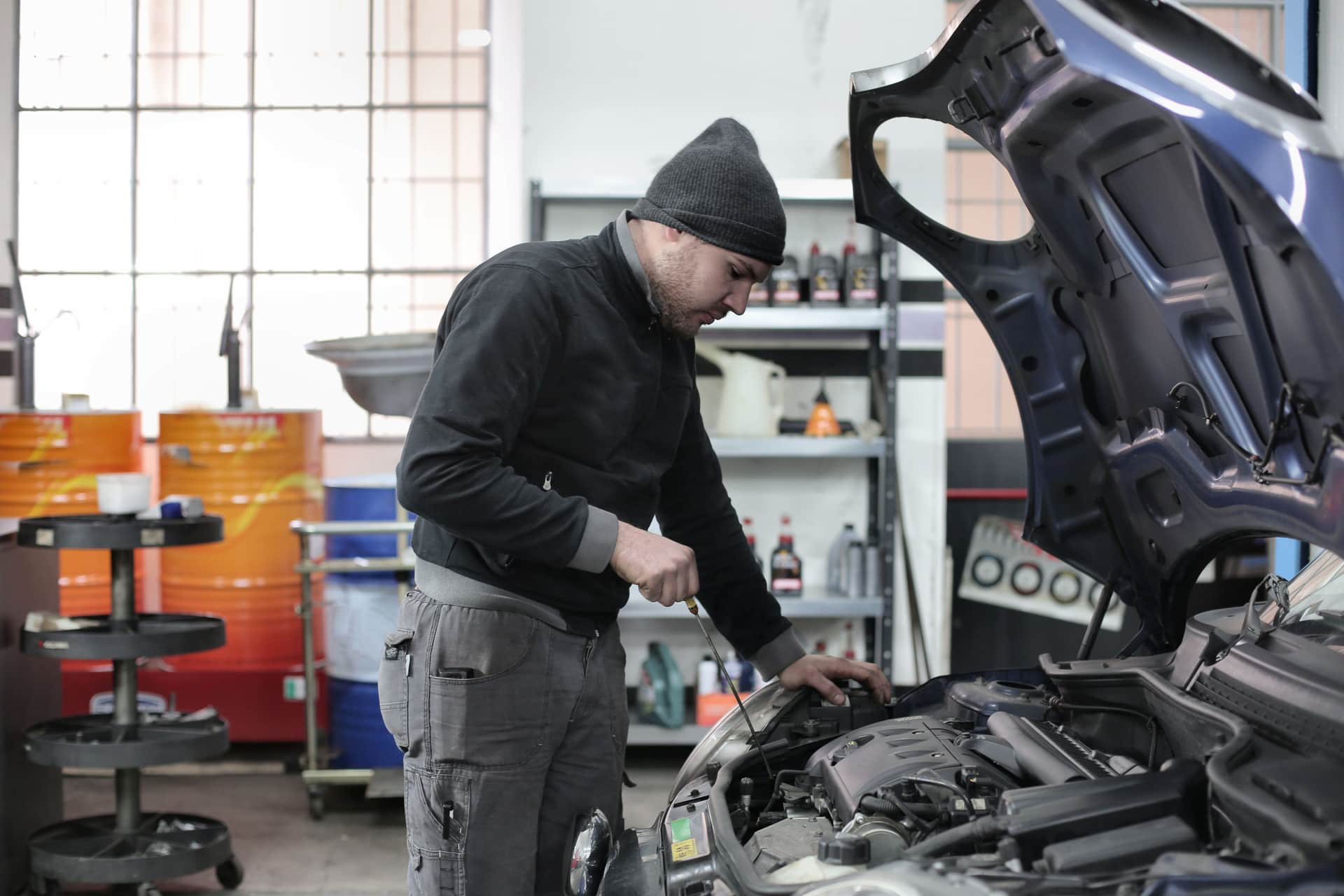
No, not in normal use. Automotive de-icers are formulated for cars and their labels name windshields, windows and wiper blades as intended surfaces. They are alcohol-based solvents, so the sensible precautions are to rinse residue off paint when the weather allows and to avoid repeatedly soaking rubber trim.
Does de-icer damage paint?
In normal use, no. These products are sold for use on a vehicle and are formulated to be compatible with automotive finishes. Overspray landing on a hood while you clear a windshield is not going to strip your clear coat.
What is worth knowing is that they are solvents, and solvents left to dry repeatedly on the same spot can dull a wax or sealant layer over a season. That is a cosmetic effect on the protective layer rather than damage to the paint underneath, and it is easily managed:
- Aim at the glass rather than spraying broadly across panels.
- Rinse the car when the weather allows. In a salted-road winter you should be doing that anyway.
- Reapply wax or sealant in the spring, which is when you would anyway.
For context, the far bigger threat to your paint in winter is road salt sitting on it for months, and the second biggest is a gritty brush dragged sideways across a panel - see what actually scratches car paint.
Does de-icer damage rubber trim and seals?
This is the most legitimate concern on the list. Alcohol is a solvent, and solvents pull plasticizers out of rubber over time. That is what makes old weatherstrip go hard, gray and cracked.
One winter of ordinary use will not do it. What can, over several seasons, is soaking door seals directly and repeatedly - which is a thing people do when they are trying to free a frozen door with a windshield de-icer.
The sensible practice: use de-icer on glass, use a proper lock de-icer on locks, and treat rubber seals with a silicone conditioner rather than blasting them with solvent. The prevention routine is in how to prevent frost overnight.
Does de-icer damage wiper blades?
The labels on several of these products explicitly name wiper blades as an intended surface, which is about as clear an answer as a manufacturer gives.
The genuine risk to a wiper blade in winter is not chemical at all - it is running a blade that is frozen to the glass, which tears the rubber right off the frame. De-icer is the thing that prevents that, so on balance it extends blade life rather than shortening it.
Does de-icer damage the windshield?
No. Glass is chemically inert to these formulations. What damages a windshield in winter is thermal shock - and that comes from pouring hot water on it, not from a spray applied at ambient temperature.
Does one brand damage paint more than another?
People search specifically about individual brands, and the honest answer is that we cannot rank formulations against each other, because none of these manufacturers publishes a full ingredient breakdown and we have not tested anything.
What we can tell you is what the labels commit to, which is what our de-icer roundup lists product by product. If you want the actual chemistry, every manufacturer publishes a Safety Data Sheet for its products, and that is the document to read rather than a review page.
Three things that genuinely do damage a car
Do notpour hot water on frozen glass
Thermal shock cracks windshields, and any existing chip becomes a full crack. This is the most damaging thing on this page and it is the one people do most often.
- Hot water on cold glass. See above. It also refreezes within minutes.
- Scraping a painted panel, or leaning hard enough on a blade that it slips off the glass onto trim.
- Forcing a frozen door or a frozen wiper. Both tear parts off the car and both are entirely avoidable with thirty seconds of patience.
The verdict
Use it. Aim at glass, rinse the car occasionally, treat your rubber seals separately with a silicone conditioner, and use a dedicated lock de-icer for locks. The risk is small, manageable and much smaller than the alternative of attacking bonded ice with a plastic blade.
What to buy, and what to skip
We haven't tested these
No lab, no borrowed units, no free samples. What we did do: pull every published spec into one table and work out what the numbers mean on a cold morning. Everything below traces to a published spec sheet, a manual, or a standard we can point you at - and if a figure isn't published, we say so instead of estimating it. The full method is here.
Heads up: we earn a commission if you buy through the links on this page, at no extra cost to you. It never changes a ranking - here is how we pick and how the site is funded.
1. If the answer is yes, buy this
Prestone AS242 Windshield De-Icer, 11 oz Aerosol
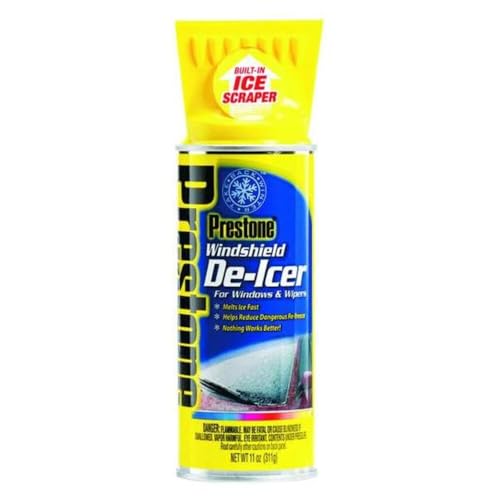
The default de-icer. Small enough to keep in a door pocket, and the cap is a scraper, which means the can and the tool are the same object you are already holding.
Best for: The can that lives in the car
What the maker publishes
- Size
- 11 oz aerosol
- Applicator
- Aerosol spray, scraper cap
- Maker claim
- Melts ice fast and helps reduce refreeze
- Active ingredient
- See the product label and SDS
- Rated melt temperature
- Not published by the maker
What works
- Fits a door pocket, which is where a de-icer has to live to be any use at 7am
- The scraper cap removes the second-tool problem entirely
- Aerosol reaches a wiper cowl and a mirror face better than a trigger bottle does
What doesn't
- 11 oz does not go far on a fully iced windshield - this is a frost can, not a storm can
- Prestone does not publish a rated melt temperature on the listing, so cold-limit claims are not something we can verify for you
Skip this if: you are clearing a whole iced car rather than a patch. Buy the 32 oz trigger bottle and keep this one for the lock and the mirrors.
2. For a whole iced car
Splash Red Hot De-Icer Windshield Trigger Spray, 32 oz, 3 Pack

Three 32 oz trigger bottles in one purchase, which is the cheapest way per ounce to keep one in each car and one in the house. The label is honest about what it is for: frost and light ice.
Best for: Cost per ounce
What the maker publishes
- Size
- 32 oz per bottle, 3 bottles
- Applicator
- Trigger sprayer
- Stated job
- Melts frost and light ice on the windshield and wiper blades
- Rated temperature
- Not published by the maker
- Active ingredient
- See the product label and SDS
What works
- Three bottles is the honest answer to the storage problem - one in the house, one in each car
- A trigger bottle covers a whole windshield faster than an 11 oz aerosol, and refills are cheaper
- The label claims frost and light ice rather than implying it will free a car cased in a quarter inch
What doesn't
- Light ice is a real limit, not marketing caution - bonded ice still wants a scraper behind the spray
- A 32 oz bottle is too big for most door pockets, which is where de-icer actually needs to live
- No published temperature rating
Skip this if: you want one small can that fits in the door pocket. Buy the 11 oz aerosol and keep this for the garage.
3. For the rubber it touches
Silicone Rubber Seal Conditioner
The actual fix for doors freezing shut. Water sits on a bare rubber seal and freezes it to the body; a silicone film stops the water sitting there in the first place.
Best for: Doors that freeze shut
What the maker publishes
- Type
- Silicone treatment for rubber weatherstrip
- Applied to
- Door, trunk and hatch seals
- When to apply
- Before the first freeze, on a dry seal
- Reapplication
- Per the product instructions, typically through the season
- Rated temperature
- Not published by the maker
What works
- Treats the cause rather than the symptom - a seal that sheds water cannot freeze to the body
- One bottle does every door on several cars
- Also slows the perishing of rubber seals generally
What doesn't
- Must be applied before the freeze, on a dry seal, which means doing it in October rather than in January
- Silicone overspray on glass is a smeary nuisance to remove
Skip this if: your doors are already frozen shut this morning. This is a prevention product; today you need warm hands and patience.
Questions people actually ask
Does de-icer damage car paint?
Not in normal use. These products are formulated for automotive surfaces and the labels name glass and wiper blades as intended. They are solvents, so rinse residue off paint when the weather allows and expect to reapply wax in spring.
Does de-icer damage rubber seals?
Repeated soaking can, over several seasons, because alcohol pulls plasticizers out of rubber and that is what makes weatherstrip go hard and crack. One winter of ordinary glass use will not. Treat seals with a silicone conditioner instead of spraying solvent at them.
Does de-icer damage wiper blades?
No - several labels name wiper blades as an intended surface. The real threat to a blade in winter is running it while it is frozen to the glass, which tears the rubber off the frame. De-icer prevents that, so on balance it helps.
Does de-icer damage the windshield?
No. Glass is chemically inert to these formulations. What damages a windshield in winter is thermal shock from hot water, which turns an existing chip into a crack across your eyeline.
Is it safe to use de-icer on the inside of the windshield?
No. These are exterior products. Interior ice is caused by moisture trapped in the cabin, and the fix is the defroster plus finding the source - wet floor mats, a blocked cabin drain or a leaking seal.