De-Icers, Washer Fluid & Wipers
De-Icer vs Scraper
Two tools for what looks like one job. They are good at genuinely different kinds of ice, and knowing which is which saves five minutes on a bad morning.
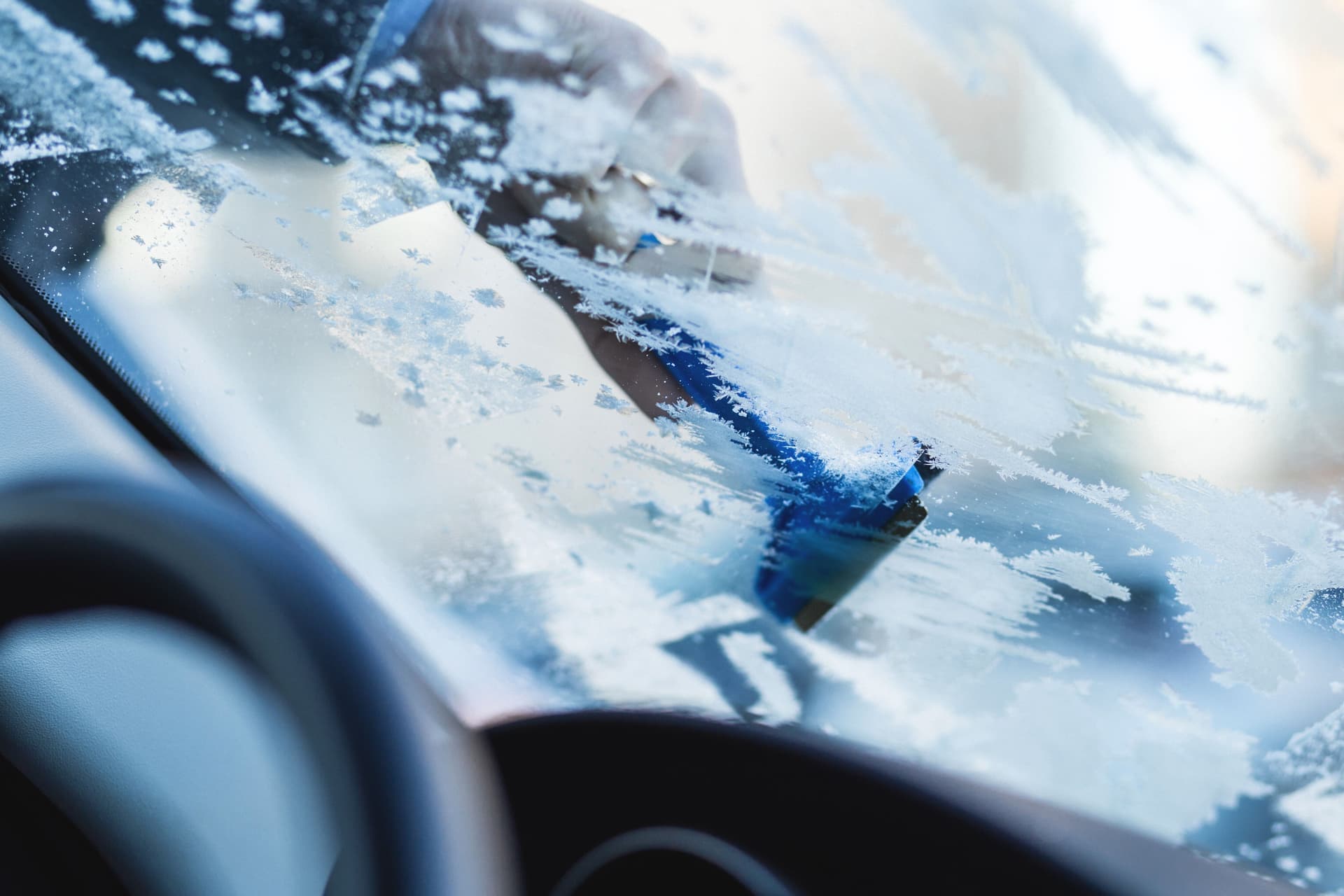
Use a scraper on dry frost - it is faster and it costs nothing per use. Use de-icer on ice that has bonded to the glass, where a blade skates across the surface. The fastest method on a bad morning is both: spray, wait thirty seconds, then scrape.
There are two kinds of ice on a windshield
They look similar through a windshield at 7am and they behave completely differently.
- Frost. Airborne moisture that condensed onto cold glass and froze as crystals. It is loosely attached and it comes away in sheets under a blade. A scraper handles this in under a minute and de-icer is overkill.
- Bonded ice. Liquid water that was sitting on the glass when it froze, usually from rain, sleet, melted snow, or a warm day followed by a cold night. It has frozen INTO the microscopic texture of the glass surface. A blade slides over the top of it and takes off the high spots, which is why you get noise and no progress.
The test is simple: if the first pass with a scraper produces flakes, it is frost and you are nearly done. If it produces a scraping sound and a shiny surface, it is bonded and you need chemistry.
Side by side
The combination that is fastest
- Start the engine, defroster on full. The glass warms from the inside while you work outside - this is free time and most people waste it.
- Clear the roof and the hood with a brush while the engine warms. Otherwise it comes down onto the glass you are about to clear.
- Spray de-icer across the top of the windshield and let it run down.
- Wait thirty seconds. The step everybody skips and the step that does the work.
- Scrape. The ice should release rather than need chipping - you can feel the difference.
- Check the wipers are free before switching them on.
That sequence takes about four minutes on a badly iced car. Scraping alone can take fifteen and is where paint and trim get damaged, because the moment you start leaning on a blade is the moment something slips.
The economics, honestly
A scraper is a one-time purchase of a few dollars that works for years. De-icer is a consumable and in a hard winter you will go through a can every few weeks. Over a season the de-icer costs more.
It buys two things a scraper cannot: it works on ice a blade cannot touch, and it removes the physical effort, which matters more than it sounds if you have limited grip or a bad shoulder.
Both together are still cheap. The genuinely economical answer is a third product - a windshield cover - which prevents the ice and means you use neither.
Do notlean harder on the scraper when it is not working
If a blade is skating rather than cutting, more force will not fix it and it is exactly how a scraper slips off the glass and onto trim. Stop and reach for the can. More on what actually damages a car in will an ice scraper scratch your paint.
The verdict
Own both. A cheap scraper in the door pocket and a small can beside it costs very little and covers every morning. Reach for the scraper first, and switch to the can the moment it stops cutting.
There is a third product with de-icer on the label that does neither of these jobs - the washer fluid that goes in the reservoir. If the names have you second-guessing what you already own, spray vs washer fluid is the page for that.
What to buy, and what to skip
We haven't tested these
No lab, no borrowed units, no free samples. What we did do: pull every published spec into one table and work out what the numbers mean on a cold morning. Everything below traces to a published spec sheet, a manual, or a standard we can point you at - and if a figure isn't published, we say so instead of estimating it. The full method is here.
Heads up: we earn a commission if you buy through the links on this page, at no extra cost to you. It never changes a ranking - here is how we pick and how the site is funded.
1. The scraper
Hopkins SubZero 16621 Ice Crusher Ice Scraper

A short two-ended scraper: a straight blade for frost, a chipper for the ice a blade skates over. This is the one you keep in the car you did not plan to be scraping.
Best for: The door-pocket scraper
What the maker publishes
- Type
- Handheld scraper, no brush
- Working ends
- Frost blade one end, ice chipper the other
- Grip
- Oval foam
- Length
- About 11 in per the listing
- Blade material
- Not published by the maker
What works
- Short enough to live in a door pocket, which is the only place a scraper is reliably useful
- The chipper end does something a flat blade cannot: it breaks a bonded sheet instead of riding over it
- Cheap enough to keep one in every vehicle, which is the honest answer to most scraper questions
What doesn't
- No brush, so it does nothing about the six inches of snow sitting on top of the ice
- Short handle means your hand is on the glass and your sleeve is in the snow
- A chipper is the part of a scraper most likely to mark trim if you slip
Skip this if: you routinely deal with real snow depth rather than overnight frost. This clears glass; it will not clear a car.
2. The de-icer
Prestone AS242 Windshield De-Icer, 11 oz Aerosol
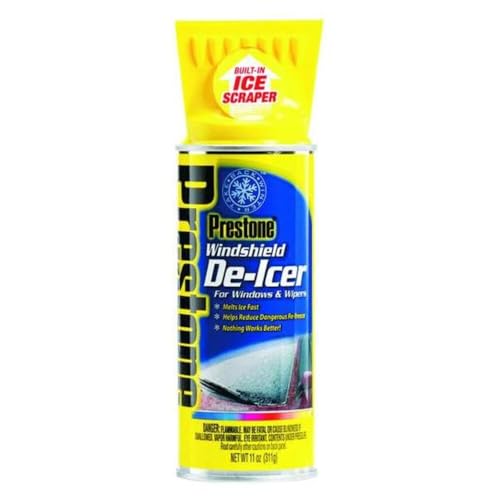
The default de-icer. Small enough to keep in a door pocket, and the cap is a scraper, which means the can and the tool are the same object you are already holding.
Best for: The can that lives in the car
What the maker publishes
- Size
- 11 oz aerosol
- Applicator
- Aerosol spray, scraper cap
- Maker claim
- Melts ice fast and helps reduce refreeze
- Active ingredient
- See the product label and SDS
- Rated melt temperature
- Not published by the maker
What works
- Fits a door pocket, which is where a de-icer has to live to be any use at 7am
- The scraper cap removes the second-tool problem entirely
- Aerosol reaches a wiper cowl and a mirror face better than a trigger bottle does
What doesn't
- 11 oz does not go far on a fully iced windshield - this is a frost can, not a storm can
- Prestone does not publish a rated melt temperature on the listing, so cold-limit claims are not something we can verify for you
Skip this if: you are clearing a whole iced car rather than a patch. Buy the 32 oz trigger bottle and keep this one for the lock and the mirrors.
3. Both in one purchase
CarPlan Winter Essentials Kit, 4 Piece Set
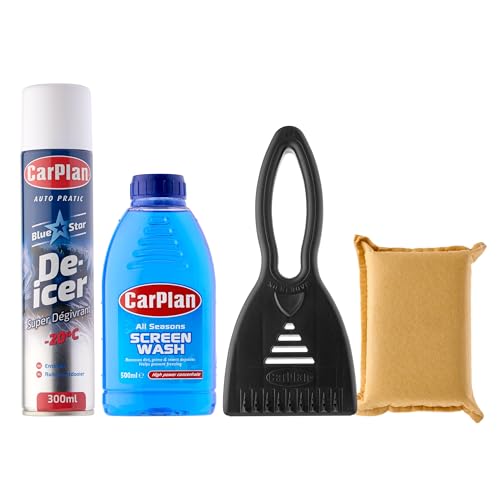
A de-icer and a scraper bought together rather than built into each other. Nothing live pairs a scraper cap with a can any more, and two tools in one box is the closest honest equivalent.
Best for: De-icer and scraper in one purchase
What the maker publishes
- Includes
- De-icer 300 ml, screenwash 500 ml, ice scraper, demister pad
- De-icer size
- 300 ml
- Scraper
- Easi-Grip, soft handle with a finger recess
- Stated performance
- Melts ice at low temperatures, streak-free finish, per the maker
- Rated temperature
- Not published by the maker
What works
- The two tools that actually work together arrive together, which is the point of the old scraper-cap can
- The demister pad addresses the inside of the glass, which no de-icer does
- Small bottle, so it fits where de-icer needs to be rather than in the trunk
What doesn't
- It is a kit, not a one-handed tool - you are holding two things, which is exactly what the old scraper-cap design avoided
- 300 ml is a small amount of de-icer for a whole winter
- The screenwash is an all-season formula, so it is not a substitute for a rated winter fluid
Skip this if: you already own a scraper you like. Buy a de-icer on its own and keep the scraper you trust.
Questions people actually ask
Is de-icer better than a scraper?
For bonded ice, yes - a blade skates over ice that has frozen into the glass surface. For dry frost, a scraper is faster and costs nothing per use. Most bad mornings need both: spray, wait thirty seconds, then scrape.
Why is my scraper not removing the ice?
It is bonded ice rather than frost. Water that was liquid on the glass when it froze has set into the surface texture, so a blade removes only the high spots. That is what de-icer is for, and leaning harder on the scraper is how trim gets damaged.
Can I use de-icer instead of buying a scraper?
You can, but it costs more over a season and it does nothing about snow on the roof and hood. A cheap scraper with a brush covers jobs de-icer cannot, and the two together cost less than a tank of fuel.
What is the fastest way to clear a badly iced windshield?
Engine and defroster on first, brush the roof and hood while it warms, spray de-icer across the top of the glass, wait thirty seconds, then scrape. About four minutes, against fifteen for scraping alone.