De-Icers, Washer Fluid & Wipers
The Best De-Icer Sprays
The one product that does something a scraper cannot. Five cans compared on the only things that separate them: where they fit, how they spray, and what the label commits to.

Heads up: we earn a commission if you buy through the links on this page, at no extra cost to you. It never changes a ranking - here is how we pick and how the site is funded.
Quick picks
The short answer, before the detail. Tap any row to jump to that write-up, or go straight to the listing to check today's price.
| # | Product | Best for | Price |
|---|---|---|---|
| 1 | 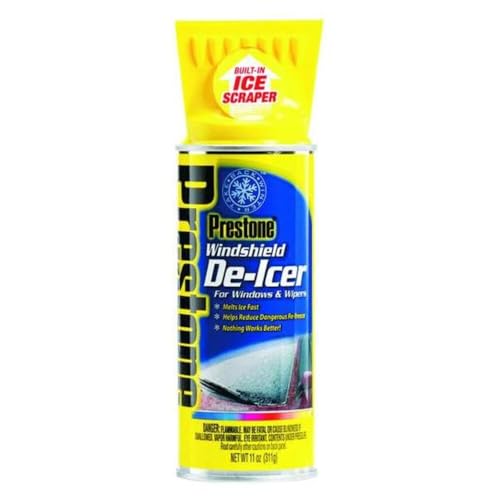 Prestone AS242 11 ozThe default de-icer. Small enough to keep in a door pocket, and the cap is a scraper, which means the can and the tool are the same object you are already holding. | Best overall | $5.98 - Check on Amazon |
| 2 |  Splash Red Hot 32 ozThree 32 oz trigger bottles in one purchase, which is the cheapest way per ounce to keep one in each car and one in the house. The label is honest about what it is for: frost and light ice. | Best value | $18.00 - Check on Amazon |
| 3 | 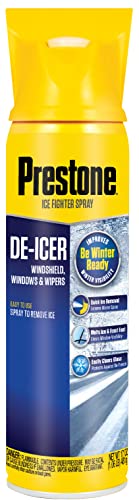 Prestone AS244 17 ozThe same formula in a can big enough to do a whole car, and the label explicitly covers wipers - which is where ice actually strands you. | Best for whole-car mornings | $29.99 - Check on Amazon |
| 4 | 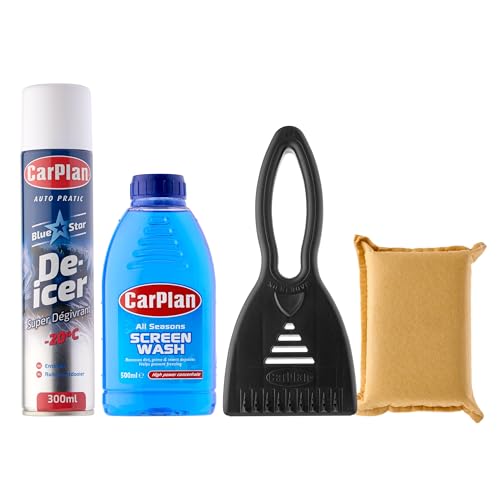 CarPlan winter kitA de-icer and a scraper bought together rather than built into each other. Nothing live pairs a scraper cap with a can any more, and two tools in one box is the closest honest equivalent. | Best de-icer and scraper together | $17.79 - Check on Amazon |
| 5 |  Prestone 32 oz triggerPrestone formula, trigger bottle, sold by the multipack. If two cars ice up every morning from November, buying de-icer one small can at a time is the expensive way to do it. | Skip unless you have two cars | $29.99 - Check on Amazon |
There is a point every winter where a scraper stops working. Ice bonds to the glass overnight, gets rained on, refreezes, and now a plastic blade skates across the top of it producing noise and a sore shoulder. That is what de-icer is for, and it is the only product in this section doing something a tool physically cannot.
The formulations across the mainstream brands are broadly similar - alcohol-based, designed to depress the freezing point of the water in the ice so it releases from the glass. What actually differs between them is far more mundane, and it is what this ranking is built on.
The three things that decide it
- Where the can fits. This is the real ranking criterion and it is why the smallest can is first. A 32 oz bottle lives in the trunk. You are standing at the driver's door. A can that fits a door pocket is a can you are actually holding when the glass is frozen; a bigger one is a can you will walk around the car to get, twice, before you stop bothering.
- Aerosol or trigger. A trigger bottle puts more liquid on the glass per second, which is what a fully iced windshield wants. An aerosol reaches into a wiper cowl and onto a mirror face far better. Both are right, for different jobs.
- Whether the cap is a scraper. Two of these have one. It removes the specific irritation of holding a can in one hand while looking for a scraper with the other, in gloves, in the dark.
What none of them publish
A rated melt temperature. Every one of these cans carries claims about melting ice fast and reducing refreeze, and not one of the listings we read states the temperature the product is rated to work at.
That is worth knowing, because the neighboring product on the same shelf - winter washer fluid - does print exactly that number, and the difference is instructive. When you can compare a rated figure, do. When you cannot, treat the marketing language as marketing language. We have listed "not published" in every specification table below rather than filling the cell with a plausible number.
How to actually use it
- Start the engine and set the defroster to full first. You want the glass warming from the inside while the spray works from the outside - the two together are far faster than either alone.
- Spray across the top of the windshield and let gravity carry it down. Working top-down uses less product than covering the whole surface directly.
- Wait thirty seconds. This is the step everybody skips and it is the step that makes the difference. The chemistry needs contact time.
- Then scrape. The ice should release rather than need chipping, and you should feel it let go.
- Do the wiper blades separately, and check they are free before you switch them on.
Thick bonded ice may need a second pass. Two applications with a wait beats one application and ten minutes of leaning on a blade, which is where paint and trim get damaged.
Does it damage the car?
It is the most-searched question in this category by a distance, with five separate variants covering paint, rubber, wiper blades, the windshield and the car generally. The short answer is that these products are formulated for use on a car and their labels name windshields, windows and wiper blades as intended surfaces.
The full answer, including what the solvents do to rubber over repeated applications and the one surface you should not aim at, is in does de-icer damage your car. It is worth reading before you buy rather than after.
Do notuse de-icer on the inside of the windshield
These are alcohol-based solvents formulated for exterior glass. Interior ice is a cabin moisture problem and the fix is the defroster plus dealing with what is making the inside of your car damp - see defrosting and defogging.
The short version
Buy the 11 oz Prestone for the door pocket. If you regularly clear a whole iced car rather than a frosted windshield, add the 32 oz Rain-X for the trunk. That combination costs very little and covers both situations.
And if you want to stop needing any of this, a windshield cover prevents the ice rather than removing it. The two approaches are compared in cover vs de-icer.
One more thing worth clearing up before you order: the jug of de-icer washer fluid on the next shelf is a different product from every can on this page, despite the near-identical name. Spray vs washer fluid explains which does which job.
The picks, one at a time
We haven't tested these
No lab, no borrowed units, no free samples. What we did do: pull every published spec into one table and work out what the numbers mean on a cold morning. Everything below traces to a published spec sheet, a manual, or a standard we can point you at - and if a figure isn't published, we say so instead of estimating it. The full method is here.
1. Best overall
Prestone AS242 Windshield De-Icer, 11 oz Aerosol
The default de-icer. Small enough to keep in a door pocket, and the cap is a scraper, which means the can and the tool are the same object you are already holding.
Best for: The can that lives in the car
What the maker publishes
- Size
- 11 oz aerosol
- Applicator
- Aerosol spray, scraper cap
- Maker claim
- Melts ice fast and helps reduce refreeze
- Active ingredient
- See the product label and SDS
- Rated melt temperature
- Not published by the maker
What works
- Fits a door pocket, which is where a de-icer has to live to be any use at 7am
- The scraper cap removes the second-tool problem entirely
- Aerosol reaches a wiper cowl and a mirror face better than a trigger bottle does
What doesn't
- 11 oz does not go far on a fully iced windshield - this is a frost can, not a storm can
- Prestone does not publish a rated melt temperature on the listing, so cold-limit claims are not something we can verify for you
Skip this if: you are clearing a whole iced car rather than a patch. Buy the 32 oz trigger bottle and keep this one for the lock and the mirrors.
2. Best value
Splash Red Hot De-Icer Windshield Trigger Spray, 32 oz, 3 Pack
Three 32 oz trigger bottles in one purchase, which is the cheapest way per ounce to keep one in each car and one in the house. The label is honest about what it is for: frost and light ice.
Best for: Cost per ounce
What the maker publishes
- Size
- 32 oz per bottle, 3 bottles
- Applicator
- Trigger sprayer
- Stated job
- Melts frost and light ice on the windshield and wiper blades
- Rated temperature
- Not published by the maker
- Active ingredient
- See the product label and SDS
What works
- Three bottles is the honest answer to the storage problem - one in the house, one in each car
- A trigger bottle covers a whole windshield faster than an 11 oz aerosol, and refills are cheaper
- The label claims frost and light ice rather than implying it will free a car cased in a quarter inch
What doesn't
- Light ice is a real limit, not marketing caution - bonded ice still wants a scraper behind the spray
- A 32 oz bottle is too big for most door pockets, which is where de-icer actually needs to live
- No published temperature rating
Skip this if: you want one small can that fits in the door pocket. Buy the 11 oz aerosol and keep this for the garage.
3. Best for whole-car mornings
Prestone AS244 De-Icer for Windshield, Windows and Wipers, 17 oz Aerosol
The same formula in a can big enough to do a whole car, and the label explicitly covers wipers - which is where ice actually strands you.
Best for: Whole-car mornings
What the maker publishes
- Size
- 17 oz aerosol
- Rated surfaces
- Windshield, windows and wipers, per the label
- Applicator
- Aerosol
- Active ingredient
- See the product label and SDS
- Rated melt temperature
- Not published by the maker
What works
- 17 oz is enough for the whole glass area rather than one cleared patch
- The label naming wipers matters: freeing a bonded wiper is the job that decides whether you can drive
- Sold in multipacks, which is the right way to buy a consumable you use every cold morning
What doesn't
- Too tall for most door pockets, so it lives in the trunk and is not there when you need it
- No published rated melt temperature
Skip this if: you only ever get light frost. The 11 oz can is cheaper, fits the door, and does that job identically.
4. Best de-icer and scraper together
CarPlan Winter Essentials Kit, 4 Piece Set
A de-icer and a scraper bought together rather than built into each other. Nothing live pairs a scraper cap with a can any more, and two tools in one box is the closest honest equivalent.
Best for: De-icer and scraper in one purchase
What the maker publishes
- Includes
- De-icer 300 ml, screenwash 500 ml, ice scraper, demister pad
- De-icer size
- 300 ml
- Scraper
- Easi-Grip, soft handle with a finger recess
- Stated performance
- Melts ice at low temperatures, streak-free finish, per the maker
- Rated temperature
- Not published by the maker
What works
- The two tools that actually work together arrive together, which is the point of the old scraper-cap can
- The demister pad addresses the inside of the glass, which no de-icer does
- Small bottle, so it fits where de-icer needs to be rather than in the trunk
What doesn't
- It is a kit, not a one-handed tool - you are holding two things, which is exactly what the old scraper-cap design avoided
- 300 ml is a small amount of de-icer for a whole winter
- The screenwash is an all-season formula, so it is not a substitute for a rated winter fluid
Skip this if: you already own a scraper you like. Buy a de-icer on its own and keep the scraper you trust.
5. Skip unless you have two cars
Prestone Trigger Spray Windshield De-Icer, 32 oz
Prestone formula, trigger bottle, sold by the multipack. If two cars ice up every morning from November, buying de-icer one small can at a time is the expensive way to do it.
Best for: Two-car households
What the maker publishes
- Size
- 32 oz per bottle
- Applicator
- Trigger spray
- Maker claim
- Concentrated ice-melting formula, helps reduce refreeze
- Active ingredient
- See the product label and SDS
- Rated melt temperature
- Not published by the maker
What works
- Cheapest per ounce here when bought as a pack, and this is a consumable you will use up
- The refreeze claim is the one that matters on a commute - clearing glass that ices over again at the first light is not clearing it
What doesn't
- Buying six bottles of anything is a commitment before you know you like it
- Trigger bottles can freeze shut overnight in an unheated garage
- No published melt temperature
Skip this if: you have one car and mild winters. One 15 oz can will outlast the season.
Questions people actually ask
What is the best de-icer spray for car windows?
The one that fits where you will actually keep it. A small aerosol in the door pocket beats a larger bottle in the trunk every time, because the trunk is not where you are standing when the windshield is frozen.
How long does de-icer take to work?
About thirty seconds of contact time on frost, longer on thick bonded ice. The waiting is the part people skip and it is the part that does the work - spraying and scraping immediately wastes most of the product.
Can I use de-icer on car door locks?
Windshield de-icer is the wrong applicator for a keyway. Use a dedicated lock de-icer with a fine nozzle, and keep it in a coat pocket rather than in the car, since a lock de-icer inside a locked car helps nobody.
Does de-icer spray work on thick ice?
Yes, but it may need two applications with a wait between them. Run the defroster at the same time so the glass is warming from the inside while the spray works from the outside - the combination is considerably faster than either alone.
Can you make your own de-icer with rubbing alcohol?
A mix of isopropyl alcohol and water does depress the freezing point and it will work. Commercial de-icers add surfactants and refreeze inhibitors that a home mix does not have, and the labeled products state which surfaces they are safe on, which a home mix cannot.