De-Icers, Washer Fluid & Wipers
The Best Lock De-Icers
This is the one product category where the spec that decides everything is not on the label. It is whether the can is small enough that you will genuinely carry it.
Heads up: we earn a commission if you buy through the links on this page, at no extra cost to you. It never changes a ranking - here is how we pick and how the site is funded.
Quick picks
The short answer, before the detail. Tap any row to jump to that write-up, or go straight to the listing to check today's price.
| # | Product | Best for | Price |
|---|---|---|---|
| 1 |  Victor lock de-icerTwo thirds of a fluid ounce, which sounds absurd until you remember the only rule that matters here: it has to be outside the car. This one fits a coat pocket or a bag and still lubricates the cylinder after it thaws it. | Best overall | $11.37 - Check on Amazon |
| 2 | 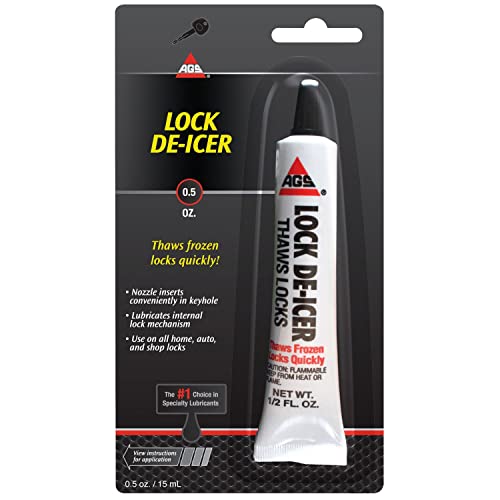 AGS MZ-1Half an ounce and the lowest price here. It is the one you buy three of and put one in each coat, which is a better strategy than owning a single expensive can you left in the trunk. | Best value | $5.22 - Check on Amazon-14% |
| 3 |  Blaster lock de-icerA 3 oz sprayer sized for a keyhole rather than a windshield. The catch is obvious once you say it out loud: keep it anywhere except inside the car it unlocks. | Best middle ground | $13.27 - Check on Amazon |
| 4 |  TRIPAK Heat XtremeThe only lock de-icer here that publishes a working temperature - stated to -40F - in a water-based formula with no methanol, plus a precision straw. It is also a 12 oz can, which is the wrong shape for the one job that defines this category. | Best formula, wrong size | $27.49 - Check on Amazon |
| 5 |  AGS Lock-EaseNot a de-icer at all - a graphite lubricant that stops the lock freezing in the first place. Graphite carries no water and no oil, so there is nothing in the cylinder left to freeze or to gum up in the cold. | Buy this in October | $9.44 - Check on Amazon |
A frozen door lock is a small problem with a disproportionate cost. You cannot get in, you cannot start the engine to warm anything up, and the obvious fixes - hot water, force, a lighter under the key - range from useless to genuinely damaging.
The product that solves it costs less than a sandwich. The reason people still stand in the cold is almost never that they do not own one. It is where they keep it.
How we judged these, before any ranking
- Size, first and by a distance. A lock de-icer only works if it is with you, and the one place it must never be is inside the car it opens. That makes physical size a functional specification, not a convenience.
- The applicator. A keyway is a slot a few millimeters wide. A product with a precision straw puts fluid inside the cylinder; a broad spray coats the door and does nothing for the pins.
- Whether it lubricates as well as thaws. Alcohol-based de-icers flush out whatever lubricant was in the cylinder. A product that leaves something behind is doing two jobs.
- A published temperature. Almost nothing in this category states one. Exactly one product here does, and it deserves credit for it even though it loses on the first criterion.
What each one publishes
Four blanks in the last column. That is the category being quiet about the number a buyer most wants, and it is why the one product that prints a figure gets an award on this page despite being the wrong shape for a car.
The rule that decides whether any of this works
Say it out loud and it sorts the whole category: a lock de-icer kept in the glovebox is inside the locked car. It is not a backup. It is a decoration.
So the product has to live somewhere else, and the realistic options are a coat pocket, a bag you carry, a keyring, a desk at work, or a shelf by the front door. Every one of those places has a size limit, and it is small. This is the entire reason a half-ounce tin outranks a twelve-ounce can that is better in every chemical respect.
- By the front door is the best single location - you pass it on the way out, and the failure happens at the start of the journey rather than the end.
- A coat pocket works if it is the coat you actually wear in winter. Check it in October rather than discovering it in the summer jacket.
- A second one at work covers the other half of the problem, which is the lock freezing during the day while the car sits in a parking lot.
- Not the glovebox, not the trunk, not the door pocket. All three are behind the lock you are trying to open.
How to actually use it
- Put the fluid in the keyway, not on the door. Use the straw if there is one. The ice that matters is around the pins inside the cylinder, not on the paint.
- Give it thirty seconds. It has to travel into the cylinder and melt its way down. Trying the key immediately is what breaks keys.
- Turn gently. If it will not move, apply more and wait again. Never lever the key with pliers - a snapped key inside a frozen lock turns a five-minute problem into a locksmith.
- Re-lubricate afterwards. The de-icer flushed the cylinder. A graphite lubricant puts something back that will not freeze next time.
If the lock turns but the door still will not open, the lock was never the problem - the rubber seals have frozen to the frame, which is a different fix covered in frozen car doors and locks.
Do notuse WD-40, hot water or a flame on a frozen lock
WD-40 is a water-displacing penetrant, not a lock lubricant - it leaves a residue that attracts grit and gums up a cylinder over time. Hot water refreezes inside the mechanism within minutes and leaves you worse off. And heating the key with a lighter transfers very little heat, damages the key coating, and on a modern key destroys the transponder electronics inside the head.
If your car is keyless, read this before winter
Most keyless cars still have a mechanical lock cylinder, and on many it is hidden behind a small cover on the driver's door handle, with the physical key itself tucked inside the fob. A lot of owners have never located either.
Find both now, in daylight, with the manual open. The morning the fob will not wake the car is a bad time to discover that your key blade is inside the fob and the keyhole is under a trim cap you need a fingernail to remove.
Worth knowing too: if the car will not respond at all rather than just refusing to unlock, the problem may be the 12V battery rather than the lock - car batteries in cold weather covers that failure.
The version where this never happens
A lock freezes because there is moisture inside the cylinder. Take the moisture out and there is nothing to freeze, which is what a dry graphite lubricant does - it carries no water and no oil, so it displaces nothing and holds nothing.
Do it once in October. It takes about a minute per lock and it is the reason the fifth pick on this page is not a de-icer at all. The same October pass should include the door seals, which freeze far more often than the locks do - the full routine is in how to prevent frost overnight.
What not to buy for this
Two products get bought for this job constantly and neither one does it:
- Windshield de-icer. Formulated to sheet across a large flat surface, in a can with a wide spray pattern. It cannot get into a keyway, and the windshield sprays are a genuinely different product with a different job.
- General penetrating oil. It will free a seized mechanism and it will also leave an oil film inside a lock that collects grit all year and thickens in cold. Lock lubricants are dry for a reason.
The short version
Buy the smallest one you will genuinely carry, and buy two. The Victor is the pick because 0.625 fl oz fits a pocket and it lubricates as well as thaws; the AGS MZ-1 is the cheapest way to put one in every coat. The Blaster 3 oz is the sensible middle if you want a season's worth in one bottle you keep by the door. The TRIPAK has the best formula on this page and the worst format for a car - buy it for the shed and the padlocks. And spend ten dollars on graphite in October, because the best lock de-icer is the one you never need to reach for.
The picks, one at a time
We haven't tested these
No lab, no borrowed units, no free samples. What we did do: pull every published spec into one table and work out what the numbers mean on a cold morning. Everything below traces to a published spec sheet, a manual, or a standard we can point you at - and if a figure isn't published, we say so instead of estimating it. The full method is here.
1. Best overall
Victor Lock De-Icer Lubricant Aerosol, 0.625 fl oz
Two thirds of a fluid ounce, which sounds absurd until you remember the only rule that matters here: it has to be outside the car. This one fits a coat pocket or a bag and still lubricates the cylinder after it thaws it.
Best for: Living on a keyring
What the maker publishes
- Size
- 0.625 fl oz
- Type
- Aerosol de-icer and lubricant
- Stated action
- Thaws frozen locks instantly and lubricates the cylinder, per the maker
- Also listed for
- Car doors, ski racks, luggage, padlocks, home and garage doors, mailboxes
- Rated temperature
- Not published by the maker
What works
- Small enough to genuinely carry, which is the whole product - a lock de-icer inside the locked car is worth nothing
- It lubricates as well as thaws, so it replaces some of what the flushing carries away
- The published use list is broad enough that the same can covers a padlock, a shed and a mailbox
What doesn't
- 0.625 fl oz is a handful of applications, not a season
- No published temperature rating, so there is no figure to hold it to in a deep freeze
- An aerosol this small is easy to lose, and easy to leave in the car by accident
Skip this if: you want one can for the whole winter in a garage. Buy a larger can for the shed and keep a small one on you.
2. Best value
AGS MZ-1 Lock De-Icer Lubricant, 1/2 oz
Half an ounce and the lowest price here. It is the one you buy three of and put one in each coat, which is a better strategy than owning a single expensive can you left in the trunk.
Best for: The cheapest way to be prepared
What the maker publishes
- Size
- 1/2 oz
- Type
- Lock de-icer and lubricant
- Stated action
- Thaws frozen locks quickly, per the maker
- Origin
- Manufactured in the United States, per the maker
- Rated temperature
- Not published by the maker
What works
- Cheap enough that buying several and distributing them is the obvious move
- Half an ounce fits anywhere - a pocket, a bag, a desk drawer at work
- Being able to keep one at your destination as well as on you is a real advantage nobody discusses
What doesn't
- The listing publishes almost nothing beyond the size and the claim - no temperature, no ingredient, no application count
- Half an ounce is genuinely small; treat it as an emergency dose rather than a supply
- Small tins and tubes are the easiest thing in this category to mislay
Skip this if: you want published specifications to compare. This one asks you to trust the category rather than the label.
3. Best middle ground
Blaster Sprayer Lock De-Icer, 3 oz
A 3 oz sprayer sized for a keyhole rather than a windshield. The catch is obvious once you say it out loud: keep it anywhere except inside the car it unlocks.
Best for: A frozen door lock
What the maker publishes
- Type
- Lock de-icer spray
- Size
- 3 oz - pocket sized, which is the point
- Where to store it
- Pocket, bag or house - never in the locked car
- Active ingredient
- See the product label and SDS
- Rated temperature
- Not published by the maker
What works
- Sized for a keyway, unlike a windshield de-icer that will not get inside a lock cylinder
- Small enough to keep on a keyring or in a coat pocket, which is the only place it works
- Cheap, and a frozen lock has very few other answers
What doesn't
- Useless if it is locked in the car, which is where most people leave it
- Repeated flushing carries away lock lubricant, so re-lubricate the cylinder afterwards
- Most keyless cars have a hidden mechanical keyhole - find yours before you need it
Skip this if: you can park where the lock does not freeze. Prevention with a lock lubricant beats a cure you cannot reach.
4. Best formula, wrong size
TRIPAK Heat Xtreme De-Icer Lubricant Spray for Locks, 12 oz
The only lock de-icer here that publishes a working temperature - stated to -40F - in a water-based formula with no methanol, plus a precision straw. It is also a 12 oz can, which is the wrong shape for the one job that defines this category.
Best for: The formula, not the format
What the maker publishes
- Size
- 12 oz
- Stated temperature
- Works down to -40F, per the maker
- Formula
- Water-based, biodegradable, no methanol or glycol, per the maker
- Applicator
- Precision straw
- Lubricant
- Leaves a protective film, stated to resist rust and future ice
- Also listed for
- Padlocks, hinges, latches, snowblowers, machinery
What works
- A published -40F figure is unique in this group and it is the number that actually decides whether a de-icer works on the coldest morning
- No methanol or glycol is a genuine difference if you have pets or you are spraying near a driveway
- A precision straw is what gets the fluid into a keyway rather than over the door
What doesn't
- 12 oz is a garage can. The defining failure in this category is a de-icer locked inside the car, and a can this size is the one you will leave there
- Costs several times what a pocket can costs, for a job measured in milliliters
- Water-based is kinder chemistry and it also means the can itself should not be left somewhere it can freeze
Skip this if: this is your only lock de-icer. Buy it for the shed, the gate and the trailer, and carry something pocket-sized for the car.
5. Buy this in October
AGS Lock-Ease Graphite Lock Lubricant, 3 oz Aerosol
Not a de-icer at all - a graphite lubricant that stops the lock freezing in the first place. Graphite carries no water and no oil, so there is nothing in the cylinder left to freeze or to gum up in the cold.
Best for: October, not January
What the maker publishes
- Size
- 3 oz aerosol
- Type
- Dry graphite lubricant
- Why graphite
- Contains no water or oil to freeze, per the maker
- Residue
- Stated not to leave a sticky film that attracts dust
- Suits
- Automotive locks, padlocks, deadbolts
What works
- Treats the cause rather than the morning - a dry lock cylinder has nothing in it to freeze
- Graphite does not attract the dust and grit that oil-based lubricants hold in a keyway
- One can does every lock on the car and the house, and it lasts years
What doesn't
- It will not open a lock that is already frozen - this is prevention and only prevention
- Graphite is messy on light-colored paint and trim if you are careless with the straw
- Applied once in warm weather and forgotten, which is exactly when people stop noticing it has worn out
Skip this if: your lock is frozen right now. Buy a de-icer for this morning and this in October.
Questions people actually ask
What is the best way to de-ice a car lock?
Put a purpose-made lock de-icer into the keyway rather than on the door, wait about thirty seconds for it to reach the pins, then turn the key gently. Never force the key, use hot water, or heat the key with a flame.
What is the best lock de-icer?
The smallest one you will actually carry, because a lock de-icer in the glovebox is inside the car you cannot open. A sub-ounce aerosol that also lubricates the cylinder covers the job and fits a coat pocket.
Where should I keep lock de-icer?
Anywhere except the car - a coat pocket, a bag, a keyring or a shelf by the front door. Keeping a second one at work covers the other half of the problem, which is the lock freezing while the car sits during the day.
Can I use WD-40 on a frozen car lock?
It is not the right product. WD-40 is a water-displacing penetrant rather than a lock lubricant, and it leaves a residue that attracts grit and gums up the cylinder over time. Use a lock de-icer to open it and a dry graphite lubricant to prevent it.
How do I stop my car lock freezing again?
Apply a dry graphite lubricant to the cylinder in autumn. Graphite carries no water and no oil, so there is nothing inside the lock left to freeze, and unlike oil it does not collect grit through the year.
Can I pour hot water on a frozen car lock?
No. It refreezes inside the mechanism within minutes, usually leaving the lock worse than before, and repeated soaking drives more moisture into the cylinder - which is the thing that freezes next time.
My keyless car will not unlock - is the lock frozen?
It may be, but if the car does not respond at all the cause is more often the 12V battery. Most keyless cars keep a hidden mechanical keyhole on the driver's door and a physical blade inside the fob - find both before winter rather than during it.