Cold Starts, Batteries & Jump Starters
Car Batteries in Cold Weather
Cold does not kill a healthy battery. It finds the one that was already going, and it finds it on the worst possible morning.
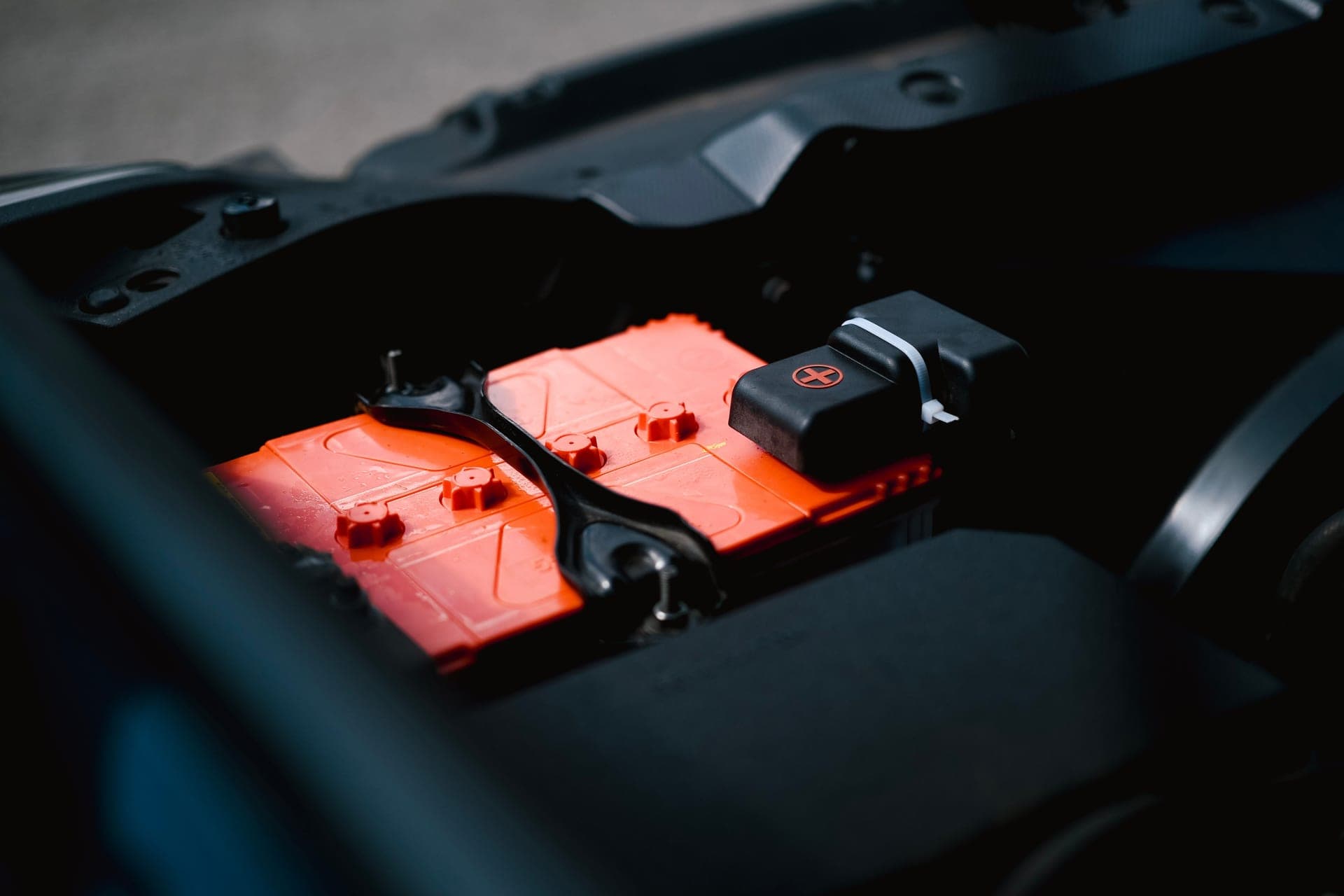
There is no single figure for how long a battery lasts in the cold, because age and state of charge matter far more than temperature. A healthy battery has plenty of margin at 0F. A four-year-old battery at partial charge may not survive one cold night parked.
What cold actually does
A lead-acid battery generates current through a chemical reaction between lead plates and electrolyte. Chemical reaction rates fall as temperature falls, so the same battery delivers less current at 0F than at 70F. That much is straightforward physics.
What makes it feel like the cold is doing the killing is that the demand rises at the same time. Thick oil means the starter draws more current for longer. So the margin between what the battery can give and what the car needs narrows from both directions simultaneously, and a battery that had been quietly getting weaker for a year finally falls through it.
How long does a battery last if the car sits?
Every modern car draws a small standby current continuously - the alarm, the keyless entry receiver, the clock, various control modules that never fully sleep. That is normal and it is designed for.
What it means is that a parked car is always discharging slowly. A healthy battery in a normal car copes with weeks of that. A weak battery, or a car with an aftermarket dashcam or tracker wired in, does not.
The honest version is that anybody quoting a precise number for this is guessing. The useful takeaway is which factors matter, and age plus standby drain matter far more than the thermometer.
The habit that kills batteries quietly
Starting a car takes a substantial amount of charge out of the battery, and the alternator puts it back over the following minutes of driving. On a short trip - five minutes to the store - the alternator does not replace what the start consumed, especially in winter when the blower, heated seats, lights and rear defroster are all drawing at the same time.
Do that daily for a month and the battery is progressively less charged each morning, without any single day feeling like a problem. Then a cold night arrives and it does not start, and the cold gets blamed for a month of short journeys.
The fix is either a longer drive weekly, or a maintainer if the car sits somewhere with power - the charger picks are here, compared on the temperature compensation that decides whether one works in a cold garage. How long that drive needs to be, and why a driveway idle is not a substitute for it, is in how often to start your car in winter.
The warning signs, in order of urgency
- Cranking that sounds slower than it used to. This is the earliest and most reliable signal, and it usually appears weeks before a failure.
- Headlights that dim noticeably while cranking.
- Needing a jump more than once. A battery that repeatedly goes flat is either failing or there is a drain, and either way another jump is not a fix.
- A battery warning light. This more often points at the charging system than the battery, and it is worth having checked.
- A bulging, cracked or leaking case. Replace immediately and do not attempt to charge or jump it.
Get it tested, it is free
Any parts store will load-test a battery free in about five minutes. A load test applies a realistic current draw and measures whether the voltage holds, which is a genuine test of condition rather than a voltage reading that tells you almost nothing.
Do it in October. A battery that tests marginal in the fall is a battery you replace in a warm garage on your own schedule, rather than in a parking lot in January on somebody else's.
Do notcharge a battery that has frozen
A discharged battery has more water and less acid in its electrolyte, which raises its freezing point. If it has frozen, charging current can cause it to rupture. A visibly distorted or bulging case after a hard freeze means replacement, not recovery.
Keeping one alive through winter
- Load-test in the fall and replace anything marginal before the cold arrives.
- Clean and tighten the terminals. Corrosion produces symptoms identical to a dying battery and costs nothing to fix.
- Use a maintainer if the car sits for days and you have power where you park - it is the cheapest intervention in this whole section.
- Drive it properly at least once a week. Twenty minutes is more useful than four five-minute trips.
- Turn accessories off before you start. Every amp going to the rear defroster is one the starter does not have.
- If you have a dashcam or tracker wired in, know what it draws when parked, and consider a hardwire kit with a low-voltage cutoff.
When it is genuinely time to replace, the battery picks are here - and remember that group size decides the purchase before any specification does.
What to buy, and what to skip
We haven't tested these
No lab, no borrowed units, no free samples. What we did do: pull every published spec into one table and work out what the numbers mean on a cold morning. Everything below traces to a published spec sheet, a manual, or a standard we can point you at - and if a figure isn't published, we say so instead of estimating it. The full method is here.
Heads up: we earn a commission if you buy through the links on this page, at no extra cost to you. It never changes a ranking - here is how we pick and how the site is funded.
1. The cheap prevention
Battery Tender Junior 12V, 750mA Charger and Maintainer

The cheapest intervention in this whole section. A battery that is kept topped up does not develop the cold-weather problem in the first place, and a maintainer costs a fraction of a battery.
Best for: A car that sits
What the maker publishes
- Type
- Automatic float charger
- Voltage
- 12V
- Rated output
- 750 mA
- Chemistry support
- Check it covers AGM if that is what your car has
- Requires
- Power where you park
What works
- Prevention rather than replacement, at a small fraction of a battery price
- Removes the specific failure of a car that sits unused for two cold weeks
- Modern units float automatically instead of cooking a full battery
What doesn't
- Needs an outlet where you park, which rules out most street parking
- Not every maintainer handles AGM correctly - check before you plug it into one
Skip this if: you park on the street or drive daily. This solves a storage problem, not a commuting one.
2. When it is time to replace
Odyssey ODP-AGM35 Performance Series AGM Battery, Group 35, 675 CCA

Group 35 is what a lot of Japanese-brand sedans and crossovers take. 675 CCA and 110 minutes of reserve, in the size that will actually bolt in - the longest reserve any group 35 on this page publishes.
Best for: Common import fitments
What the maker publishes
- Cold cranking amps
- 675 CCA
- Group size
- 35 - check yours before buying
- Chemistry
- Sealed AGM
- Reserve capacity
- 110 minutes
- Pulse cranking
- 1200 PHCA, 900 HCA, per the maker
- Terminals
- SAE posts, negative on the left
- Warranty
- 3 years, per the maker
- Dimensions
- Not published by the maker
What works
- 110 minutes of reserve is the highest published figure of any group 35 here, which is what matters if the alternator quits on a winter night
- The right group for a very large slice of the cars on the road
- 675 CCA is ample for a four- or six-cylinder engine at 0F
What doesn't
- The listing publishes no case dimensions or weight, which is the one thing you most want to check before buying a battery
- 125 fewer CCA than the group 34, which matters if you have a big V8 and a group 35 tray
- An AGM price premium on top of an already premium brand - that trade is the whole point of this pick, but it is a real one
Skip this if: your car takes a different group. Group size first, every time.
3. For the morning it happens anyway
Weego 44s 2100A 12V Lithium Car Battery Jump Starter

The only pack we have found that publishes cranking amps as well as peak amps - 440 CA against 2100 peak - which is the figure that actually predicts a start. It also publishes a weight under one pound and engine ratings of 7L gas and 3.5L diesel, so you can check it against your own car rather than trusting a headline number.
Best for: Most cars, and a glovebox
What the maker publishes
- Peak amps
- 2100A
- Cranking amps
- 440 CA, per the maker
- Gas engines
- Up to 7L, per the maker
- Diesel engines
- Up to 3.5L, per the maker
- Weight
- Under 1 lb, per the maker
- Charge retention
- Holds a charge for months, per the maker
- Protection
- Anti-spark, reverse polarity and surge protection
- Build
- Stated to resist water, dust and dirt
What works
- Publishing a cranking amps figure is almost unheard of in this category, and cranking amps is the number that decides whether a cold engine turns - peak amps has no standard behind it at all
- Under a pound means it genuinely lives in the glovebox, which is inside the heated cabin - and where a lithium pack is stored matters more than any number on the box
- Holding a charge for months addresses the real failure of these packs, which is reaching for one in January and finding it flat
What doesn't
- 3.5L diesel is a car-and-van ceiling, not a truck one, and the gas figure of 7L is mid-pack rather than generous
- Priced right at the top of the sub-$100 bracket, which buys fewer amps than the cheap packs claim
- Lithium still delivers least current when it is cold, so the published figures assume a pack that has not been sitting in a freezing trunk
Skip this if: you drive a diesel pickup. The 3.5L diesel ceiling is the number that matters and it is not close.
Questions people actually ask
How long before a car battery dies in cold weather?
There is no single figure, because age and state of charge matter far more than temperature. A healthy battery copes with weeks parked; a four-year-old battery at partial charge may not survive one cold night. Anyone quoting a precise number is guessing.
How do I keep my car battery from dying in winter?
Load-test it in the fall, clean and tighten the terminals, drive properly at least weekly rather than only short trips, and use a maintainer if the car sits somewhere with a power outlet. Short journeys never replace the charge that starting consumes.
How long can a car sit without starting in winter?
A healthy battery in a normal car usually manages a couple of weeks even in deep cold. An older battery, or one in a car with an aftermarket dashcam or tracker drawing current, can go flat in days.
Why does my battery keep dying in winter?
Most often a combination of an aging battery and short trips that never replace the charge starting takes out. A parasitic drain from something wired in is the other common cause, and both are diagnosed rather than fixed by another jump start.
Should I disconnect my car battery if I am not driving for a month?
It stops the standby drain, but you lose radio presets and some settings, and on some cars relearning idle or window positions is a nuisance. A battery maintainer achieves the same result without any of that, if you have power where you park.
Sources
Read next
- The best car batteries for winter
- Why cars do not start in the cold
- The best jump starters for cold weather
- The full winter car checklist
- The best battery chargers for winter
- How often to start your car in winter
- Jump starter vs battery charger
- AGM vs flooded car battery
- The best engine and battery warmers
- The best car battery testers
- The best engine oil for cold weather
- Can you jump start a hybrid?