Cold Starts, Batteries & Jump Starters
How Often Should You Start Your Car in Winter?
The instinct is right - a car that sits in the cold develops problems. The usual execution is wrong, because starting an engine and idling it takes more out of the battery than it puts back.
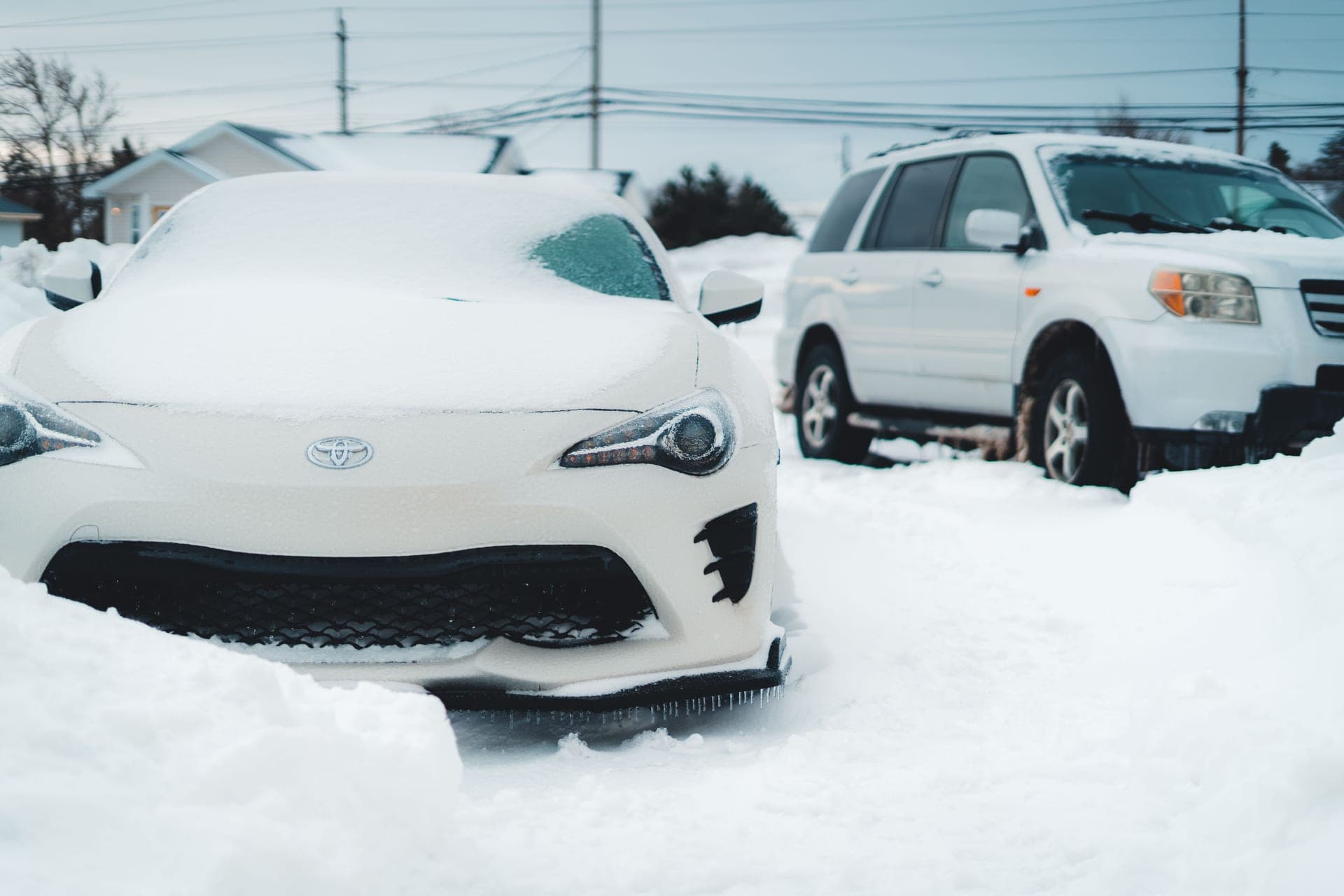
If the car sits, drive it about once a week for twenty to thirty minutes at road speed. Do not start it and idle it in the driveway - that is the version most people do and it is close to useless. If you cannot drive it, put a maintainer on the battery and stop starting it at all.
Why starting it to keep the battery up does not work
The reasoning behind the habit is sound: a battery that sits loses charge, a discharged battery in the cold is the thing that strands you, so run the engine and let the alternator top it up. Every step of that is true except the last one.
Starting an engine is the single largest current draw a car makes. In the cold it is larger still, because the oil is thick and the starter has to turn against it for longer. You spend a meaningful slug of the battery in those few seconds.
The alternator then has to put it back, and at idle it is working at its worst. Alternator output rises with engine speed, and a cold idle is the lowest speed the engine runs at. Worse, everything else that comes on with the ignition is drawing at the same time - the blower, the heated rear window, the headlights, the seat heaters, the whole reason you started it. On a genuinely cold morning the accessories can consume most of what the alternator is making.
So a five-minute idle can end with the battery at a lower state of charge than before you turned the key. Do that twice a week for a month and you have engineered exactly the failure you were trying to prevent. The underlying chemistry is in car batteries in cold weather.
What actually recharges it
Engine speed and time, together. Driving does both: the engine spends most of the trip well above idle, the alternator is near its useful output, and the trip is long enough for the charge to go somewhere.
- Twenty to thirty minutes at road speed, weekly. Long enough to replace what starting took and then some, and long enough for the engine and exhaust to reach full temperature.
- Road speed, not town crawling. A twenty-minute crawl through traffic with the engine at idle half the time is closer to idling than to driving.
- Once a week is a floor, not a target. If you drive normally most days this whole page is irrelevant to you. It is written for the second car, the weekend car, and the commuter that has gone remote for the winter.
Note the difference between this and the warm-up question. Before driving, you want about thirty seconds and then gentle driving - how long to warm up your car covers why. This page is about the opposite situation: a car that is not going anywhere.
The three costs of idling instead
- It is hard on the engine. A cold idle runs rich. Unburned fuel washes past the rings and dilutes the oil, and the engine never gets hot enough long enough to boil off the water that combustion puts into the exhaust and the crankcase. A routine of repeated short cold idles is worse for an engine than not starting it at all.
- It wastes fuel for no result. You are burning fuel to achieve a battery outcome you are not achieving.
- Idling unattended is restricted in many places. A number of states and cities limit how long a vehicle may be left running unattended, and separately it is how unattended cars get stolen. Check your local rule before making it a habit.
Do notrun the engine without checking the tailpipe is clear
If snow has drifted around the back of the car, clear the exhaust before you start it. A blocked tailpipe pushes exhaust back toward the vehicle, and carbon monoxide has no smell - the first symptom is drowsiness. This is the one mistake on this site that is genuinely dangerous rather than merely expensive.
If you cannot drive it, stop starting it
The honest answer for a car that genuinely cannot be driven weekly is to take the battery out of the equation instead. A maintainer holds it at full charge indefinitely, which is the outcome the weekly start was trying and failing to produce.
A low-output unit is all this job needs. One amp will hold a healthy battery forever; it is slow at refilling a flat one, but refilling is not what you are asking it to do. The full comparison, including why temperature compensation matters in an unheated garage, is in the battery charger picks.
The outlet problem, and the solar answer
Every maintainer recommendation runs into the same objection: it assumes power where you park. Street parking, an apartment lot, a shared driveway - no outlet, no maintainer, and the advice collapses.
A solar maintainer is the only product that addresses that. A small panel on the windshield, a charge controller so it floats rather than overcharges, and a cable to the battery. It is a real solution and we would rather say plainly where it falls down.
- Snow on the panel stops it dead. A panel mounted on the windshield in winter is sitting exactly where snow lands. This is the failure mode that does not appear in any listing, and it is the reason a solar maintainer is a partial answer rather than a complete one.
- The wattage is a peak figure. Five watts is what a panel makes in full sun. Short days, a low sun angle and overcast skies all reduce it, and makers do not publish what it delivers under those conditions - so we do not either.
- It is still better than nothing. On a car that would otherwise sit discharging for three months with no intervention at all, a panel that works on the clear days is a genuine improvement.
If it is sitting for a month or more
Past about a month the battery stops being the only thing to think about, and the weekly drive stops being the right frame. A few things worth doing once rather than repeatedly:
- Maintainer on, and leave it on. Not a weekly start.
- Inflate the tires to the door jamb figure before it sits. Cold air contracts and a tire that starts low sits flat-spotted for weeks. Details in the tire inflator picks.
- Leave the parking brake off if the surface allows it. A parking brake left engaged for months in damp cold can seize to the drum or disc. Chock the wheels instead.
- Fill the tank. A full tank has less air in it, and less air means less condensation forming inside as the temperature swings.
Hybrids and EVs are a different question
Both still have an ordinary 12 V battery, and on both it is usually the thing that fails first. What changes is that idling to charge it makes even less sense than it does on a gas car - a hybrid at rest may not run its engine at all, and an EV has no engine to run.
On a hybrid, the correct move is the manufacturer-specified ready-mode procedure or a maintainer on the 12 V battery; leaving it in accessory mode drains it. On an EV, leave it plugged in if you can, because the car manages the 12 V system from the traction pack. Neither is helped by the weekly start habit this page is about.
The short version
- Drive it weekly for twenty to thirty minutes at road speed, or do not start it at all.
- Idling in the driveway takes more out of the battery than it puts back.
- No outlet is the real constraint - solar is the only thing that works there, with a snow-shaped caveat.
- Over a month, switch from a routine to a maintainer plus tires, brake and fuel.
- If it has already gone flat, that is a jump pack problem, and a battery over four years old is a replacement rather than a maintenance one.
What to buy, and what to skip
We haven't tested these
No lab, no borrowed units, no free samples. What we did do: pull every published spec into one table and work out what the numbers mean on a cold morning. Everything below traces to a published spec sheet, a manual, or a standard we can point you at - and if a figure isn't published, we say so instead of estimating it. The full method is here.
Heads up: we earn a commission if you buy through the links on this page, at no extra cost to you. It never changes a ranking - here is how we pick and how the site is funded.
1. If you have an outlet
NOCO GENIUS1 1A 6V/12V Smart Battery Charger and Maintainer
1A is a maintainer rather than a charger. If the job is keeping a healthy battery topped up through a cold month of not driving, that is all the current you need and this is the cheapest way in.
Best for: Pure maintaining, cheapest entry
What the maker publishes
- Output
- 1A
- Voltage
- 6V and 12V
- Temperature compensation
- Yes, per NOCO
- Features
- Overcharge protection, desulfator, Force Mode
- Chemistry
- Lead-acid (wet, gel, AGM) and lithium LiFePO4
What works
- Cheapest way to get real temperature compensation and AGM support rather than a dumb trickle charger
- Small enough to leave permanently connected in a garage
- Same overcharge protection and desulfation as the bigger units
What doesn't
- 1A takes a very long time to actually recharge a flat battery - it is designed to hold, not to refill
- Not the unit to buy if the battery is already run down
Skip this if: your battery actually goes flat rather than just drifting down. Buy the 5A, which can recover as well as hold.
2. If you do not
Battery Tender 5 Watt Solar Panel 12V Battery Charger with Charge Controller, 021-1171
The only maintainer here that works without mains power, which answers the objection every other charger runs into - that a maintainer is no use if you park on the street or in an unpowered lot. It also has a winter-specific weakness the listing will not tell you about.
Best for: A car parked where there is no outlet
What the maker publishes
- Output
- 5 W, 12 V
- Controller
- Charge controller included
- Weatherproofing
- IP67, per the listing
- Mounting
- Windshield mountable
- Charge rate in winter light
- Not published by the maker
What works
- Works where no other maintainer does - street parking, a lot, a field, a driveway with no outdoor outlet
- A charge controller is included, so it floats rather than cooking the battery on a bright day
- IP67 is a real rating rather than a vague weatherproof claim, which matters for something left on the glass all winter
What doesn't
- Snow on the panel stops it completely, and a windshield-mounted panel in winter is exactly where snow lands - this is the failure mode nobody mentions
- 5 W is a peak figure in full sun. Short days, low sun angle and overcast skies all cut it, and the maker does not publish what it delivers in winter conditions
- You still have to route a cable from the glass to the battery or an accessory socket
- A 1 A wall charger does more, more predictably, for less money
Skip this if: you have an outlet where you park. This exists for the case where you do not - it is not the better product, it is the only one that works there.
3. For when it already went flat
NOCO Boost GB40 1000A UltraSafe Lithium Jump Starter
The one most people should buy. 1000A, rated to 6.0L gas and 3.0L diesel, and small enough to actually live in the glovebox where a jump starter is any use.
Best for: Most gas cars
What the maker publishes
- Peak current
- 1000A
- Engine rating
- Up to 6.0L gas, 3.0L diesel
- Jump starts per charge
- Up to 20, per NOCO
- Safety
- Spark-proof connections, reverse polarity protection
- Extras
- USB-C power bank, 100-lumen LED with seven modes
What works
- Small enough to store in the cabin, which matters because a jump starter in a cold trunk is a jump starter with less charge
- Spark-proof and reverse-polarity protection turn the scariest part of jumping a car into a non-event
- Doubles as a power bank, so it earns its space the other 364 days
What doesn't
- Lithium cells lose deliverable current as they get cold, which is exactly the condition you bought it for - keep it inside, not in the trunk
- NOCO does not print an operating temperature range on the listing, so check the manual for your climate before relying on it at 0F
Skip this if: you drive a diesel truck. 3.0L of diesel is the published ceiling and a cold diesel is the hardest thing on this list to crank.
Questions people actually ask
How often should I start my car in cold weather?
If it is sitting, drive it about once a week for twenty to thirty minutes at road speed rather than starting it in the driveway. If you cannot drive it that often, fit a battery maintainer and stop starting it - that achieves what the weekly start is trying to do.
Does idling charge your car battery?
Barely. Alternator output rises with engine speed, so a cold idle is its worst case, and the blower, heated glass and lights are drawing at the same time. A short idle can leave the battery lower than before you turned the key.
How long do I need to drive to recharge the battery?
Around twenty to thirty minutes at road speed. Town driving with the engine at idle half the time is much closer to idling than to driving, so it does not count for the same.
Is it bad to start your car and let it idle in winter?
As a repeated habit, yes. A cold idle runs rich, unburned fuel dilutes the oil, and the engine never gets hot enough for long enough to drive off the water that combustion produces. Repeated short cold idles are worse than not starting it.
What if I have nowhere to plug in a battery maintainer?
A solar maintainer is the only option that works without mains power. It genuinely helps, with one caveat no listing mentions: snow on the panel stops it completely, and a windshield-mounted panel in winter is exactly where snow lands.
Should I start my car every day in winter?
No. Daily starting without driving is the worst pattern available - it spends battery charge repeatedly and never gets the engine warm enough to clear the moisture that short cold runs create.
What should I do if the car has to sit for a month?
Switch from a routine to a one-time setup: maintainer on and left on, tires inflated to the door jamb figure, parking brake off with the wheels chocked if the surface allows, and a full tank to reduce condensation inside it.