What You Need to Store a Car Over Winter
Four jobs, in this order: stabilize the fuel, keep the battery full, give the moisture somewhere to go, and leave the tires at placard pressure. Everything else is optional.
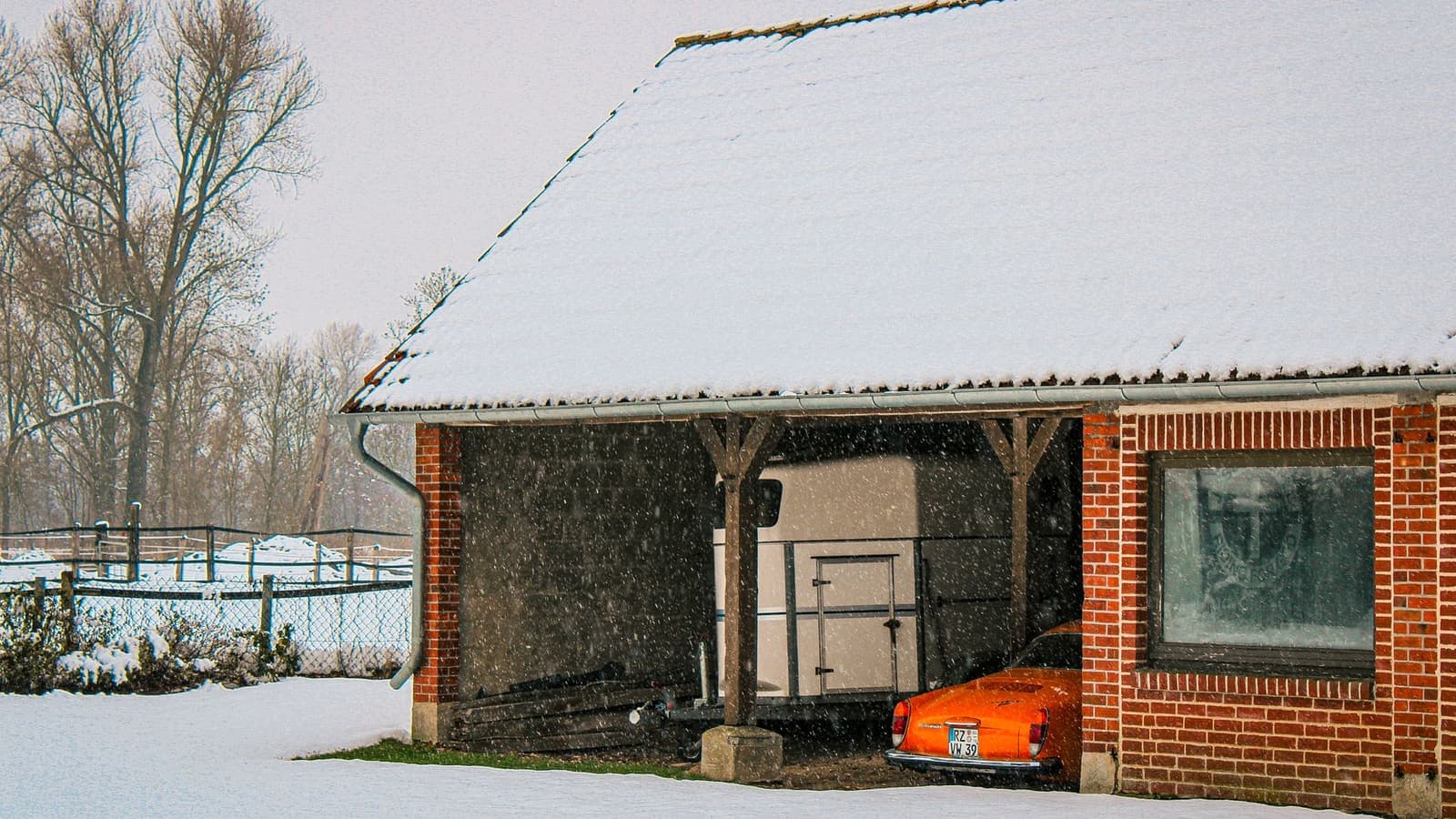
A battery maintainer first - a flat battery is the thing that actually goes wrong. Then a fuel stabilizer if the tank will sit more than a couple of months, a desiccant if the car is shut up and unventilated, and a cover matched to indoors or outdoors. Leave the tires at the door-jamb placard pressure: Michelin says over-inflating "will not help flat spotting" and "in some cases it could make it worse".
Storing a car is a short list of cheap things done once, and a long list of things the internet will sell you that do not matter. This page is ordered by what actually fails.
How we judged this list
One test: does the failure it prevents actually happen in three to six months of sitting? That ruled out most of what gets recommended for storage - fogging oil, raising the car on stands, draining fluids - which are measures for multi-year layups, not a winter. What survived is four items, and one of them is under twenty dollars.
Within each job we preferred products that publish a figure: a treat volume and a dose, a gram capacity, a published output current, a named inner layer.
1. The battery, which is the one that always goes
A parked car is not an idle car electrically. Alarms, keyless-entry receivers, body control modules and clocks all draw continuously, and a lead-acid battery also self-discharges, faster when it is partly discharged to begin with. Three months of that is enough to leave a healthy battery flat and a four-year-old battery dead for good.
The correct tool is a maintainer, not a charger, and the distinction is real: a maintainer puts out under two amps and holds a full battery full indefinitely, while a charger pushes six to fifteen amps to refill a flat one. Battery maintainer vs battery charger has the arithmetic, including why a dumb trickle charger left on all winter cooks the battery it was meant to save.
If there is no outlet where the car is parked, you have two options and one non-option. The options are a solar maintainer on the dash, or disconnecting the negative terminal - which stops the draw but loses radio presets and, on some cars, means a relearn procedure. The non-option is starting it every couple of weeks and letting it idle: how often to start your car in winter explains why a short cold idle can leave the battery lower than before you turned the key.
2. The fuel, if it will sit more than a couple of months
Gasoline degrades. The light fractions evaporate, the rest oxidizes, and the gum that forms settles in the places you least want it. Ethanol adds a second mechanism, because it attracts water.
STA-BIL publishes the figures that make this easy to get right: 1 oz per 2.5 gallons, a 32 oz bottle treating 80 gallons, fuel kept fresh "for up to 24 months" in storage, and protection against the effects of both ethanol and non-ethanol fuels.
Two details from the same listing that people miss, and they matter:
- Store it with a full tank. Air space is where condensation forms. A full tank has almost none.
- Run the engine for five minutes after dosing. STA-BIL's instruction is explicit - that is what carries treated fuel out of the tank and into the lines, rail and injectors. Pouring it in and parking the car treats the tank only.
A car still being driven every week or two does not need this; fresh fuel is already going through it. And this is a different product from a water remover - if the question is freeze-up in a line rather than fuel going stale, HEET vs Iso-HEET is that page.
3. The moisture, if the car is shut up
A sealed car with damp carpet is a terrarium. Moisture evaporates during the warm part of the day and condenses on the coldest surface at night, which is the glass. Weeks of that produces a musty interior and a film on the inside of every window.
A rechargeable silica gel desiccant is the cheap fix, and the one we picked publishes a number to size it by: 150 g of moisture adsorbed per 500 g bag, up to 180 g, reactivated in a microwave in 10 to 16 minutes, for more than ten cycles. Its own listing names the symptom - reducing condensation on car windows on cold winter mornings.
What it will not do is beat a source. A wet floor mat, a leaking door seal or a blocked sunroof drain will keep feeding moisture faster than any desiccant removes it. Dry the interior properly before you shut the car up - and if the carpet is wet with brine rather than water, deal with the salt first.
4. The tires - and the one piece of advice makers disagree on
A tire sitting under load for a long time takes a set in the flattened contact patch. Michelin describes the nylon cap staying "in this flat state for a long time" until the tire takes a set to that shape. Continental puts a timeframe on the serious version: semi-permanent flat spots can form when tires stand under vehicle load for a month or longer, made worse by high temperatures and low pressure.
Here is where the makers part company, and it is worth knowing rather than guessing:
Our reading, and the reason the recommendation at the top of this page is what it is: placard pressure is the position of the maker that has published a direct answer to the over-inflation question, and it is also the pressure you want the car to be at when you drive it again. A temporary flat spot usually works itself out within the first few miles of driving. Chasing a semi-permanent one with extra PSI is, on Michelin's own account, as likely to hurt as help.
Set the pressures when the tires are cold, and recheck them before the car moves in the spring - the stored car will have lost pressure to the cold exactly as a driven one does. The cold-pressure arithmetic is here.
The cover, and the mistake people make with it
Indoors and outdoors are different products. A breathable single-layer cover keeps dust off a garaged car without trapping moisture against it. A multi-layer outdoor cover resists rain, snow and UV - and needs securing, because a cover that moves is the thing that damages paint.
The rule that matters more than the cover you choose: cover a clean, dry car. Do car covers scratch paint has the mechanism - grit plus movement - and the full cover roundup compares the outdoor options on layers, lining and securing.
The short version
Fill the tank and dose it with stabilizer, run the engine five minutes, put a maintainer on the battery, dry the interior and add a desiccant if it will be shut up, set the tires to placard pressure, and put a clean cover on a clean car. Four purchases, one afternoon, and the car starts in March.
What to buy, and what to skip
We haven't tested these
No lab, no borrowed units, no free samples. What we did do: pull every published spec into one table and work out what the numbers mean on a cold morning. Everything below traces to a published spec sheet, a manual, or a standard we can point you at - and if a figure isn't published, we say so instead of estimating it. The full method is here.
Heads up: we earn a commission if you buy through the links on this page, at no extra cost to you. It never changes a ranking - here is how we pick and how the site is funded.
1. Buy this first
Battery Tender Junior 12V, 750mA Charger and Maintainer

The cheapest intervention in this whole section. A battery that is kept topped up does not develop the cold-weather problem in the first place, and a maintainer costs a fraction of a battery.
Best for: A car that sits
What the maker publishes
- Type
- Automatic float charger
- Voltage
- 12V
- Rated output
- 750 mA
- Chemistry support
- Check it covers AGM if that is what your car has
- Requires
- Power where you park
What works
- Prevention rather than replacement, at a small fraction of a battery price
- Removes the specific failure of a car that sits unused for two cold weeks
- Modern units float automatically instead of cooking a full battery
What doesn't
- Needs an outlet where you park, which rules out most street parking
- Not every maintainer handles AGM correctly - check before you plug it into one
Skip this if: you park on the street or drive daily. This solves a storage problem, not a commuting one.
2. For any tank sitting over two months
STA-BIL Storage Fuel Stabilizer, 32 oz

The bottle that makes a stored tank a non-issue: 32 oz treats 80 gallons at 1 oz per 2.5 gallons, and STA-BIL publishes a 24-month freshness claim plus protection against ethanol and non-ethanol fuels. It also publishes an expiry code for itself, which is the detail that tells you it is a real chemistry rather than a label.
Best for: A tank that will sit for more than a couple of months
What the maker publishes
- Size
- 32 fl oz, treats 80 gallons
- Dose
- 1 oz per 2.5 gallons of gasoline
- Freshness claim
- Up to 24 months in storage, per STA-BIL
- Ethanol
- Stated to protect against ethanol and non-ethanol fuel effects
- Method
- Add before filling, then run the engine 5 minutes to treat the whole fuel system
- Own shelf life
- 2 years after opening, 5 years from production, per the date code
- Independent test detail
- Not published by the maker
What works
- Publishes a dose, a treat volume and a time claim, so you can work out exactly what a stored tank needs instead of pouring in a glug
- The instruction to run the engine for five minutes afterwards is the step people skip, and without it the stabilizer never reaches the lines, rail or injectors
- Printing its own expiry code is unusually straight for a chemical that sits in a garage for years
What doesn't
- The 'America's number one, outperforms competition in independent lab testing' line on the listing names no test and no competitor
- Pointless for a car you are still driving weekly - this is a storage product, not a winter additive
- A 32 oz bottle treats far more fuel than one car's tank, so most of it will outlive the winter
Skip this if: the car is still being driven every week or two. Fresh fuel is going through it already and this buys you nothing.
3. For the moisture, if it is shut up
wisedry Rechargeable Silica Gel Car Dehumidifier, 2 x 500 g

The only moisture absorber we found that publishes a number: each 500 g bag adsorbs 150 g of water, up to 180 g, and recharges in a microwave in 10 to 16 minutes for more than ten cycles. It is sold for exactly the problem a stored car has - condensation on the inside of cold glass.
Best for: A sealed car that has to sit through a damp winter
What the maker publishes
- Contents
- 2 bags, 500 g each
- Capacity
- 150 g of moisture per bag, up to 180 g, per wisedry
- Reactivation
- Microwave 10-16 minutes; do not recharge under 650 g
- Reuse cycles
- More than 10, per wisedry
- Indicator
- Weigh the bag; no color indicator on this model
- Stated use
- Reduces condensation on car windows in cold weather, per wisedry
- Room volume rating
- Not published by the maker
What works
- Publishing a gram capacity turns this from an air freshener into a tool you can size - two bags is 300 g of water out of a sealed cabin
- Microwave reactivation means it is not a consumable, which matters for a product you want running all winter
- The maker names the winter symptom directly, so you are not inferring the use case from an air-care listing
What doesn't
- No color indicator on this version, so knowing when it is saturated means taking it indoors and weighing it
- Silica gel does nothing about the source of the moisture - a wet floor mat or a leaking door seal will simply keep feeding it
- Two large bags take up real footwell space in a car you have packed for storage
Skip this if: the car is being driven. A running heater and fresh air do this job for free; desiccant is for a car that stays shut.
4. Best cover if it is stored indoors
Budge Lite Breathable Dustproof Car Cover, Sedans up to 228 in

Single-layer polypropylene, sold by its own maker for indoor or short-term outdoor storage. It is a dust cover, and a dust cover on a driveway in January is worse than nothing.
Best for: A garage, not a driveway
What the maker publishes
- Construction
- Single-layer polypropylene
- Intended use
- Indoor or short-term outdoor storage, per the maker
- Size
- 228 in L x 60 in W x 51 in H
- Anchoring
- Full elastic hem
- Seams
- Reinforced, double-stitched
- Water rating
- None - it is breathable, not waterproof
What works
- Genuinely good at the job it claims: keeping dust off a car that lives in a garage
- Breathable, so it will not trap moisture against paint the way a sealed cover does
- Light enough to fit and fold single-handed
What doesn't
- Not waterproof, and the maker does not claim it is - wet snow soaks straight through onto the paint
- A full elastic hem and nothing else is no defense against winter wind
- Single-layer polypropylene offers no impact padding against hail or falling ice
Skip this if: the car is parked outdoors at all in winter. This is the wrong category of product for that, and buying it for a driveway is the mistake this entry exists to prevent.
5. Best cover if it is stored outside
Kayme 6 Layers Car Cover, Sedan, 194-208 in

The one that publishes its construction rather than an adjective. Six named layers, a stated waterproof outer, a cotton inner against the paint, and straps at both ends - which is the combination that decides whether a cover is still on the car in the morning.
Best for: Storing a sedan outside
What the maker publishes
- Fits
- Sedan, 194-208 in - check the maker size chart
- Construction
- 6 layers, PE and PEVA outer, described as 100% waterproof
- Lining
- Soft cotton inner, to protect the paint
- Wind
- Windproof straps front and rear
- Access
- Driver door zipper
- Visibility
- 6 reflective strips
- Warranty
- 12 months, per the maker
What works
- Publishes what the layers actually are - PE and PEVA outer, aluminum reflective layer, cotton inner - in a category where most listings just print a number
- The driver door zipper is the difference between a cover you use daily and one you use twice
- Straps at both ends rather than elastic hem alone, which is what stops a cover ballooning in wind
What doesn't
- 194-208 in is one size class of several. Order the wrong one and it either flaps or will not close
- Waterproof and breathable pull against each other; a fully waterproof outer traps whatever moisture is already under it, so it must go on a dry car
- Nothing published about a cold-weather rating, so how the fabric handles being folded at 0F is unknown
Skip this if: you drive the car every day. Fitting and removing a full cover twice daily in winter takes longer than scraping, and you will stop doing it by December.
Questions people actually ask
What do you need to store a car over winter?
Four things, in order of what actually fails: a battery maintainer, a fuel stabilizer if the tank will sit more than a couple of months, a desiccant if the car will be shut up and unventilated, and a cover matched to indoor or outdoor storage. Set the tires to the door-jamb placard pressure.
Should you overinflate tires before storing a car?
Michelin says no - it recommends placard pressure and not higher, and states that over-inflating will not help flat spotting and in some cases could make it worse. Continental suggests about 3 PSI above normal, never above the tire's maximum cold pressure. The makers genuinely disagree; placard pressure is the safer reading.
Do you need fuel stabilizer to store a car for the winter?
For a tank sitting more than a couple of months, yes. Gasoline oxidizes and the ethanol in most US pump fuel attracts water. STA-BIL publishes 1 oz per 2.5 gallons and up to 24 months of freshness, and instructs you to run the engine for five minutes afterwards so treated fuel reaches the lines and injectors.
Is it better to start a stored car periodically or use a maintainer?
A maintainer. Starting an engine is the largest current draw a car makes, and a short cold idle is the alternator at its weakest, so the habit can leave the battery lower than before you turned the key. A maintainer under two amps holds a full battery full for months.
How do you stop a stored car getting damp inside?
Dry the interior before you shut it up, then add a rechargeable silica gel desiccant. The one we picked publishes 150 g of moisture adsorbed per 500 g bag and is reactivated in a microwave. No desiccant will beat an active source such as a wet mat or a leaking seal.
Should a stored car be covered?
Yes, with the right type: a breathable single-layer cover indoors, and a multi-layer secured cover outdoors. The important part is covering a clean, dry car - grit trapped under a cover that can move is what scratches paint, not the cover itself.
How long before flat spots become permanent?
Continental says semi-permanent flat spots can form when tires stand under vehicle load for a month or longer, worsened by high temperature and low pressure. A temporary flat spot usually disappears after a short drive. Michelin suggests jack stands or tire cradles for long-term storage, while noting it has no data verifying that cradles reduce flat spotting.
Sources
- Michelin - Tire flat spotting: causes, prevention and solutions
- Continental - Flat-spotting
- Amazon listing - Battery Tender Junior 12V maintainer
- Amazon listing - STA-BIL Storage fuel stabilizer 32 oz
- Amazon listing - wisedry rechargeable silica gel car dehumidifier
- Amazon listing - Budge Lite breathable dustproof car cover
- Amazon listing - Kayme 6 layers car cover for sedans