How to Get Salt Stains Out of Car Carpet
The white crust is recrystallized road salt, not dirt. That is why ordinary carpet cleaner does nothing to it, and why the step everyone skips is the one that decides the result.
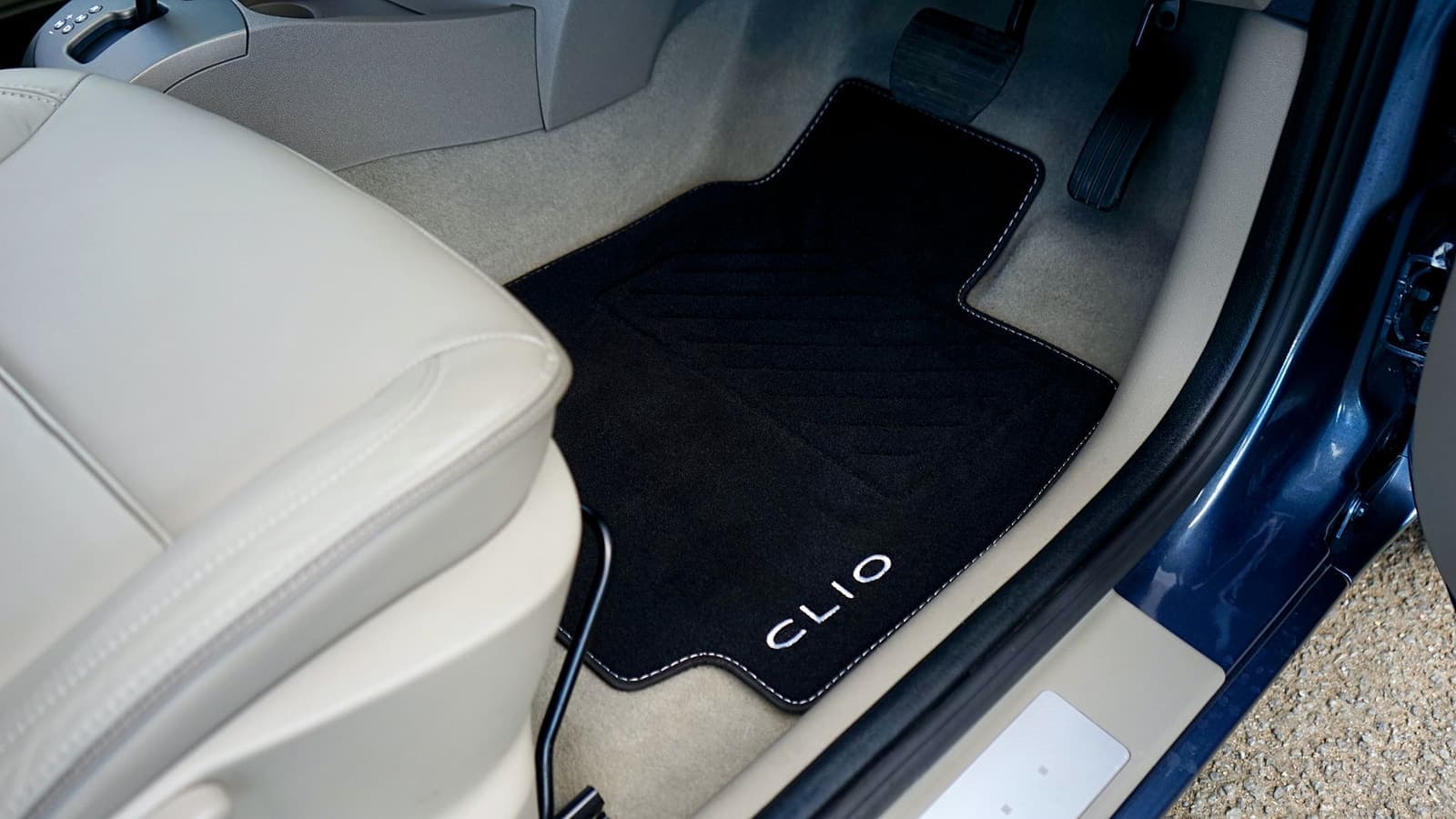
Dissolve the salt, agitate it loose, then extract the liquid before it dries - and the extraction is the step that decides the outcome. A purpose-built salt remover like Dr. Beasley's Salt Chisel is the right chemistry (it is the only one whose maker says the word salt), but a wet-capable vacuum is what actually removes the salt from the carpet. Blotting a dissolved stain and letting it dry puts the crust straight back.
Nearly everything written about this problem treats it as a stain-removal problem. It is not. It is a solubility and removal problem, and getting that distinction right is the difference between a clean footwell and a slightly rearranged white patch.
What the white crust actually is
Road de-icers are chloride salts - sodium chloride, and increasingly magnesium and calcium chloride, which work at lower temperatures. They get onto your boots as a wet brine and onto your carpet as a puddle.
Then the water evaporates and the salt does not. It recrystallizes in and around the carpet fibers, which is why the mark appears as the footwell dries rather than when it gets wet, and why it reappears after you clean it if you did not actually remove the salt.
Three consequences follow, and they are the whole method:
- It is not a pigment, so there is nothing to bleach or lift. Detergents and enzymes work on organic staining - coffee, food, pet messes. A chloride crystal is indifferent to them.
- It is highly water-soluble, so dissolving it is easy. That is the good news, and it is why plain warm water does most of the work.
- Dissolving it without removing it changes nothing. The salt is still in the carpet; it is just wet. As it dries it crystallizes again, often spreading slightly wider than before. This is the step everyone skips.
Which also explains the single most common complaint about every product in this category: "it came back". It did not come back. It never left.
The method, in order
- Vacuum dry first. Get the loose grit and crystals out before you add any liquid. Whatever you dissolve, you then have to remove - so start with less of it.
- Pull the mats out and do them separately. A rubber or TPE mat can be rinsed with a hose and wiped, which takes two minutes and removes most of the total salt in the car. The carpet underneath is the only part that needs a method.
- Wet the area and let it dwell. Warm water, or a salt-specific remover where the crust is heavy. Give it a few minutes. You are waiting for crystals to go into solution, and that takes time rather than force.
- Agitate with a stiff brush. This is what gets solution down into the pile instead of sitting on top of it. Chemical Guys states it plainly on its own kit: the brush "provides the agitation that activates" the cleaner.
- Extract while it is still wet. A wet-capable vacuum, pass after pass, until what comes up is clear. This is the step that removes the salt from the vehicle.
- Rinse and extract again if the crust was heavy. Plain water, then extract. Residual salt is residual stain.
- Dry it properly. Doors open on a dry day, or a fan, or the heater on fresh air rather than recirculate. A damp carpet in a cold car is how you trade a salt problem for a condensation problem - see the anti-fog page for what that does to your glass.
Do notscrub a dry salt crust
Dry crystals under a stiff brush are an abrasive being worked into carpet fibers and into whatever backing is underneath. Wet it, let it dissolve, then agitate. The order is not optional, and it is the reason some footwells end up fluffy and discolored after cleaning.
How we judged the products
- Does the maker name salt? It is a startlingly effective filter. Of everything we read in this category, one product's listing is about sodium-based stains and the rest are about coffee, soda, wine and pets.
- Does it cover a step, and which one? We picked to cover the three steps - dissolve, agitate, extract - rather than picking three bottles that all do the first one.
- Is the published method honest? A listing that says the foam should be lifted out with a towel or a hot water extractor is telling you the truth about what it can and cannot do on its own.
- Moisture load. Everything you spray into a carpet in winter has to come back out or evaporate in a cold car. A low-moisture formula is a real advantage here in a way it is not in July.
The version of this that takes no work at all
Nothing on this page is as effective as not getting salt into the carpet, and there is one purchase that does most of it: a deep-lipped rubber or TPE floor liner that contains the brine instead of letting it soak through.
The economics are not close. A liner costs about what a bottle of salt remover plus an afternoon costs, and it turns an annual cleaning job into a thirty-second rinse. The winter floor mat and liner picks compare them on lip height and fitment, which are the two specs that decide whether brine stays in the tray.
The other half of prevention is the exterior, where salt is doing something worse than staining - it is corroding. The wax and sealant picks cover the paint side, and washing a car in winter covers getting salt off the car without freezing the doors shut.
The short version
Vacuum dry, pull the mats and rinse them outside, wet the carpet and let the salt go into solution, agitate with a stiff brush, then extract with a wet-capable vacuum until it runs clear. Use a salt-specific product where the crust is heavy and a general fabric cleaner for the gray-brown grime that is not salt. Dry the car out afterwards. Then buy a lipped liner so you do not do this again next March.
What to buy, and what to skip
We haven't tested these
No lab, no borrowed units, no free samples. What we did do: pull every published spec into one table and work out what the numbers mean on a cold morning. Everything below traces to a published spec sheet, a manual, or a standard we can point you at - and if a figure isn't published, we say so instead of estimating it. The full method is here.
Heads up: we earn a commission if you buy through the links on this page, at no extra cost to you. It never changes a ranking - here is how we pick and how the site is funded.
1. Best for the salt itself
Dr. Beasley's Salt Chisel Salt Stain Remover for Auto Carpet and Upholstery
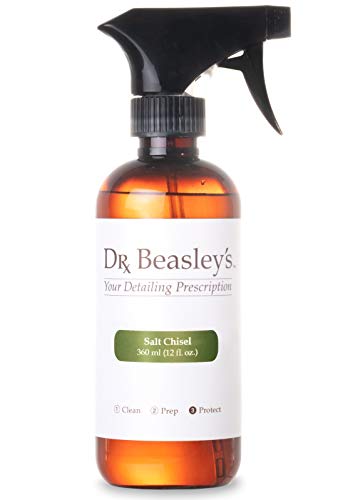
The only product we found whose maker says the word salt. Dr. Beasley's states it is formulated to target salt and break it down at the chemical level, and that it foams on contact with a sodium-based stain - which is also a usable test of whether what you are looking at is salt.
Best for: A white crust that ordinary carpet cleaner has already failed on
What the maker publishes
- Targets
- Sodium-based stains on carpet and upholstery, per the maker
- Visible reaction
- Foams on contact with a salt stain, per the maker
- Claim
- Breaks salt down at the chemical level, per the maker
- Texture
- Stated to restore softness to salted carpet
- Residue
- Stated to leave no trace after cleaning
- Size
- Per the listing
- Dwell time
- Not published by the maker
- Dilution
- Not published by the maker
What works
- It is the only bottle in this category aimed at the actual chemistry on your carpet rather than at coffee and pet stains
- The foaming reaction is genuinely useful feedback - no foam means the stain is not salt and you have the wrong product out
- Restoring the texture matters more than it sounds: dried road salt leaves carpet stiff as well as white
What doesn't
- Two to three times the price of a general carpet cleaner, for a bottle you will use for one season's problem
- Publishes no dwell time and no dilution, so the method is down to you
- It still does not do the hard part - the dissolved salt has to come out of the fibers, and that is extraction, not chemistry
Skip this if: the mark is gray-brown rather than white. That is road grime, and a general fabric cleaner is the cheaper right answer.
2. Best for the agitation step
Chemical Guys Citrus Fabric and Carpet Cleaner Spray with Induro 7 Brush, 16 oz

A low-moisture foaming cleaner packaged with the stiff brush that makes it work. Chemical Guys is explicit that the brush provides the agitation that activates the cleaner, and that the foam is designed to be lifted out with a towel or a hot water extractor - which is the correct method stated on the label.
Best for: The agitation half of the job, in one box
What the maker publishes
- Contents
- 16 oz ready-to-use spray plus Induro 7 heavy duty brush
- Formula
- Low-moisture foaming, detergent-free, per Chemical Guys
- Dilution
- None - pre-diluted
- Method stated
- Spray, agitate with the brush, lift with a towel or hot water extractor
- Surfaces
- Automotive carpet, cloth seats, floor mats
- Salt claim
- None published
- Weight
- 1.39 lb
- Warranty
- 30 days through Amazon
What works
- Bundling the brush is the difference between a cleaner that works and a cleaner that sits on top of the carpet - the maker says so itself
- Low-moisture and detergent-free means less water going into a carpet you then have to dry in a cold car
- The label names extraction as the finishing step, which is the honest instruction most of this category leaves out
What doesn't
- Publishes no salt claim at all - it is a general fabric cleaner, and on a heavy salt crust it is the second tool, not the first
- The brush is stiff enough to be used too hard on an older carpet
- 16 oz does not go far across four floor mats and a cargo area
Skip this if: the problem is a white salt crust rather than general winter grime. Dissolve the salt first, then come back to this.
3. The step that decides the result
CRAFTSMAN CMXEVBE17250 2.5 Gallon 2.5 Peak HP Wet/Dry Shop Vacuum

The unglamorous pick and the one that decides the result. Dissolved salt has to leave the carpet as liquid or it dries back into a crust, and a wet-capable vacuum is the only household tool that lifts it out. 2.5 gallons, 6.7 lb, crevice tool included, three-year warranty.
Best for: The step that actually removes the salt
What the maker publishes
- Capacity
- 2.5 gallons
- Motor
- 2.5 peak HP
- Wet pickup
- Yes - wet and dry
- Weight
- 6.7 lb
- Hose
- 1-1/4 in x 5 ft friction fit
- Included tools
- Crevice tool, utility nozzle, filter bag
- Blower mode
- Yes
- Warranty
- 3-year limited
What works
- Wet pickup is the whole point: a dry vacuum cannot remove dissolved salt, and leaving it to dry puts the stain straight back
- Light enough at 6.7 lb to carry to the car rather than carrying the mats to the garage
- A three-year warranty and a filter bag you can actually buy in five years, which is not true of most cheap car vacuums
What doesn't
- It is a shop vacuum, not an upholstery extractor - it lifts liquid but it does not rinse, so you are doing the rinse by hand
- Needs mains power, so a street parker is working off an extension cord or doing the mats indoors
- By far the most expensive item on this page, and it is the one nobody wants to buy
Skip this if: you already own any wet-capable vacuum. Nothing here needs a second one - use the one you have and spend the money on the chemistry.
4. Skip for salt - wrong chemistry
Chemical Guys Lightning Fast Carpet and Upholstery Stain Extractor, 16 oz

A good organic-stain cleaner that keeps getting bought for the wrong job. Every claim on the listing is about coffee, soda, wine, food and pet messes; salt appears nowhere, and a mineral crust is not what this chemistry is built for.
Best for: Coffee, soda and the mess that is not salt
What the maker publishes
- Size
- 16 fl oz
- Targets
- Coffee, soda, wine, food, pet messes, odors
- Salt claim
- None published
- Method
- Spray, agitate with a brush, blot or vacuum
- Fibers
- Natural and synthetic, per Chemical Guys
- Dilution
- Ready to use
- Dwell time
- Not published by the maker
What works
- Genuinely good at what it claims - the organic stains that also accumulate in a winter footwell
- Safe on natural and synthetic fibers per the maker, so it is not a risk on a cloth seat
- Cheap, and you will use the rest of the bottle on something
What doesn't
- Publishes nothing about salt or mineral deposits, which is the stain this page is about
- Marketed as a stain extractor while being a spray - the extraction is still your vacuum's job
- No published dwell time, so results vary with how patient you are
Skip this if: you are buying it for road salt. It is the wrong chemistry for that stain and the reviews that call it useless on salt are correct.
Questions people actually ask
How do you get salt stains out of car carpet?
Dissolve, agitate, extract. Vacuum dry first, wet the area with warm water or a salt-specific remover and let it dwell, agitate with a stiff brush to get solution into the pile, then extract the liquid with a wet-capable vacuum before it dries. Blotting without extracting leaves the salt in the carpet to recrystallize.
Why do salt stains come back after cleaning?
They did not come back - they never left. Salt is highly water-soluble, so cleaning it dissolves it easily, but if the liquid is not extracted the salt stays in the fibers and recrystallizes as the carpet dries, often over a slightly wider area than before.
Does regular carpet cleaner remove salt stains?
Usually not. Most automotive carpet cleaners are formulated for organic staining - coffee, soda, wine, food, pet messes - and their listings say so. Road salt is a mineral deposit, and detergents and enzymes do not act on a chloride crystal. Only one product we found is formulated to target salt specifically.
Can you use vinegar on salt stains in a car?
Vinegar dissolves salt no better than warm water does, because the salt is already highly water-soluble - the limiting step is extraction, not chemistry. If you use it, extract the liquid out afterwards exactly as you would with any other solution, or you have achieved nothing.
Do you need a wet vacuum to remove salt stains?
Something wet-capable, yes. That is the step that physically removes dissolved salt from the vehicle. A dry vacuum cannot lift liquid, and a towel only blots the surface. If you do not own a wet-capable vacuum, the next best option is repeated rinse-and-blot with clean towels, changed often.
How do you stop salt stains in a car in the first place?
A deep-lipped rubber or TPE floor liner that contains the brine rather than letting it soak into carpet. It costs about what one cleaning session costs and turns the job into a thirty-second rinse.