De-Icers, Washer Fluid & Wipers
The Best Anti-Fog Sprays for Car Glass
Every one of these works better on clean glass than any of them works on dirty glass. That sentence is most of what you need to know about this category.
Heads up: we earn a commission if you buy through the links on this page, at no extra cost to you. It never changes a ranking - here is how we pick and how the site is funded.
Quick picks
The short answer, before the detail. Tap any row to jump to that write-up, or go straight to the listing to check today's price.
| # | Product | Best for | Price |
|---|---|---|---|
| 1 | 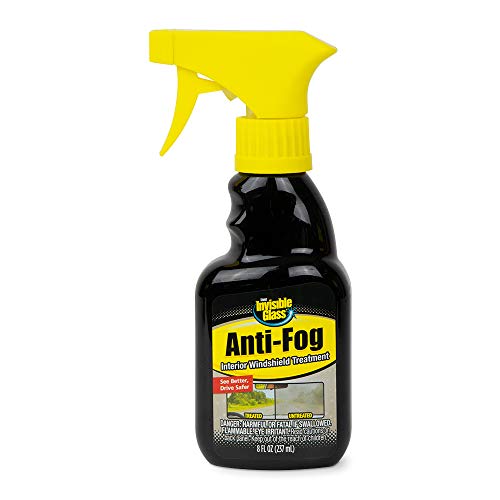 Invisible Glass Anti-FogThe one that specifically claims a streak-free, haze-free finish - which matters more here than anywhere else, because a hazy film on the inside of a windshield is exactly what you were trying to get rid of. | Best overall | $14.99 - Check on Amazon |
| 2 | 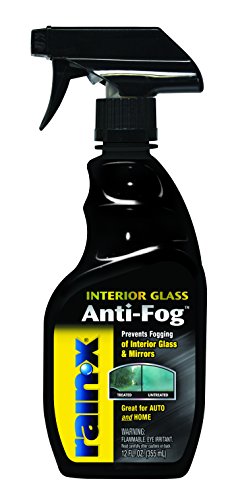 Rain-X Anti-FogThe category default, at a price that makes trying it a non-decision. The listing is almost bare - reduced interior fogging, improved visibility, automotive and marine glass - and there is something to be said for a label that does not oversell. | Best value | $5.97 - Check on Amazon |
| 3 |  E-Cloth Haze EraserA dual-sided microfiber sponge rather than a spray - waffle weave to soak the moisture up, smooth side to polish it clear, water only. It does not prevent fog; it clears it faster than anything in the glovebox, and it is reusable. | Best for fog right now | $19.99 - Check on Amazon |
| 4 | 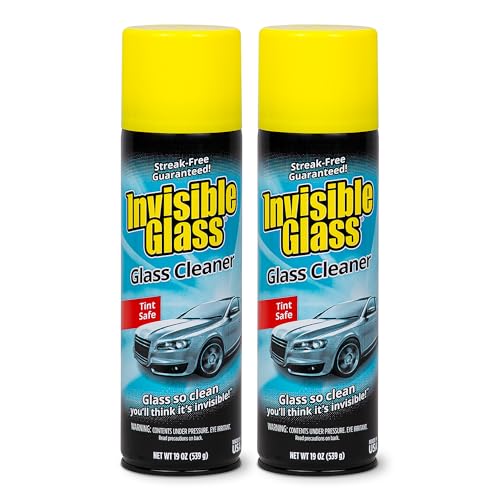 Invisible Glass cleanerNot an anti-fog product at all - a foaming glass cleaner. It is here because every treatment on this page fails on a dirty screen, and the inside of a windshield carries a film of plasticizer haze that ordinary wiping does not remove. | The step before any of it | $10.36 - Check on Amazon |
Interior fog is condensation: warm moist cabin air meeting glass that is colder than the dew point. An anti-fog treatment does not remove the moisture or warm the glass. It changes how the water sits on the surface - spreading it into a thin, even, transparent film instead of thousands of tiny light-scattering droplets.
That is a genuinely useful effect and a narrow one, and it is worth understanding before you spend anything, because the same eight dollars spent on drying out the cabin often does more.
How we judged these
- Does it avoid leaving a haze? This is the category's specific failure. A treatment that films over the inside of a windshield has replaced a fog problem with a permanent one, and at night a hazy screen scatters headlights exactly like fog does.
- Does the label say what it is for? Naming the condition - extreme temperature change, wet weather - beats another round of the word anti-fog.
- Does it publish anything at all? Almost nothing in this category publishes a duration or a coverage figure. Where a maker says nothing, we say so.
- Does it solve now or later? A treatment is prevention. A screen that is fogged at this moment is a different problem with a different tool, and both belong in the car.
What each one publishes
Why the inside of a windshield is the dirtiest glass on the car
People clean the outside of a windshield constantly and the inside almost never. Meanwhile the interior surface collects a film that the exterior never sees: plasticizer haze off the dashboard, which gasses out of warm vinyl and condenses on the coldest surface in the car, plus whatever else lives in a cabin.
That film is oily. Anti-fog treatments do not bond to it - they smear across it. This is the single biggest reason people conclude these products do not work, and the fix is a proper automotive glass cleaner and two clean towels before you open the anti-fog bottle at all.
A foaming cleaner is worth the small premium here specifically because a raked windshield is close to horizontal - a liquid spray runs straight down onto the dashboard, and foam stays where you put it.
The thing none of these fix
A treatment manages how condensation looks. It does nothing about where the water came from, and in a car that is almost always something you can remove:
- Wet floor mats. Snow off your boots evaporates into the cabin all day. Rubber trays that you can tip out are the fix - winter floor mats.
- A blocked cabin or sunroof drain. If the carpet is damp and you have not been walking snow in, water is getting in somewhere.
- Recirculation left on. It keeps the same humid air going round. Fresh air in and the air conditioning running - yes, in winter - dries the cabin far faster than any coating.
- A failed heater core, which fogs the screen with a sweet smell and an oily film. That is a repair, not a spray.
The full method for clearing a fogged screen fast, and the counterintuitive air-conditioning trick, is in defrosting and defogging your windows.
Do notapply anti-fog to the outside of the glass
These are interior products. Ice and frost form on the outside and condensation forms on the inside, and they are different problems with different chemistry. For the outside, a water repellent changes how rain and sleet behave - the repellent picks - and nothing sprayed on either face stops frost forming.
Applying it without creating a haze
- Clean first, properly. Automotive glass cleaner, not household - many contain ammonia, which is unkind to tint and to rubber trim.
- Two towels. One to apply, one dry one to finish. A single damp towel is how streaks happen.
- Work in small sections and buff each one out completely before moving on. Product allowed to dry on the glass is the haze you are trying to avoid.
- Do the side glass and the mirror too. The driver's window is the one you need clear when pulling out of a junction, and nothing wipes it.
The short version
Buy the treatment that specifically claims a haze-free finish, because haze is the failure mode that matters on interior glass. Buy the cheap one instead if you are careful with application - the difference is finish, not effect. Keep a microfiber sponge in the door pocket regardless, because it is the only thing on this page that helps a screen that is fogged right now. And before any of it, clean the glass and get the wet mats out of the car, which between them will do more than the spray will.
The picks, one at a time
We haven't tested these
No lab, no borrowed units, no free samples. What we did do: pull every published spec into one table and work out what the numbers mean on a cold morning. Everything below traces to a published spec sheet, a manual, or a standard we can point you at - and if a figure isn't published, we say so instead of estimating it. The full method is here.
1. Best overall
Invisible Glass 92472 Anti-Fog Interior Windshield Treatment
The one that specifically claims a streak-free, haze-free finish - which matters more here than anywhere else, because a hazy film on the inside of a windshield is exactly what you were trying to get rid of.
Best for: Not leaving a haze
What the maker publishes
- Type
- Interior anti-fog treatment
- Stated effect
- Prevents fogging during extreme temperature changes and wet weather, per the maker
- Finish
- Stated streak-free and haze-free
- Made in
- USA, per the maker
- Duration
- Not published by the maker
What works
- Streak-free is the specific failure mode of this category, and it is the thing this label addresses head on
- Names the condition it is for - extreme temperature changes and wet weather - rather than just saying anti-fog
- Backed by a money-back guarantee, which is easy to state and still rarer than it should be
What doesn't
- No duration published, same as everything else in this category
- More expensive than the default for a benefit that is about finish rather than performance
- Still a coating on glass - it manages the symptom and not the moisture causing it
Skip this if: you are on a budget and can apply carefully. Careful application of the cheap one gets you most of the way.
2. Best value
Rain-X 630046 Interior Glass Anti-Fog, 12 oz
The category default, at a price that makes trying it a non-decision. The listing is almost bare - reduced interior fogging, improved visibility, automotive and marine glass - and there is something to be said for a label that does not oversell.
Best for: The cheapest thing that works
What the maker publishes
- Type
- Interior anti-fog treatment
- Size
- 12 oz
- Surfaces
- Interior glass and mirrors, automotive and marine
- Duration
- Not published by the maker
- Application
- Wipe on interior glass
What works
- Cheapest product in this category and a bottle lasts a long time on the inside of one windshield
- Rated for marine use as well, which is a harsher humidity environment than a car
- No grand claims on the label, which in a category full of them is a point in its favor
What doesn't
- Publishes almost nothing - no duration, no coverage, no mechanism
- Interior treatments smear badly if applied over a dirty or greasy screen, and the inside of a windshield is greasier than people expect
- Reapplication is on guesswork, because nothing tells you how long it should last
Skip this if: your fogging is caused by a wet cabin. Treating the glass does not dry the carpet that is putting the water into the air.
3. Best for fog right now
E-Cloth Car Windshield Haze Eraser Sponge, 2 Pack
A dual-sided microfiber sponge rather than a spray - waffle weave to soak the moisture up, smooth side to polish it clear, water only. It does not prevent fog; it clears it faster than anything in the glovebox, and it is reusable.
Best for: Not using a chemical at all
What the maker publishes
- Type
- Microfiber sponge, dual sided
- Quantity
- 2 pack
- Needs
- Water only, no spray
- Sides
- Waffle weave to absorb, smooth side to finish
- Reusable
- Washable and reusable, per the maker
What works
- Solves the immediate problem - a fogged screen right now - which a preventative treatment does not
- No chemistry to smear, and nothing to run out of at the wrong moment
- Washable, so one purchase covers several winters rather than several bottles
What doesn't
- This is a cure, not a prevention - it will not stop the glass fogging in the first place
- A damp sponge left in a hot car is exactly the thing that starts to smell
- Needs to be genuinely clean or you are polishing grime across the screen
Skip this if: you want the glass to stay clear without intervention. A treatment is the preventative half of this job.
4. The step before any of it
Invisible Glass 91164 Auto Glass Cleaner Foaming Spray, 19 oz
Not an anti-fog product at all - a foaming glass cleaner. It is here because every treatment on this page fails on a dirty screen, and the inside of a windshield carries a film of plasticizer haze that ordinary wiping does not remove.
Best for: The step before any of this
What the maker publishes
- Type
- Foaming automotive glass cleaner
- Size
- 19 oz
- Anti-fog
- No - this is the prep step
- Foaming
- Clings to vertical glass rather than running off
What works
- Foam clings to the inside of a raked windshield instead of running down onto the dash
- Removes the interior film that makes anti-fog treatments streak
- Cheap, and it is the step most people skip
What doesn't
- It does not prevent fogging and does not claim to - buying it as an anti-fog product is a mistake
- Any cleaning benefit is gone the next time somebody exhales on the glass
- 19 oz is a lot of cleaner if the inside of your windshield is the only glass you ever clean
Skip this if: you already own an automotive glass cleaner. Use that and spend the money on the treatment.
Questions people actually ask
Do anti-fog sprays for cars actually work?
They work at what they do, which is making condensation form as a thin even film instead of light-scattering droplets. They do not remove the moisture or warm the glass, so they manage the symptom rather than the cause.
Why does my anti-fog spray leave a haze?
Almost always because the glass was not clean. The inside of a windshield carries an oily plasticizer film off the dashboard that treatments smear across rather than bond to. Clean with an automotive glass cleaner and two towels first.
What is the best anti-fog for car windows?
The one that specifically claims a streak-free and haze-free finish, because a hazy interior screen scatters headlights at night much like fog does. The cheaper treatments work similarly if you apply them carefully.
Can I use anti-fog spray on the outside of the windshield?
No - these are interior products. Condensation forms inside and frost forms outside, and they need different chemistry. A water repellent is the exterior product, and neither stops frost forming.
How do I stop my car windows fogging up in the first place?
Remove the moisture source. Wet floor mats are the usual culprit, followed by blocked cabin drains and leaving recirculation on. Fresh air with the air conditioning running dries a cabin faster than any coating.
Does anti-fog spray last all winter?
No maker in this category publishes a duration, so there is no figure to rely on. Expect to reapply when you notice the fog behaving like droplets again rather than a thin film.