Defrosting and Defogging Your Windows
The counterintuitive answer is to turn the air conditioning on. Here is why that works, and why the inside of your windshield keeps fogging in the first place.
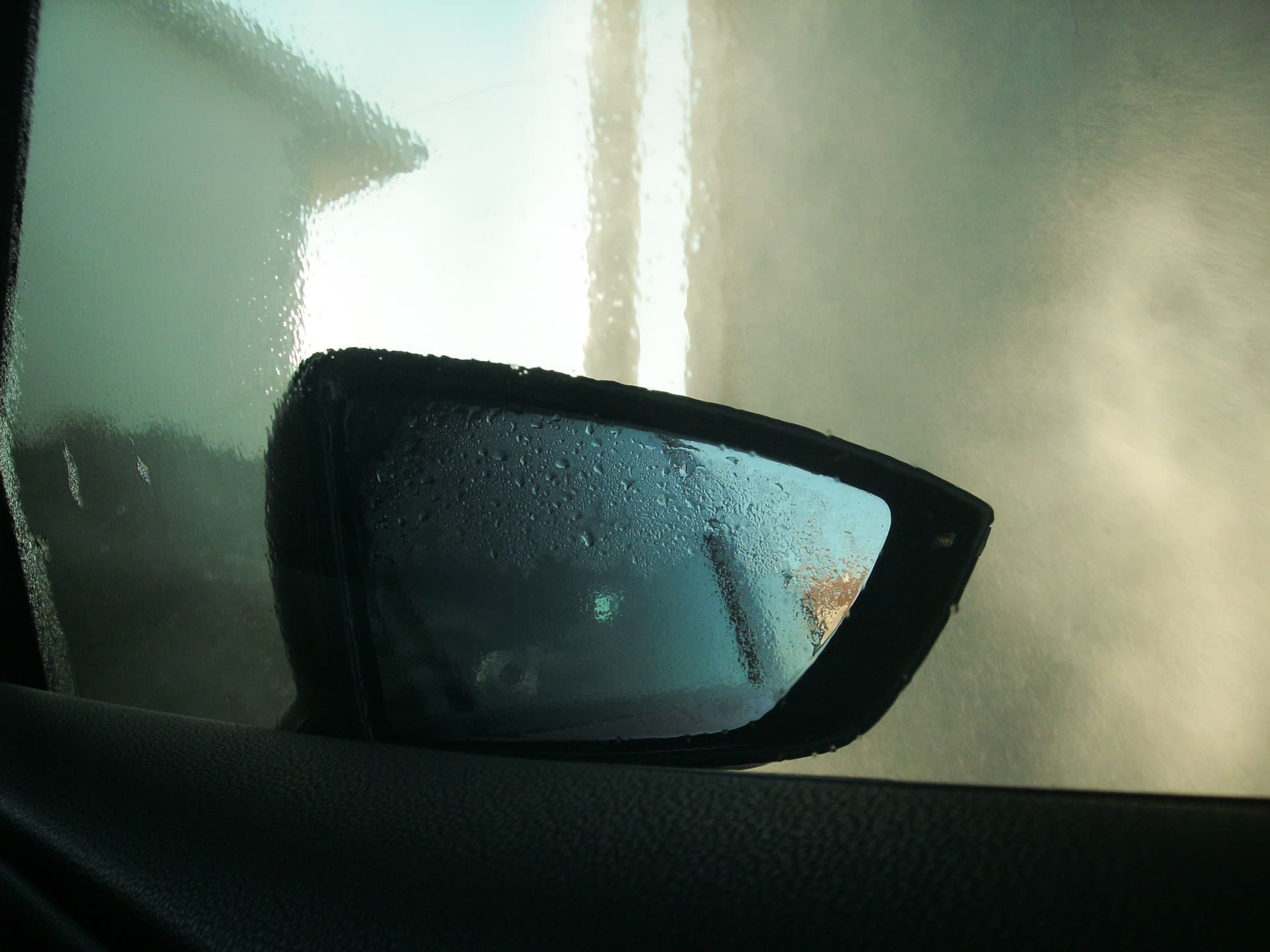
Turn the air conditioning on, set the temperature warm, direct the airflow to the windshield, and turn off air recirculation. The A/C dries the air before it is heated, and dry warm air pulls moisture off the glass far faster than warm humid air can.
Why the air conditioning is the answer
Fog on the inside of a windshield is condensation. Warm humid air inside the car meets cold glass, the air next to the glass cools below its dew point, and the moisture it was carrying comes out as water on the surface.
So there are two ways to clear it: warm the glass so the air next to it stays above the dew point, or dry the air so there is less moisture to deposit. Doing both at once is dramatically faster than either alone.
An air conditioning system is a dehumidifier. Air passing over the cold evaporator drops its moisture as condensate, which drains out under the car. Then the heater core warms that now-dry air on its way to the vents. Warm dry air is the ideal thing to point at a fogged windshield, and almost every car can produce it with two button presses.
Many cars do this automatically when you select the windshield defrost setting, which is why that setting often clears glass faster than turning the heat up manually.
The settings, exactly
- Air conditioning ON. Yes, in winter. It is the dehumidifier.
- Temperature set warm - you want warm dry air, not cold dry air.
- Airflow directed to the windshield and the side window vents.
- Recirculation OFF. This is the one people get wrong. Recirculation loops the same humid cabin air around, which is exactly wrong when you are trying to remove moisture.
- Fan speed high. More air movement, faster clearing.
- Rear defroster on if the rear window is fogged. That works by electrically heating the glass rather than by airflow.
Once the glass is clear you can turn recirculation back on if you want the cabin to warm up faster. If it starts fogging again, turn it back off.
The recirculation trap
Recirculation exists to warm or cool a cabin faster by reusing air that is already at the right temperature. It is genuinely useful in traffic and on a hot day.
In winter it is a fog machine. Every occupant is exhaling water vapor continuously, and wet coats, wet boots and wet floor mats are all evaporating into the same air. With recirculation on, that moisture accumulates with nowhere to go, and the humidity in the cabin climbs until it condenses on the coldest surface - which is the windshield.
Ice on the INSIDE of the windshield
Same problem, colder. The moisture condensed on the glass and then froze there. It looks like a weather problem and it is a cabin problem, which is why no windshield cover helps with it.
To clear it: defroster on full with the A/C on, and a soft cloth once it begins melting. Never a scraper. On a rear window the heating elements are printed on the interior surface and a blade breaks the circuit permanently.
To stop it, find where the water is coming from:
If the fog is on the outside
Less common and it means the opposite: the glass is colder than the humid air outside, usually on a mild damp morning after a cold night, or when you run the A/C hard on a humid day.
The wipers clear it in one pass. If it keeps returning, warm the glass slightly rather than cooling it - which is the reverse of the interior-fog answer.
Two things that genuinely help
- Clean the inside of the glass properly. Interior glass builds up a film from plastics off-gassing, and that film gives condensation something to cling to. A properly cleaned interior windshield fogs measurably less. This is free.
- Put a moisture absorber in the car. A dehumidifier bag on the dashboard or under a seat pulls moisture out of the cabin air overnight. Cheap, and it works on the cause rather than the symptom.
Anti-fog sprays and coatings also exist. They work by changing how water condenses on the surface, so it forms a thin sheet instead of scattering droplets, and the results people report vary considerably. Clean glass and dry air do more.
Do notdrive with a hand-wiped porthole in the fog
A hand-wiped patch smears the film across the glass and makes the whole windshield worse in oncoming headlights, which is exactly when you need it clear. Take the extra minute and clear the whole thing.
The other half of visibility
Clear glass is only half of seeing out in winter. The other half is a washer system that works when a salt truck coats your windshield at speed - which needs fluid with a rated temperature and blades that have not gone hard. And if the outside of the glass is iced rather than fogged, that is a different sequence.
What to buy, and what to skip
We haven't tested these
No lab, no borrowed units, no free samples. What we did do: pull every published spec into one table and work out what the numbers mean on a cold morning. Everything below traces to a published spec sheet, a manual, or a standard we can point you at - and if a figure isn't published, we say so instead of estimating it. The full method is here.
Heads up: we earn a commission if you buy through the links on this page, at no extra cost to you. It never changes a ranking - here is how we pick and how the site is funded.
1. For the outside
Prestone AS253 De-Icer Winter Windshield Washer Fluid, 1 Gallon

Prints a rated melt temperature on the label, which is the whole decision in this category and something most fluids never print. Read the figure off the jug in front of you - published ratings for this line have not been consistent between listings, so the label is the authority, not us.
Best for: The one number that matters
What the maker publishes
- Rated temperature
- Printed on the label - check the jug, reported figures vary between listings
- Volume
- 1 gallon
- Type
- Pre-mixed de-icer washer fluid
- Active ingredient
- See the product label and SDS
- Water-repellent additive
- None claimed
What works
- A published rated temperature is the only spec in this aisle worth comparing, and this one prints it
- Pre-mixed, so there is no dilution mistake to make in a cold garage
- Whatever the jug prints, a rated winter fluid sits well below the point where summer blue fluid turns to slush and splits a reservoir
What doesn't
- A printed rating is not a guarantee at any temperature - if your nights go past what the jug says, this is not your fluid
- A gallon jug is heavy and awkward to pour into a cold engine bay without a funnel
Skip this if: your winters are mild and your existing fluid has never frozen. All-season fluid is cheaper and does the same job above freezing.
2. For what the wipers leave
Bosch Snow Driver Winter Wiper Blade
Bosch publishes a tested temperature: -20F. In a category where almost nobody prints a number, a blade that does is the one worth starting from.
Best for: A published cold rating
What the maker publishes
- Rated temperature
- Tested to perform at -20F, per Bosch
- Construction
- Beam - no joints, hinges or exposed metal brackets
- Spoiler
- Aerodynamic grooved spoiler, resists snow and ice buildup
- Fitting
- Click-On adapter system
- Sizes
- 13 in through 26 in - buy your own size
What works
- A jointless beam has no exposed hinge for ice to pack into and lock solid, which is the whole failure mode of a conventional blade in winter
- -20F is a published, checkable figure rather than the word winter on a package
- Made in the sizes you actually need rather than one universal length
What doesn't
- Beam blades cost more than a conventional blade, every time
- You must look up your own driver and passenger sizes - they are frequently different on the same car
Skip this if: your car is due for a new windshield or your wiper arms have weak springs. New blades will not fix chatter caused by a tired arm.
3. So the outside is already clear
FrostGuard Deluxe Full-Coverage Windshield Cover, XL, 41 x 68 in

The one cover here that prints its dimensions on the listing, and the only one that covers the wipers and the side mirrors as part of the same product. Security panels tuck inside the doors so it cannot be lifted off the glass.
Best for: Almost everyone who parks outside
What the maker publishes
- Size
- 41 x 68 in, published by the maker
- Covers
- Windshield, wiper blades and side mirrors
- Material
- Polyester, per the maker
- Anchoring
- Fit-Fast straps plus security panels that shut in the doors
- Fits
- Described as ideal for SUVs and trucks of most makes
- Warranty
- One year, per the maker
- Rated temperature
- Not published by the maker
What works
- A published measurement is the single most useful thing in this category, and most competitors give you a vehicle list instead
- Wiper and mirror coverage in one product removes the two jobs a plain windshield cover leaves you
- Security panels inside the doors are what stop a cover leaving in the wind or with a passer-by
What doesn't
- At 41 x 68 in it is generous for a compact car - measure your glass before assuming bigger is better
- Polyester holds water, so it wants somewhere to dry rather than going straight into the trunk
- No published cold-temperature rating
Skip this if: you park in a garage. This solves an outdoor problem and nothing else.
Questions people actually ask
What is the fastest way to defog car windows in winter?
Air conditioning on, temperature warm, airflow to the windshield, and recirculation off. The A/C dries the air before the heater warms it, and warm dry air pulls moisture off the glass far faster than warm humid air can.
Why does using the air conditioning help defog windows?
An air conditioning system is a dehumidifier - air passing over the cold evaporator drops its moisture, which drains out under the car. The heater then warms that now-dry air, which is the ideal thing to point at a fogged windshield.
Should recirculation be on or off to clear fog?
Off. Recirculation loops the same humid cabin air around, and every occupant is exhaling water vapor while wet coats and mats evaporate into the same air. Turning it off brings in drier outside air instead.
Why is there ice on the inside of my windshield?
Moisture trapped in the cabin condensed on the cold glass and froze there. The usual causes are wet floor mats, blocked cabin or sunroof drains, or a leaking seal. It is a cabin problem, which is why no exterior cover helps with it.
How do I stop my car windows fogging up in winter?
Clean the inside of the glass properly, keep the cabin dry by taking wet mats out to dry, use a moisture absorber bag, and run the A/C with recirculation off. Clean glass and dry air do more than any anti-fog spray.