Do Windshield Covers Actually Work?
Six different versions of this question show up in search, which tells you people suspect the whole category is a con. It is not. Here is the mechanism and the two real limits.
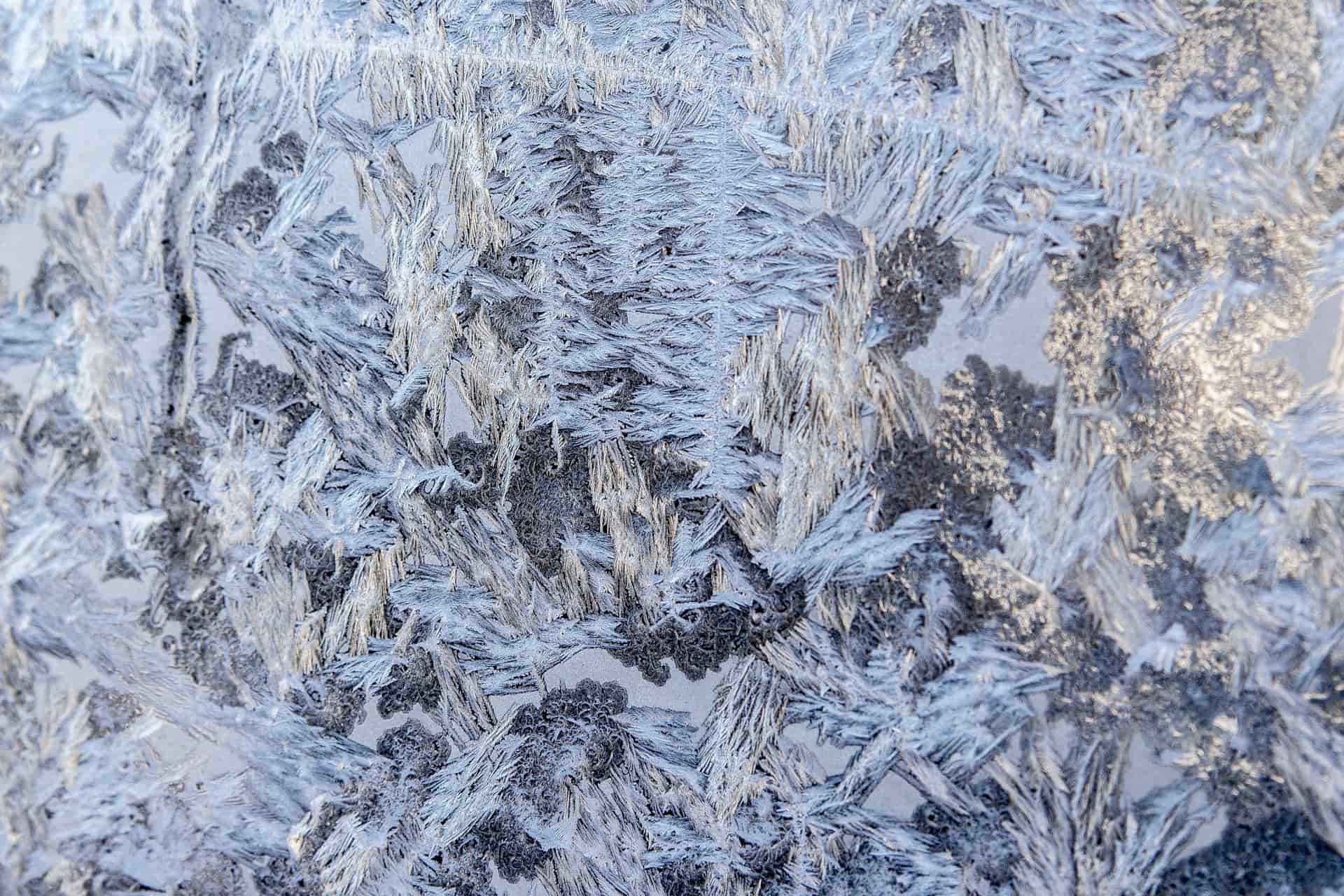
Yes. A windshield cover keeps moisture off the glass, so there is nothing on the windshield that can freeze to it. Lift the cover in the morning and the glass beneath is dry. Snow and frost come away with the cover instead of needing to be scraped off the car.
The mechanism, which is duller than you think
Frost forms when the windshield drops below the dew point of the air around it and below freezing. Moisture in the air condenses onto the cold glass and turns straight to ice. Glass is very good at radiating heat away to a clear night sky, which is why the windshield frosts over when the ground around the car does not.
A cover interrupts that in two ways. It puts a physical barrier between the moisture and the glass, so condensation forms on the cover rather than on the windshield. And it slows the radiative cooling of the glass itself, so the windshield stays slightly warmer than it otherwise would.
The first effect is the one doing the work, and it is why a cover works even when it gets wet. The ice forms on a sheet you can shake out, rather than bonded to the glass you need to see through.
Does it work for snow as well as frost?
Yes, and for snow it is arguably better. Snow that lands on a cover lifts away with the cover in one movement. Snow that lands on bare glass often has a thin layer of ice underneath it, because the glass was warm when the first flakes hit, they melted, and then the meltwater froze.
That underlying ice layer is the reason clearing a snowy windshield is so often slower than it looks. A cover prevents it entirely.
The two situations where a cover genuinely does not help
- Ice forming on the INSIDE of the glass. This is a moisture problem in the cabin, not a weather problem outside. A cover cannot touch it. If you are scraping the inside of your windshield, the cause is water getting into the car - wet floor mats, a blocked cabin drain, a leaking seal - and defrosting and defogging is the page you want.
- Freezing rain and heavy ice storms. A cover still protects the glass, but the cover itself can freeze to the bodywork around the edges, and then you are chipping ice off a wet sheet in the dark. In a genuine ice storm most people find the cover more trouble than it saves.
Why some people say they do not work
- It blew off. Almost always the real complaint. An edge with no overhang lifts in wind, and once an edge lifts the whole thing peels. Buy a cover with margin past the glass and fasten every attachment point.
- The magnets did nothing. Aluminum or composite panels. Test with a fridge magnet first - magnetic vs strap covers covers this in full.
- The wipers were still frozen. The cover did not extend over them. Wiper coverage is a design feature, not a given.
- It was fitted on wet glass. Water already on the windshield freezes under the cover. Fit it on dry glass, or wipe the windshield first.
- It was stolen. A common experience with magnetic covers on street parking, and the reason anti-theft straps exist.
Getting it right
- Fit it on dry glass, at night, before the temperature drops. A cover put on over existing moisture traps it.
- Engage every fastening the cover has. Half-fitted is the failure mode, because you believed it was done.
- Tuck it over or under the wiper arms if the design allows. It anchors the bottom edge where lift starts.
- In the morning, lift it away from the panel rather than dragging it sideways.
- Shake it out and store it somewhere it can dry. A cover folded away wet freezes into a board.
Do notfit a cover over an already-frosted windshield
It traps the ice against the glass rather than preventing it, and now you have to remove a frozen cover before you can start on the frost. If the glass is already frozen tonight, use de-icer, dry the glass, and fit the cover once it is dry.
Is it worth it?
For a car parked outside in the same spot every night, it is the highest-return purchase on this site: ten seconds of effort for five to ten minutes saved, every morning, for four months. The picks are in the cover roundup, and if you would rather not commit to fitting one every night, cover vs de-icer sets out the alternative honestly.
What to buy, and what to skip
We haven't tested these
No lab, no borrowed units, no free samples. What we did do: pull every published spec into one table and work out what the numbers mean on a cold morning. Everything below traces to a published spec sheet, a manual, or a standard we can point you at - and if a figure isn't published, we say so instead of estimating it. The full method is here.
Heads up: we earn a commission if you buy through the links on this page, at no extra cost to you. It never changes a ranking - here is how we pick and how the site is funded.
1. If the answer is yes, buy this
FrostGuard Deluxe Full-Coverage Windshield Cover, XL, 41 x 68 in

The one cover here that prints its dimensions on the listing, and the only one that covers the wipers and the side mirrors as part of the same product. Security panels tuck inside the doors so it cannot be lifted off the glass.
Best for: Almost everyone who parks outside
What the maker publishes
- Size
- 41 x 68 in, published by the maker
- Covers
- Windshield, wiper blades and side mirrors
- Material
- Polyester, per the maker
- Anchoring
- Fit-Fast straps plus security panels that shut in the doors
- Fits
- Described as ideal for SUVs and trucks of most makes
- Warranty
- One year, per the maker
- Rated temperature
- Not published by the maker
What works
- A published measurement is the single most useful thing in this category, and most competitors give you a vehicle list instead
- Wiper and mirror coverage in one product removes the two jobs a plain windshield cover leaves you
- Security panels inside the doors are what stop a cover leaving in the wind or with a passer-by
What doesn't
- At 41 x 68 in it is generous for a compact car - measure your glass before assuming bigger is better
- Polyester holds water, so it wants somewhere to dry rather than going straight into the trunk
- No published cold-temperature rating
Skip this if: you park in a garage. This solves an outdoor problem and nothing else.
2. For street parking
Cat Windshield Snow Cover with Anti-Theft Straps, 78 x 45 in

Wide, weatherproof, and it ships with anti-theft straps. A cover that can be lifted off in two seconds by anybody walking past is a cover you will replace every winter.
Best for: Street parking
What the maker publishes
- Size
- 78 x 45 in
- Fastening
- Anti-theft straps
- Weather rating
- Described as weatherproof by the maker
- Wiper coverage
- Not published by the maker
- Material
- Not published by the maker
What works
- 78 in is genuinely wide, which is the spec that decides whether wind gets under an edge
- Straps beat magnets on any car whose panels are not steel
- The anti-theft angle is not marketing on a street-parked car, it is the reason the cover is still there in March
What doesn't
- Straps are slower to fit than magnets, especially with gloves on in the dark
- No published material or wiper-coverage detail
Skip this if: you park in a private driveway and want the fastest possible fit. Magnets are quicker and theft is not your problem.
3. For the nights you forget
Prestone AS242 Windshield De-Icer, 11 oz Aerosol
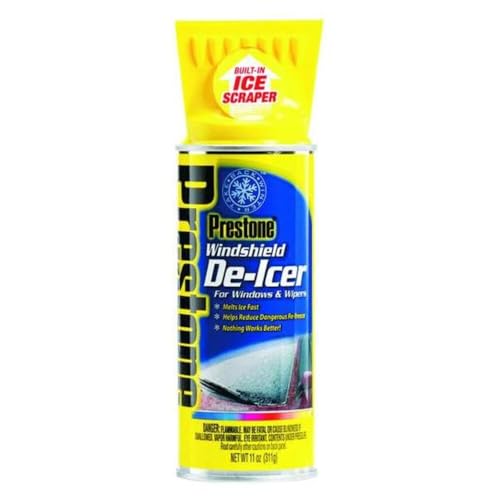
The default de-icer. Small enough to keep in a door pocket, and the cap is a scraper, which means the can and the tool are the same object you are already holding.
Best for: The can that lives in the car
What the maker publishes
- Size
- 11 oz aerosol
- Applicator
- Aerosol spray, scraper cap
- Maker claim
- Melts ice fast and helps reduce refreeze
- Active ingredient
- See the product label and SDS
- Rated melt temperature
- Not published by the maker
What works
- Fits a door pocket, which is where a de-icer has to live to be any use at 7am
- The scraper cap removes the second-tool problem entirely
- Aerosol reaches a wiper cowl and a mirror face better than a trigger bottle does
What doesn't
- 11 oz does not go far on a fully iced windshield - this is a frost can, not a storm can
- Prestone does not publish a rated melt temperature on the listing, so cold-limit claims are not something we can verify for you
Skip this if: you are clearing a whole iced car rather than a patch. Buy the 32 oz trigger bottle and keep this one for the lock and the mirrors.
Questions people actually ask
Do windshield covers work for frost?
Yes. Frost forms when airborne moisture condenses onto glass that has dropped below freezing. A cover puts a barrier between the moisture and the windshield, so the frost forms on the cover instead and lifts away with it.
Do windshield covers work for ice?
Yes, for ice forming on the outside of the glass. They cannot help with ice on the inside of the windshield, which is caused by moisture trapped in the cabin rather than by conditions outside.
Do windshield covers work in heavy snow?
Yes, and arguably better than for frost. Snow lifts off with the cover in one movement, and you avoid the thin ice layer that forms underneath snow when the first flakes melt on warm glass and then refreeze.
How does a windshield cover work?
It keeps moisture off the glass so nothing can freeze to it, and it slows the windshield radiating its heat away to a clear night sky. The first effect does most of the work, which is why a cover still works even when it gets wet itself.
Why did my windshield cover blow off?
Almost always an edge with no overhang. Wind gets under an unsecured corner, the cover balloons and then it peels away regardless of the other fastenings. Buy a cover with real margin past the glass and engage every attachment point.