Cold Starts, Batteries & Jump Starters
How Long to Warm Up Your Car in Winter
About thirty seconds, then drive gently. The ten-minute warm-up is advice from the carburetor era and it is now actively counterproductive.
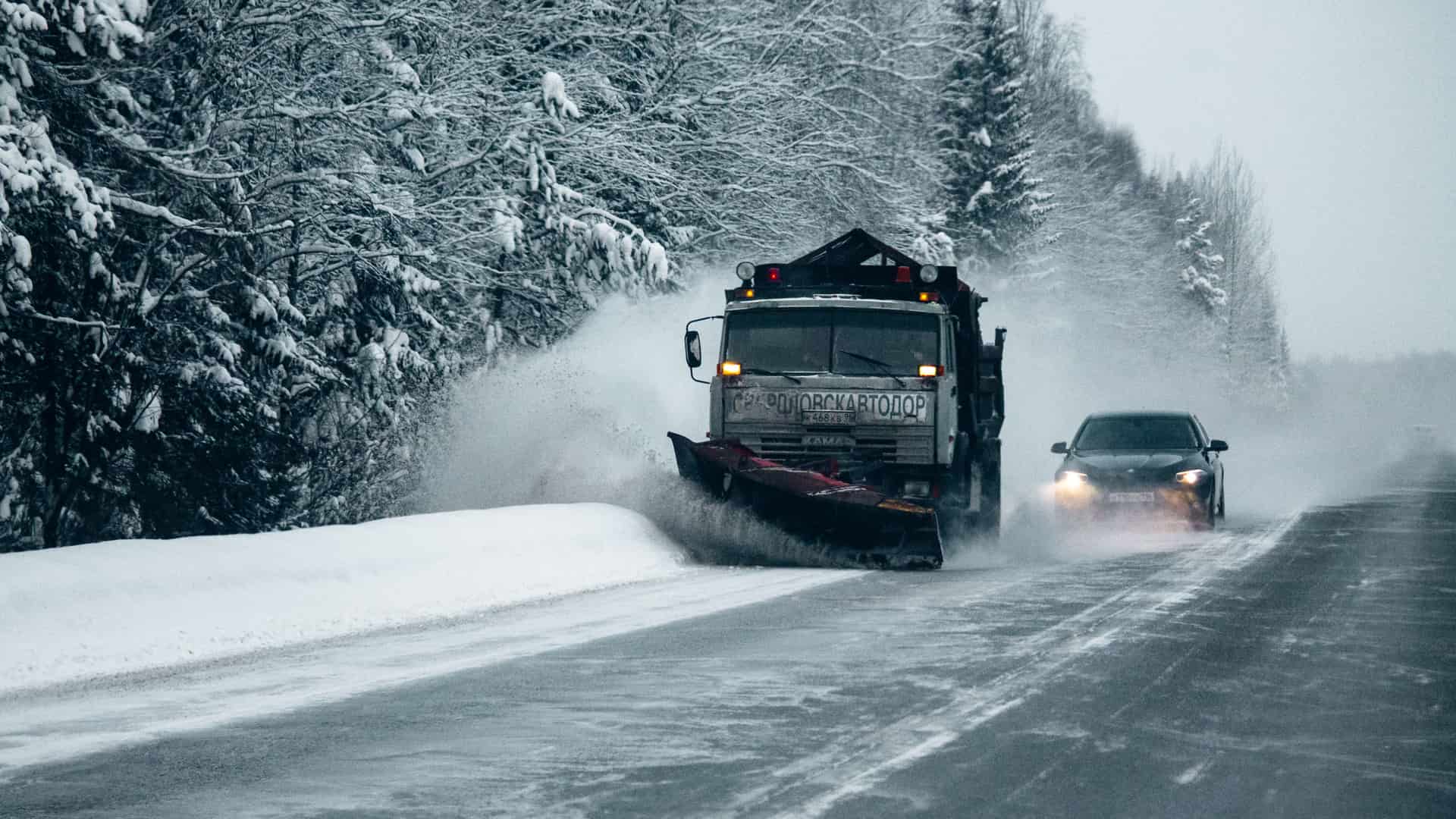
About thirty seconds for a modern gasoline engine, then drive gently until the temperature gauge lifts. Engines warm faster under light load than at idle, so driving gently is both quicker and better for the engine than sitting still with it running.
Where the ten-minute rule came from
It was correct once. Carbureted engines used a mechanical choke to enrich the fuel mixture when cold, and a carburetor cannot adjust that mixture continuously. Until the engine warmed enough for the choke to open, the car genuinely ran badly and would stall if you drove it. Idling until it warmed was the practical answer.
Fuel injection removed the problem entirely. A modern engine monitors coolant temperature, air temperature and oxygen content continuously and adjusts the mixture many times a second. It runs correctly from the moment it starts.
Why driving warms it faster
An idling engine produces very little heat, because it is doing very little work. Under light load it produces considerably more, so the coolant reaches operating temperature much sooner - and the transmission, differentials and wheel bearings warm up too, which idling does nothing for.
There is also a wear argument. Extended idling from cold leaves fuel washing the cylinder walls before the engine is warm enough to vaporize it properly, which dilutes the oil film. That is genuinely worse for the engine than a gentle drive.
What the thirty seconds is for
Oil. When an engine sits overnight, most of the oil drains back to the sump, and the first seconds after starting are the moment of highest wear because the pump is still filling the galleries. Thirty seconds lets oil pressure establish and reach the top of the engine.
Beyond that, extra idling is not doing anything useful for the engine. It is doing something useful for the cabin, which is a different question. It is also not charging the battery, which is why starting a parked car weekly does not do what people think it does.
The genuine exceptions
The reason people idle is visibility, and that is legitimate
Nobody idles for ten minutes because they are worried about the engine. They do it because the windshield is iced and the defroster needs the engine to make heat.
That is a real need, and the answer is not to idle longer - it is to need less ice removed. De-icer plus the defroster clears glass far faster than the defroster alone, and a cover fitted the night before means there is nothing to clear at all.
See how to remove ice from a windshield for the sequence, and the cover picks for the version where you skip the problem.
Do notleave a car idling unattended and unlocked
It is a common theft in cold weather, insurers frequently decline the claim, and many jurisdictions have anti-idling ordinances with fines attached. If you must warm the car up, do it with the car locked using a remote start, or stay with it.
The one that is actually dangerous
Before you run the engine while stationary, check the exhaust pipe is clear of snow. A blocked tailpipe pushes exhaust gas back toward the vehicle, and carbon monoxide has no smell. The first symptom is drowsiness, in a warm car, which is exactly the wrong combination.
This applies doubly if you are stuck in snow and running the engine periodically for heat - clear the pipe every time before you start it. That is covered in how to get unstuck.
What idling costs
An idling engine burns fuel and produces almost no useful work. Ten minutes every morning through a four-month winter is a meaningful amount of fuel spent warming a car more slowly than driving it would have.
It also does not charge the battery meaningfully. Idle speed is low, alternator output at idle is modest, and the defroster, blower, lights and heated seats are all drawing at once. If your battery is weak, idling is not the fix - this is.
What to buy, and what to skip
We haven't tested these
No lab, no borrowed units, no free samples. What we did do: pull every published spec into one table and work out what the numbers mean on a cold morning. Everything below traces to a published spec sheet, a manual, or a standard we can point you at - and if a figure isn't published, we say so instead of estimating it. The full method is here.
Heads up: we earn a commission if you buy through the links on this page, at no extra cost to you. It never changes a ranking - here is how we pick and how the site is funded.
1. Clear glass instead of idling
Prestone AS242 Windshield De-Icer, 11 oz Aerosol
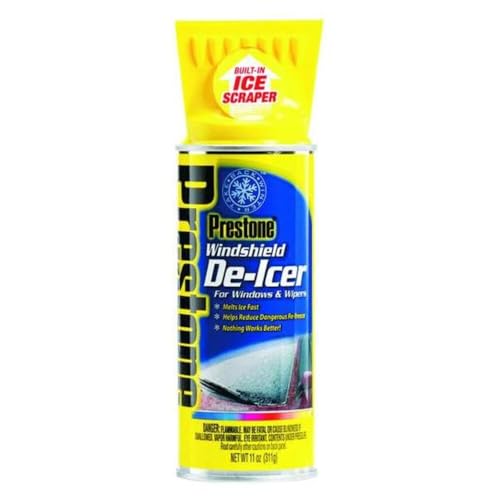
The default de-icer. Small enough to keep in a door pocket, and the cap is a scraper, which means the can and the tool are the same object you are already holding.
Best for: The can that lives in the car
What the maker publishes
- Size
- 11 oz aerosol
- Applicator
- Aerosol spray, scraper cap
- Maker claim
- Melts ice fast and helps reduce refreeze
- Active ingredient
- See the product label and SDS
- Rated melt temperature
- Not published by the maker
What works
- Fits a door pocket, which is where a de-icer has to live to be any use at 7am
- The scraper cap removes the second-tool problem entirely
- Aerosol reaches a wiper cowl and a mirror face better than a trigger bottle does
What doesn't
- 11 oz does not go far on a fully iced windshield - this is a frost can, not a storm can
- Prestone does not publish a rated melt temperature on the listing, so cold-limit claims are not something we can verify for you
Skip this if: you are clearing a whole iced car rather than a patch. Buy the 32 oz trigger bottle and keep this one for the lock and the mirrors.
2. Or skip the ice entirely
FrostGuard Deluxe Full-Coverage Windshield Cover, XL, 41 x 68 in

The one cover here that prints its dimensions on the listing, and the only one that covers the wipers and the side mirrors as part of the same product. Security panels tuck inside the doors so it cannot be lifted off the glass.
Best for: Almost everyone who parks outside
What the maker publishes
- Size
- 41 x 68 in, published by the maker
- Covers
- Windshield, wiper blades and side mirrors
- Material
- Polyester, per the maker
- Anchoring
- Fit-Fast straps plus security panels that shut in the doors
- Fits
- Described as ideal for SUVs and trucks of most makes
- Warranty
- One year, per the maker
- Rated temperature
- Not published by the maker
What works
- A published measurement is the single most useful thing in this category, and most competitors give you a vehicle list instead
- Wiper and mirror coverage in one product removes the two jobs a plain windshield cover leaves you
- Security panels inside the doors are what stop a cover leaving in the wind or with a passer-by
What doesn't
- At 41 x 68 in it is generous for a compact car - measure your glass before assuming bigger is better
- Polyester holds water, so it wants somewhere to dry rather than going straight into the trunk
- No published cold-temperature rating
Skip this if: you park in a garage. This solves an outdoor problem and nothing else.
3. For the battery idling does not charge
Battery Tender Junior 12V, 750mA Charger and Maintainer

The cheapest intervention in this whole section. A battery that is kept topped up does not develop the cold-weather problem in the first place, and a maintainer costs a fraction of a battery.
Best for: A car that sits
What the maker publishes
- Type
- Automatic float charger
- Voltage
- 12V
- Rated output
- 750 mA
- Chemistry support
- Check it covers AGM if that is what your car has
- Requires
- Power where you park
What works
- Prevention rather than replacement, at a small fraction of a battery price
- Removes the specific failure of a car that sits unused for two cold weeks
- Modern units float automatically instead of cooking a full battery
What doesn't
- Needs an outlet where you park, which rules out most street parking
- Not every maintainer handles AGM correctly - check before you plug it into one
Skip this if: you park on the street or drive daily. This solves a storage problem, not a commuting one.
Questions people actually ask
How long should I warm up my car in winter?
About thirty seconds for a modern gasoline engine, then drive gently until the temperature gauge lifts. The thirty seconds is for oil pressure to establish; beyond that, driving warms the engine faster than idling does.
How long should I warm up a diesel in winter?
Longer than a gasoline engine - a few minutes in deep cold - and let the glow plug cycle complete before cranking. Diesels rely on compression heat and run cooler at idle, so follow the owner manual for your specific engine.
How long should I warm up a hybrid in winter?
Just drive. A hybrid starts and stops its engine according to what the system needs, so the decision is not really yours to make. Idling a hybrid mostly means waiting for it to decide to run the engine at all.
Is idling bad for your engine?
Extended idling from cold is worse than a gentle drive. The engine produces little heat at idle, so it stays cold longer, and unvaporized fuel washes the cylinder walls and dilutes the oil film in the meantime.
Does idling charge a car battery?
Barely. Alternator output at idle is modest and in winter the blower, lights, rear defroster and heated seats are all drawing at once. If your battery is weak, idling will not fix it and may not even keep pace.