Washing a Car in Winter
Winter is when a car most needs washing and when washing it is most awkward. The awkwardness is solvable; the salt sitting in the seams is not, if you leave it there until March.
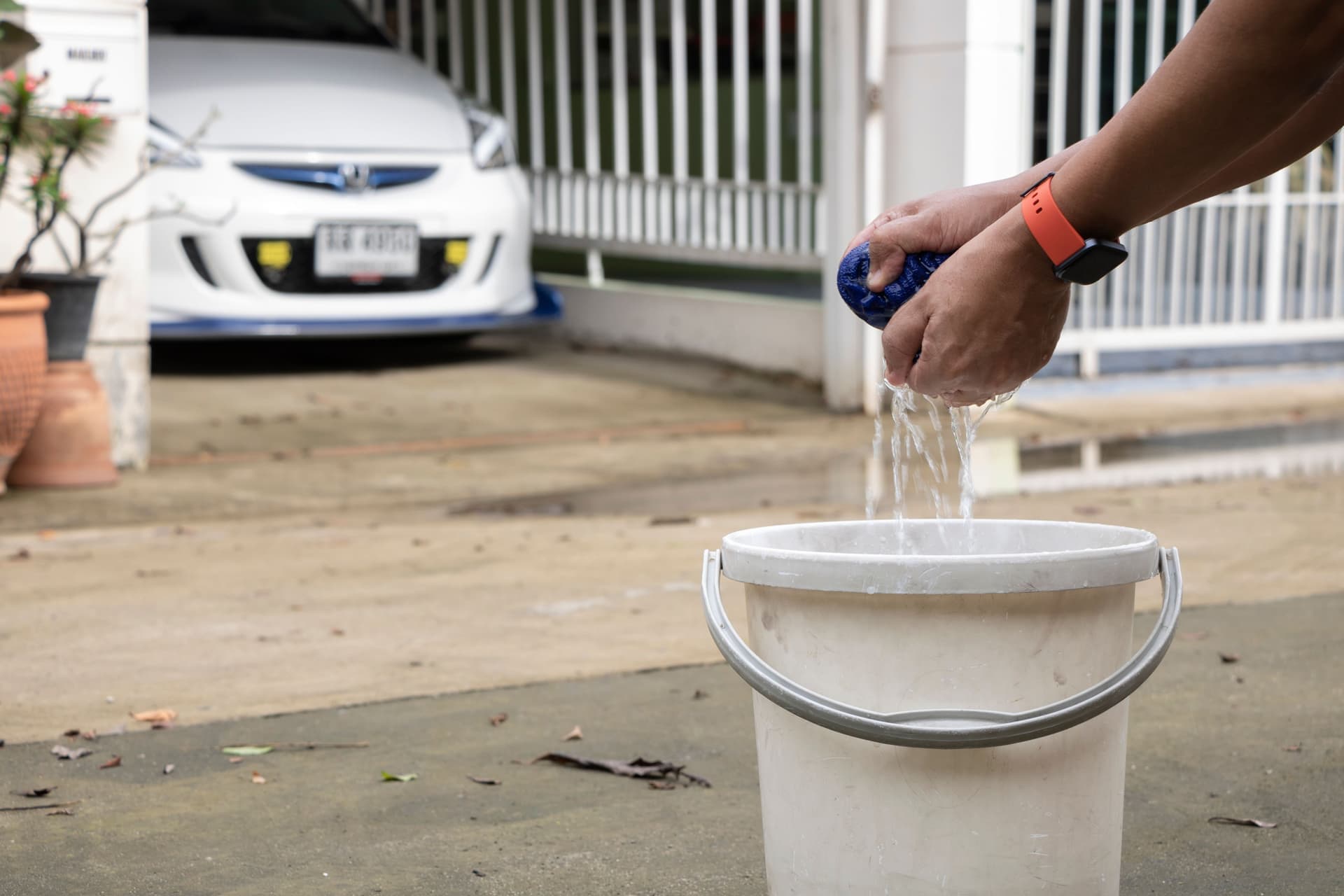
Wash when it is above freezing if you possibly can, and prioritize the underbody, wheel wells and door jambs over the paint. If it will not get above freezing, use a rinseless wash indoors with a bucket instead of a hose, and dry the door seals and jambs before you shut anything.
Why it matters more in winter than in summer
Summer dirt is cosmetic. Winter road treatment is chemically active. Rock salt and the liquid brines used for pre-treatment stay wet longer than plain water, they wick into seams and behind trim, and they keep working on bare metal in any temperature above freezing - including the temperature inside your garage.
The damage does not show up on the panels you can see. It shows up on the underbody, in the wheel arch seams, along the bottom of the doors, and around the fuel filler. Those are also exactly the places a quick wash misses.
Choosing the moment
- Above 40F is comfortable. Water runs off, seals dry, nothing freezes. This is the wash to actually do properly.
- Between freezing and 40F is workable if you are quick and you dry the jambs. Have the towels out before you start.
- Below freezing, do not use a hose. Water freezes in the locks, in the door seals, on the driveway under your feet, and inside the wiper mechanism. This is rinseless-indoors territory or nothing.
Practically, this means watching for the thaw days. One good wash during a mid-winter thaw does more than four rushed ones in the freeze.
The rinseless method
A rinseless wash is a concentrate you add to a bucket of water. Its polymers encapsulate dirt and put a barrier between the grit and the paint, so you can lift the dirt off with a microfiber towel and no pressure rinse. One to two gallons does an entire car.
That is the winter-relevant part. No hose means no water on the ground, no water in the locks, no ice rink on the driveway, and the whole job can happen in a garage that is merely above freezing rather than warm.
- Mix to the stated dilution. These are concentrates and the ratio matters - too weak and the encapsulation is not doing its job.
- Use a grit guard in the bucket. This is not optional. Rinseless washing is only paint-safe if the grit you lift settles and stays at the bottom.
- Work top down, one panel at a time, with many clean towels. Fold to a clean face constantly. A dirty towel is an abrasive pad.
- Dry as you go. A second towel behind the first. In cold air you do not have long before water starts freezing on the panel.
The honest limitation: rinseless is a maintenance method, not a rescue one. A car caked in gritty road film needs a proper pressure rinse first. Dragging a towel across heavy grit puts swirls in the clear coat, and no amount of good product prevents that.
The part that actually matters
If you only have ten minutes and a warm-enough day, spend it on the underbody and the wheel wells rather than the hood. That is where the brine sits, where it is thickest, and where corrosion becomes structural rather than cosmetic.
A rinseless wash cannot reach it. This is the one job that needs a hose, an underbody attachment, or a trip to a touchless automatic wash with an underbody rinse option - which, in a hard winter, is a genuinely sensible use of money even if you wash the paint yourself.
Not freezing your own car shut
The classic winter wash mistake: the car looks great and the driver's door will not open the next morning. Water gets into the rubber seals and the lock cylinders during the wash and freezes there overnight.
- Open every door and dry the jambs and seals. Towel along the rubber itself, not just the painted edge.
- Treat the seals afterwards. A silicone or rubber conditioner on clean dry seals is what stops them bonding to the frame - frozen doors and locks covers the full routine.
- Do not spray water at the lock cylinders. If you have keyed locks, keep water away from them entirely, and keep a lock de-icer somewhere that is not inside the car.
- Drive it for a few minutes afterwards. Airflow clears standing water out of the panel gaps and mirror housings, and a little brake heat dries the discs.
Do notuse hot water on a frozen car
Hot water on cold glass can crack a windshield through thermal shock, and hot water on ice refreezes into a smoother, harder sheet. Lukewarm at most, and if there is ice on the car, deal with the ice first - the correct method is here.
Protection makes the next wash easier
A wax or sealant layer applied before winter is doing real work: it reduces how strongly salt and grime bond to the paint, which means the next wash lifts more with less mechanical effort. That is the whole argument for it in winter - not shine.
A rinseless wash-and-wax is a reasonable way to keep topping that up through the season without a separate step, though it will never lay down as durable a layer as a dedicated sealant applied in October. If you already run a ceramic coating, use the plain rinseless and do not layer wax over the coating.
The winter wash in short
- Watch for a thaw day; do the thorough wash then.
- Underbody and wheel wells first, paint second.
- Below freezing, rinseless in a garage - never a hose.
- Grit guard, clean towels, work top down.
- Dry the jambs and seals, condition the rubber, then drive it briefly.
- Pull the floor mats out while you are at it.
What to buy, and what to skip
We haven't tested these
No lab, no borrowed units, no free samples. What we did do: pull every published spec into one table and work out what the numbers mean on a cold morning. Everything below traces to a published spec sheet, a manual, or a standard we can point you at - and if a figure isn't published, we say so instead of estimating it. The full method is here.
Heads up: we earn a commission if you buy through the links on this page, at no extra cost to you. It never changes a ranking - here is how we pick and how the site is funded.
1. Best rinseless wash
Optimum No Rinse Wash and Shine, 32 oz
The product that makes winter washing possible at all. A bucket and one to two gallons of water, no hose - which means you can do it in a heated garage instead of creating an ice rink on the driveway.
Best for: Washing a car in freezing weather
What the maker publishes
- Type
- Rinseless wash concentrate
- Water needed
- A bucket and 1-2 gallons, per the maker
- Method
- Bucket plus microfiber towels, no hose or rinse step
- How it works
- Polymers encapsulate dirt and create a barrier between grit and the finish
- Waterless dilution
- 8 oz per gallon, per the maker
What works
- No hose means no water freezing in the door seals, the locks or on the ground under your feet - which is the real reason people stop washing in winter
- Removing road salt is the whole point: salt left on paint and in the seams is what does long-term damage
- The encapsulating polymers are the mechanism that makes washing without a pressure rinse defensible rather than reckless
What doesn't
- Technique-dependent. Rinseless washing on a genuinely filthy, gritty car needs many clean towels and patience, or you are dragging grit across the paint
- Does not replace an underbody rinse, which is where road salt does the most damage and which this cannot reach
- A concentrate, so you have to measure rather than pour
Skip this if: the car is caked in gritty road film. Get it to a warm-water pressure wash first; rinseless is for maintenance, not for rescue.
2. Best starting point
Optimum No Rinse Wash Kit with Grit Guard and Big Red Sponge
The concentrate plus a grit guard and sponge. The grit guard is the part that matters: rinseless washing is only paint-safe if the grit you lift stays at the bottom of the bucket.
Best for: Getting the method right first time
What the maker publishes
- Includes
- No Rinse concentrate 32 oz, Big Red Sponge 2.0, Grit Guard bucket insert
- Type
- Rinseless wash kit
- Bucket
- Not included - insert only
- Water needed
- Bucket method
- Rated temperature
- Not published by the maker
What works
- The grit guard is the difference between a rinseless wash that is safe and one that puts swirls in your clear coat
- Buying the method rather than just the bottle is the right call if this is new to you
What doesn't
- You still need to supply the bucket and a stack of clean microfiber towels
- More expensive than the bottle alone, and experienced washers will already own the hardware
Skip this if: you already own a grit guard and good towels. Buy the concentrate on its own.
3. Most flexible dilution
Chemical Guys Rinse-Free Car Wash and Shine, 16 oz
Publishes both a bucket dilution and a spray dilution, so the same bottle covers a full rinseless wash and a quick spot clean of a salted door sill.
Best for: Flexible dilution
What the maker publishes
- Type
- Rinseless wash concentrate
- Bucket dilution
- 1-3 oz into a 5 gallon bucket, per the maker
- Spray dilution
- Into a 32 oz sprayer, per the maker
- Removes
- Dirt, dust, road grime, brake dust, road salt, bird droppings
- Size
- 16 oz
What works
- Two published dilutions means one bottle does the whole car and the quick jobs
- Road salt is named explicitly on the label, which is the winter use case
- The sprayer dilution is genuinely useful for door jambs and sills, where salt collects and rusts
What doesn't
- Same technique dependence as any rinseless wash - clean towels or you are sanding the paint
- 16 oz goes quickly at the bucket dilution
Skip this if: you want the most-documented rinseless method. ONR has a larger body of published guidance behind it.
4. Adds protection
Optimum No Rinse Wash and Wax, 8 oz
Same rinseless method with carnauba wax and UV protection in the mix. In winter a protective layer is doing real work - it is what makes the next lot of salt easier to remove.
Best for: Leaving protection behind
What the maker publishes
- Type
- Rinseless wash with carnauba wax
- Protection
- Carnauba with UV protection, per the maker
- Size
- 8 oz
- Suitable for
- Cars, RVs, trucks, motorcycles
- Water needed
- Bucket method, as ONR
What works
- Washing and protecting in one pass, which in a cold garage matters because every extra step is a step you skip
- A wax layer genuinely reduces how much salt bonds to the paint before the next wash
What doesn't
- 8 oz is a small bottle for a whole winter
- A wash-and-wax will never lay down as durable a layer as a dedicated sealant applied separately
Skip this if: you already run a sealant or ceramic coating. Use plain ONR and do not layer wax over your coating.
Questions people actually ask
Should you wash your car in winter?
Yes - winter is when it most needs it, because road salt and brine stay chemically active on the metal. The trick is choosing the moment: do the thorough wash on a thaw day, and use a rinseless method indoors when it will not get above freezing.
What temperature is too cold to wash a car?
Below freezing, do not use a hose. Water freezes in the locks, the door seals and the wiper mechanism, and turns the ground under your feet into an ice rink. Use a bucket-based rinseless wash in a garage instead.
How do I wash a car without a hose in winter?
Use a rinseless wash concentrate: one to two gallons in a bucket with a grit guard, plus a stack of clean microfiber towels. The polymers encapsulate dirt so it lifts without a pressure rinse. Work top down and dry as you go.
Why does my car door freeze shut after washing?
Water gets into the rubber seals and freezes there overnight, bonding the door to the frame. Open every door after washing, towel the jambs and the seals themselves dry, then treat the rubber with a silicone conditioner.
Is the underbody wash worth it in winter?
It is the single most valuable part of a winter wash. Brine collects in the underbody and wheel wells, where corrosion becomes structural rather than cosmetic, and a rinseless wash cannot reach any of it.
Can I use hot water to wash a frozen car?
No. Hot water on cold glass can crack a windshield through thermal shock, and on ice it refreezes into a harder sheet. Use lukewarm water at most, and clear any ice properly before washing.