Cold Starts, Batteries & Jump Starters
HEET vs Iso-HEET
One bottle is cheaper, the other is broader. The difference is written on the labels, and the harder question is whether a modern car needs either one.
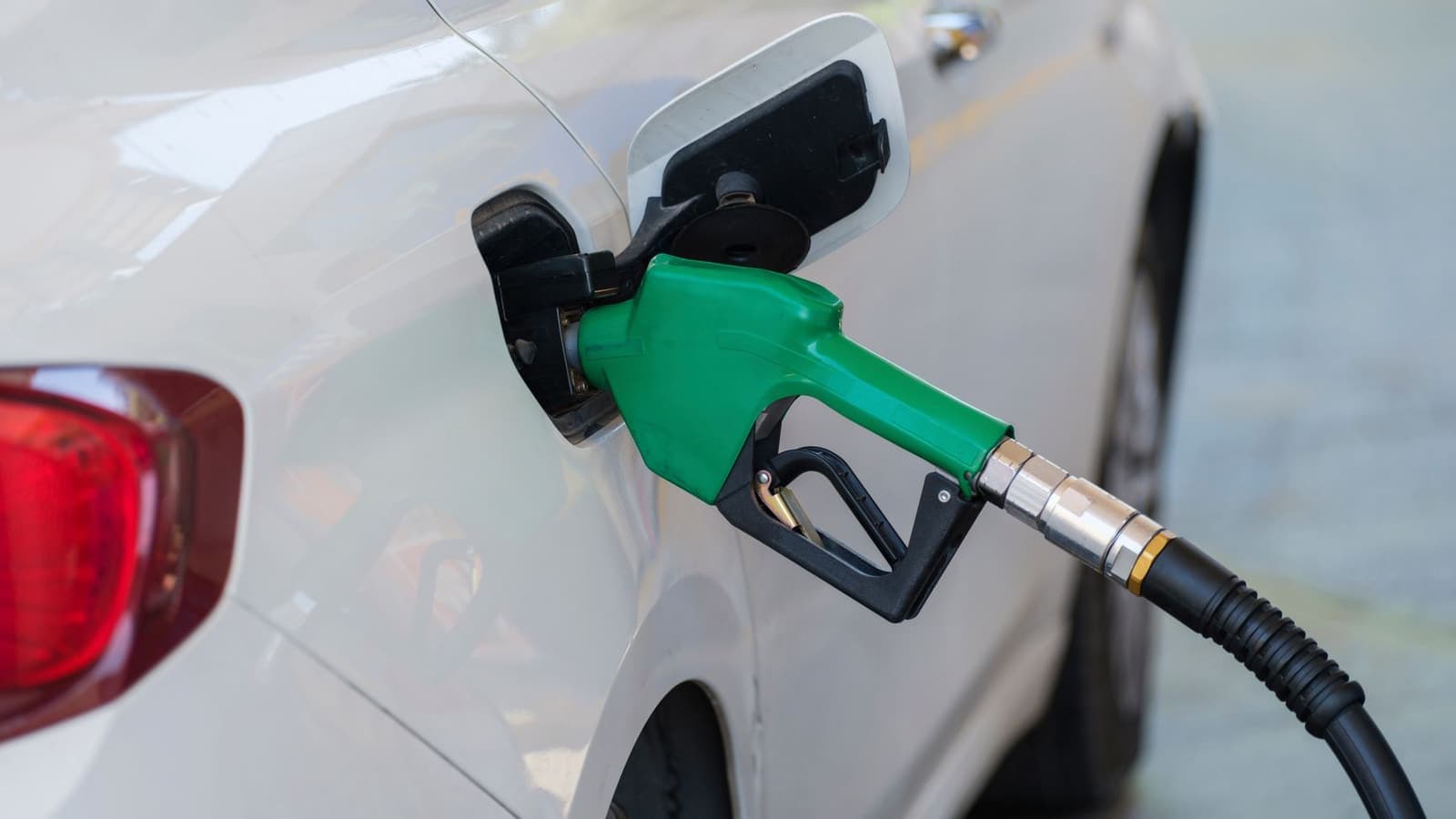
Buy Iso-HEET. It costs about a dollar more than the yellow HEET bottle and Gold Eagle publishes it as isopropanol plus injector cleaner, listed for all 2-cycle and 4-cycle gas and diesel engines, absorbing five times the water of a regular gas dryer. The yellow bottle is listed for 4-cycle gas engines only. One bottle that fits every tank in the garage is worth a dollar.
This is a two-dollar decision that people agonize over, partly because the two bottles sit next to each other with nearly the same name and partly because neither label explains the difference clearly. Here it is, from what Gold Eagle actually publishes.
What these are, and what they are not
Both are water removers sold as gas line antifreeze. The problem they address is water that has got into the fuel system - from condensation in a part-full tank, from a wet fill nozzle, from fuel that arrived with some in it - and then frozen in a fuel line on a cold night, blocking it.
What neither one is: a diesel treatment. Diesel does not have a freezing water problem so much as a wax problem - the paraffin dissolved in it crystallizes on the fuel filter at temperatures a gas car shrugs off. That needs a different chemistry entirely, which is why the diesel anti-gel picks are a separate page and a separate product on this one.
Side by side, from the labels
There is one column of real substance there and it is the engine list. Gold Eagle lists the yellow bottle for "all 4-cycle engines including fuel injected engines" and stops. It lists Iso-HEET for "year round use in all 2-cycle and 4-cycle gas & diesel engines". That is not marketing hierarchy; it is the maker telling you which tanks each bottle belongs in.
How we judged them
- Published scope before published claims. A bottle you can safely use in every engine you own is worth more than a bigger number on one you can only use in some.
- Named ingredients count. Iso-HEET names isopropanol. The yellow bottle names nothing, which means you cannot check it against anything - your fuel system materials, your small engine's warranty, or another product.
- A published dose ceiling is a mark in favor. Iso-HEET publishes a maximum - no more than one 12 oz bottle per 20 gallons. Alcohol in a fuel system is a thing you can overdo, and a maker that prints a ceiling is being more useful than one that says "add as needed".
- Relative claims get discounted. "Five times more water" than what? Gold Eagle does not name the baseline product. We report the claim and attribute it; we do not treat it as a measurement.
Worth flagging as a point against the winner: Gold Eagle's own FAQ gives two different doses for Iso-HEET - no more than one bottle per 20 gallons in one answer, and roughly 1 oz per 1.5 gallons in another, which works out at far more than one bottle for the same tank. When a maker contradicts itself, use the more conservative figure.
The question nobody in this aisle asks: do you need it at all?
This is the honest part, and it matters more than the choice between the two bottles.
Gas line freeze-up was a genuinely common winter failure when fuel tanks were steel, vents were open to atmosphere and nothing in the gasoline itself had any affinity for water. A sealed modern plastic tank with an evaporative emissions system breathes far less, and the pump gasoline sold across most of the United States contains ethanol, which mixes with water rather than letting it pool.
So the realistic case for a bottle of this is narrower than the shelf space suggests:
- A car that habitually runs near empty. Air space is where condensation happens. Keeping the tank above a quarter through the winter is the free version of this whole product category.
- A vehicle or machine that has been sitting. Months of temperature cycling with a part-full tank is the condition that actually accumulates water - and if it is a stored vehicle, the right bottle may be a fuel stabilizer instead.
- Small engines and anything 2-cycle. Snowblowers, generators, outboard motors. This is where Iso-HEET's broader published scope earns its dollar.
- A real symptom. A car that cranks and stumbles or cuts out in the cold and runs normally once warm. That is worth a bottle before it is worth a diagnosis, because the bottle costs two dollars.
Do notpour alcohol-based water remover into a tank by eye
Iso-HEET publishes a ceiling of one 12 oz bottle per 20 gallons for a reason. More alcohol is not more protection, and a heavy dose into a small tank is a way to cause a fuel-system problem rather than prevent one. One bottle per fill, at most.
The verdict
Iso-HEET, for the published scope rather than the five-times claim. It covers the car, the truck, the snowblower and the outboard from one bottle, it names its active ingredient, and it publishes a dose limit. The yellow bottle is a perfectly honest product that is a dollar cheaper and does less, and if the only tank you own is a 4-cycle gas car it is not a mistake.
If the fuel in question is diesel, neither of these is your answer - go to the anti-gel picks, where the specification that predicts a failure is the published cold filter plugging point. And if what you are actually chasing is a car that will not start in the cold, the cause is almost never the fuel: why cars do not start in the cold has the real order of suspects.
What to buy, and what to skip
We haven't tested these
No lab, no borrowed units, no free samples. What we did do: pull every published spec into one table and work out what the numbers mean on a cold morning. Everything below traces to a published spec sheet, a manual, or a standard we can point you at - and if a figure isn't published, we say so instead of estimating it. The full method is here.
Heads up: we earn a commission if you buy through the links on this page, at no extra cost to you. It never changes a ranking - here is how we pick and how the site is funded.
1. Buy this one
Iso-HEET Water Remover and Premium Fuel Line Antifreeze, 12 oz
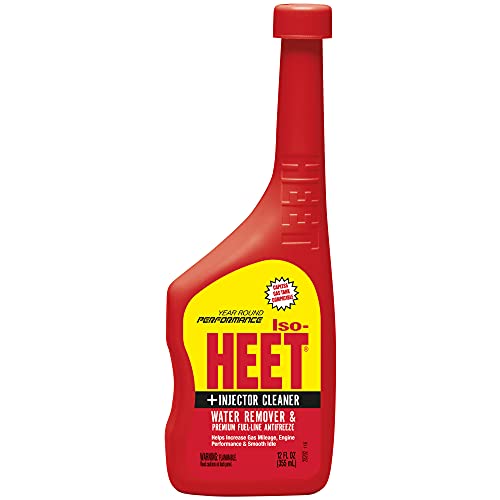
About a dollar more than the yellow bottle and strictly broader on paper: Gold Eagle publishes it as isopropanol plus injector cleaner, lists it for all 2-cycle and 4-cycle gas and diesel engines, and claims five times the water absorption of a regular gas dryer. One bottle covers every tank you own, which is the whole argument.
Best for: Any tank in the garage - gas, diesel or 2-cycle mix
What the maker publishes
- Size
- 12 fl oz
- Part number
- 28202
- Active ingredient
- Isopropanol plus fuel injector cleaner, per Gold Eagle
- Engines listed
- All 2-cycle and 4-cycle gas and diesel, per Gold Eagle
- Water absorption claim
- Five times a regular gas dryer, per Gold Eagle
- Dose ceiling
- No more than one 12 oz bottle per 20 gallons, per Gold Eagle
- Year-round use
- Stated by the maker
- Baseline behind the 5x claim
- Not published by the maker
What works
- The published scope is the reason to buy it: 2-cycle, 4-cycle, gas and diesel from one bottle, so there is no wrong tank in the garage
- Gold Eagle names the active ingredient - isopropanol - which almost nothing else in the fuel-additive aisle does
- Publishes a dose ceiling rather than an encouraging 'add as needed', and over-dosing alcohol into a fuel system is a real way to cause a problem
What doesn't
- The five-times claim is measured against an unnamed 'regular gas dryer', so it is a marketing multiple rather than a figure you can audit
- Gold Eagle's own FAQ gives two different dose figures - one bottle per 20 gallons in one answer, roughly 1 oz per 1.5 gallons in another
- Costs about 40 percent more than the yellow bottle for a job the yellow bottle also claims to do on a gas car
Skip this if: you have one 4-cycle gas car and you are counting pennies. The yellow bottle publishes the same freeze-up and water claims.
2. Only if it is a 4-cycle gas car
HEET Water Remover and Gas Line Antifreeze, 12 oz
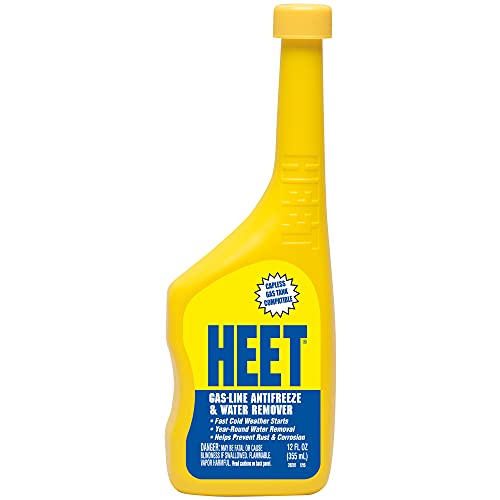
The cheapest bottle in the aisle and the narrowest. Gold Eagle lists it for all 4-cycle engines including fuel injected, and nothing else - no diesel, no 2-cycle, no injector-cleaning claim. For a gas car with water in the tank it does the one job on the label.
Best for: A 4-cycle gas car, at the lowest possible price
What the maker publishes
- Size
- 12 fl oz
- Part number
- 28201
- Engines listed
- All 4-cycle including fuel injected, per Gold Eagle
- Diesel
- Not listed by the maker
- 2-cycle
- Not listed by the maker
- Claims
- Prevents gas-line freeze-up, removes water, prevents rust and corrosion
- Injector cleaning claim
- None published
- Alcohol named on the listing
- Not published by the maker
What works
- The cheapest way to put a water remover in a gas tank, by a wide margin - this is a two-dollar-class bottle
- Three published claims and no padding: freeze-up, water, corrosion
- Gold Eagle names the engine types it is for, which is more than most fuel additives bother to do
What doesn't
- Listed for 4-cycle gas engines only - no diesel and no 2-cycle, so it is the wrong bottle for a mixed garage
- No injector-cleaning claim and no published water-absorption figure, so there is nothing to compare against the premium bottle
- The listing does not name the alcohol it uses, so you cannot check it against your own fuel-system materials
Skip this if: you own anything diesel or 2-cycle. One bottle up the range covers all of it and costs about a dollar more.
3. If the fuel is diesel, you want this instead
Hot Shot's Secret Diesel Winter Anti-Gel Fuel Treatment, 32 oz
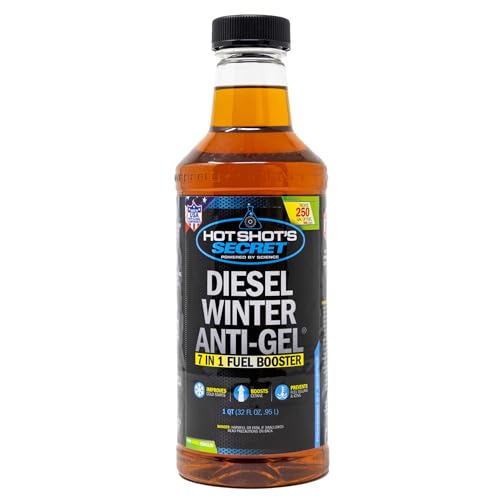
The only bottle here that publishes both a temperature and the dose rate that achieves it - 4 oz per 31 gallons, protection to -65F. Every other label either gives you a number with no dose or a dose with no number.
Best for: Cold that actually gets dangerous
What the maker publishes
- Size
- 32 oz
- Published protection
- -65F, guaranteed, per the maker
- Dose for that figure
- 4 oz per 31 gallons, per the maker
- How it works
- Minimizes wax crystal size so fuel still moves
- Also claims
- Demulsifies water, cleans injectors, improves cold starts
- Minimum storage temp
- 32F, per the maker
What works
- Publishes the dose that produces the published temperature, which is the only way a number on a bottle means anything - a -65F claim at an unstated dose is not a specification
- Demulsifies water rather than emulsifying it, so moisture drops out and can be drained instead of being carried into the injectors
- Names the mechanism - smaller wax crystals - rather than just asserting a result
What doesn't
- Its own label says to store the bottle above 32F, which means the additive cannot live in the truck bed you need it in
- Most expensive per treated gallon of the bottles here
- The guarantee is the maker's own; there is no published third-party test method behind it
Skip this if: you are treating a fleet. The per-gallon cost is the highest here and the cheaper bottles publish real numbers too.
Questions people actually ask
What is the difference between HEET and Iso-HEET?
Published scope and ingredients. Gold Eagle lists the yellow HEET bottle for all 4-cycle engines including fuel injected ones, and nothing else. It lists Iso-HEET as isopropanol plus injector cleaner for year-round use in all 2-cycle and 4-cycle gas and diesel engines, claiming five times the water absorption of a regular gas dryer.
Which is better, HEET or Iso-HEET?
Iso-HEET, for about a dollar more. It is the only one of the two that names its active ingredient, publishes a water-absorption claim, includes injector cleaner and is listed for diesel and 2-cycle engines. One bottle then covers every tank in the garage.
Can you use HEET in a diesel?
Gold Eagle does not list the yellow HEET bottle for diesel - only for 4-cycle engines including fuel injected ones. Iso-HEET is listed for gas and diesel. For diesel in winter the more useful product is an anti-gel additive, because diesel's cold problem is wax crystallizing on the fuel filter, not water freezing in a line.
How much Iso-HEET do you put in a tank?
Gold Eagle publishes a ceiling of no more than one 12 oz bottle per 20 gallons of fuel. Its own FAQ elsewhere suggests roughly 1 oz per 1.5 gallons, which is a much heavier dose; use the conservative figure. More alcohol is not more protection.
Does a modern car need gas line antifreeze?
Usually not. Sealed plastic tanks with evaporative emissions systems take in far less moist air than old vented steel tanks, and the ethanol in most US pump gasoline mixes with water rather than letting it pool. The cases that still make sense are stored vehicles, small and 2-cycle engines, cars habitually run near empty, and an actual cold-running symptom.
Will gas line antifreeze help my car start in the cold?
Only if water in the fuel line is the actual problem, which is rare on a modern car. A cold no-start is far more often a weak battery meeting thickened oil. Test the battery before buying additives.