The Best Winter Car Covers
A full cover is the right buy for a car that sits and the wrong buy for a car you drive. Here is which is which, and what separates seven covers that all claim the same things.
Heads up: we earn a commission if you buy through the links on this page, at no extra cost to you. It never changes a ranking - here is how we pick and how the site is funded.
Quick picks
The short answer, before the detail. Tap any row to jump to that write-up, or go straight to the listing to check today's price.
| # | Product | Best for | Price |
|---|---|---|---|
| 1 |  Kayme 6 Layers sedanThe one that publishes its construction rather than an adjective. Six named layers, a stated waterproof outer, a cotton inner against the paint, and straps at both ends - which is the combination that decides whether a cover is still on the car in the morning. | Best overall | $74.96 - Check on Amazon |
| 2 |  AltoCover half coverCovers the glass and the roof and nothing else, which is the point: one person can fit it in under a minute, so it still gets used in February. A full cover is a two-person job you stop doing. | Best if you drive daily | $34.49 - Check on Amazon |
| 3 | KaymeNo photo Kayme 6 Layers SUVThe same construction cut for a tall body, sold by size chart rather than by model. SUV covers are the ones most often bought a size too small, because people measure length and forget that height and mirror position also have to work. | Best for large SUVs | Check price on Amazon |
| 4 |  AUQDD 6-layer sedanA widened windproof rope with a lock buckle, which is the part that decides whether a cover is still on the car in the morning. Wind is what destroys covers, not water. | Best for windy parking | $39.91 - Check on Amazon |
| 5 |  MAITUYU 10-layerA soft cotton inner layer is the spec that matters on a cover you will put on and take off a hundred times, because the lining is the only part that ever touches your clear coat. | Best lining | $29.99 - Check on Amazon |
| 6 |  Kayme 6 Layers hatchbackThe short size class, which matters more than it sounds: a sedan cover on a hatchback leaves a loose skirt of fabric that flogs against the paint every time the wind gets up. | Best for small cars | $69.96 - Check on Amazon |
| 7 |  Budge Lite dust coverSingle-layer polypropylene, sold by its own maker for indoor or short-term outdoor storage. It is a dust cover, and a dust cover on a driveway in January is worse than nothing. | Skip this one | $34.54 - Check on Amazon |
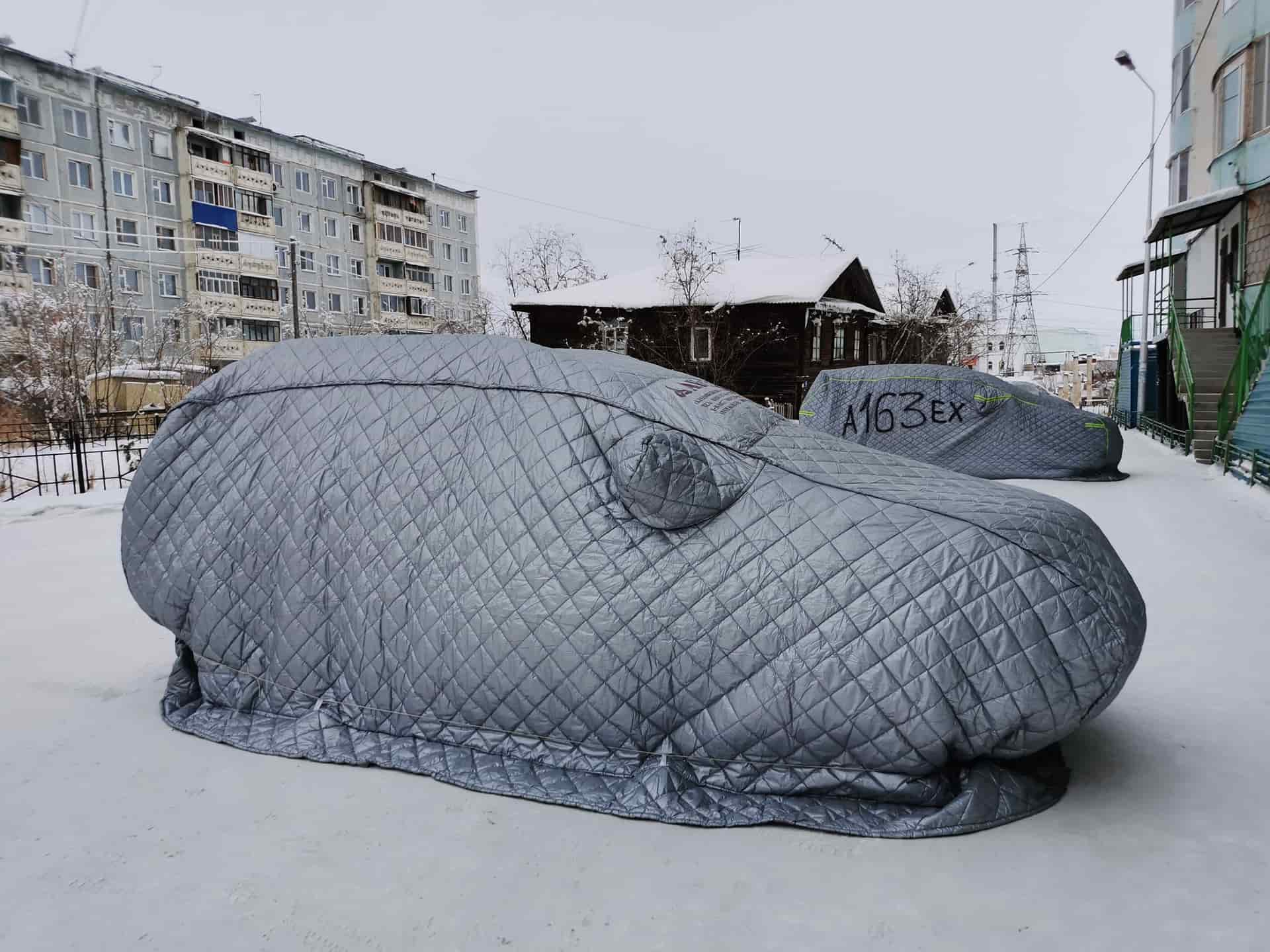
Buy a full car cover if the car sits outside for weeks without moving. Do not buy one if you drive daily - fitting and removing it twice a day takes longer than scraping, and a wet cover has to be folded away and stored somewhere. For daily drivers the right product is a glass-only cover.
"Winter car cover" is the single most-searched term in this whole category, and a lot of the people typing it want something a full cover does not do. So this page starts with who it is for, then ranks the covers on the four things that actually differ between them.
Who a full cover is genuinely for
A full cover protects paint from months of exposure. That is a storage job, and it is a real one:
- A second car, a project car or a convertible parked through the cold months and driven rarely.
- A car with no garage that sits on the same driveway for weeks at a time - somebody working away, a spare vehicle, a car waiting to be sold.
- Anywhere sap, bird mess or road salt spray accumulates faster than you are willing to wash it off.
And who it is not for, stated as plainly:
- Daily drivers. Four minutes fitting at night and four minutes removing in the morning, both while the cover is wet, is worse than the job you were trying to avoid.
- Anybody whose actual problem is iced glass. That is a ten-second job with a windshield cover, covered in our windshield cover roundup, and a full cover is a heavy way to solve it.
- Cars parked where a cover cannot be stored wet. It has to go somewhere while you drive, and a frozen one does not fold.
If you got here wanting the glass clear in the morning rather than the paint protected in April, read the windshield cover picks instead. That is a genuinely different product and it is almost certainly the one you want.
The four things that actually differ
Every listing in this category claims waterproof, windproof, snowproof, dustproof and UV protection. Those words are on all of them, so they separate nothing. These four do.
- The size class. This is the purchase. Covers are sold in length bands and a cover one class too big flaps against the paint all winter, which is the main way covers cause the damage they exist to prevent. Measure your car bumper to bumper and buy to the chart, not to the vehicle name in the title.
- Waterproof against breathable. These pull in opposite directions and no listing admits it. A fully waterproof outer keeps rain out and also keeps trapped moisture in, against your paint, for months. That is why every cover here has to go on a dry car, and why a water-resistant breathable cover is arguably the better winter choice in a wet climate.
- The lining. The inner surface is what touches your clear coat every day for four months. Fleece and cotton are published on some of these; on others the listing simply does not say, and that absence is worth weighing.
- How it ties down. Elastic hems alone do not hold in wind. What holds is straps that pass under the car, ideally with buckles you can work wearing gloves. A cover that lifts becomes a large abrasive sheet moving across your paint.
What each maker actually publishes
The same table we build for every category. The blank-looking cells are the point: they are figures the manufacturer does not publish, not gaps in our research.
Note the two water columns. Most of these say waterproof; the AUQDD is the only one that also says breathable, and the Budge Lite says breathable instead of waterproof. That distinction matters more than it sounds in a freeze-thaw climate: a fully sealed cover put on a wet car traps the moisture against your paint, while a breathable one lets it out.
The rule that matters more than the cover you buy
Only ever fit a cover to a clean, dry car.
Grit trapped between a cover and the paint is an abrasive, and wind gives it movement. That is the mechanism behind almost every "the cover scratched my car" complaint in this category - not the fabric, the dirt underneath it. It is the same physics as a snow brush dragged across a gritty roof, which we go through in will an ice scraper scratch your paint.
Moisture is the second half. A cover over a wet car in freezing weather traps that water against the clear coat and then freezes it there. Wash and dry before it goes on for the season, and if the car gets wet under the cover, take the cover off on the next dry day and let both dry out.
Do notpull a cover that has frozen to the car
A saturated cover freezes to the paint and to the trim, and pulling it takes the ice layer with it. Let it thaw - run the engine and the defroster for a few minutes, or wait for sun - and lift it off when it releases on its own. This is the same rule as a wiper frozen to the glass, for the same reason, and it is covered in stop wipers freezing to the windshield.
Two practical things nobody mentions
- A cover locks you out as effectively as it keeps weather off. If it ices over, you cannot reach the door. Covers with a driver-door zipper exist for exactly this, and on a street-parked car in a cold climate that zipper is close to essential rather than a convenience.
- Wet covers need somewhere to live. This is the reason full covers get abandoned by January. A soaked cover cannot go in the trunk and cannot go in the house. If you have no garage, shed or porch to dry one in, be honest with yourself before buying - the glass-only cover ranked second here exists for people in exactly that position.
On price
Full covers span a wide range, from budget single-layer sheets to fitted multi-layer covers costing many times more. The pattern worth knowing is that the money buys construction and fit rather than weather claims - the claims are identical across the range. Live prices sit inside the buttons on this page and carry the date they were checked; where no verified price exists the button says so and shows no number, because a remembered price is worse than none.
The short version
- Storing a car outside: the Kayme in your size class. It publishes its construction, its lining and its tie-downs, which almost nothing else here does.
- Driving daily: the glass-only half cover, or better, a proper windshield cover. Do not buy a full cover for a car you use.
- Exposed, windy parking: the AUQDD, for the lock-buckle tie-down.
- Paint you care about: the cotton-lined MAITUYU, and put it on a dry car rather than a wet one.
- Never: an indoor cover used outdoors. It is the cheapest listing in the category and it is the one that will hold water against your paint all winter.
Whichever you buy, the rest of the pre-winter pass is in the winter car checklist - and the cover is not a substitute for any of it.
The picks, one at a time
We haven't tested these
No lab, no borrowed units, no free samples. What we did do: pull every published spec into one table and work out what the numbers mean on a cold morning. Everything below traces to a published spec sheet, a manual, or a standard we can point you at - and if a figure isn't published, we say so instead of estimating it. The full method is here.
1. Best overall
Kayme 6 Layers Car Cover, Sedan, 194-208 in
The one that publishes its construction rather than an adjective. Six named layers, a stated waterproof outer, a cotton inner against the paint, and straps at both ends - which is the combination that decides whether a cover is still on the car in the morning.
Best for: Storing a sedan outside
What the maker publishes
- Fits
- Sedan, 194-208 in - check the maker size chart
- Construction
- 6 layers, PE and PEVA outer, described as 100% waterproof
- Lining
- Soft cotton inner, to protect the paint
- Wind
- Windproof straps front and rear
- Access
- Driver door zipper
- Visibility
- 6 reflective strips
- Warranty
- 12 months, per the maker
What works
- Publishes what the layers actually are - PE and PEVA outer, aluminum reflective layer, cotton inner - in a category where most listings just print a number
- The driver door zipper is the difference between a cover you use daily and one you use twice
- Straps at both ends rather than elastic hem alone, which is what stops a cover ballooning in wind
What doesn't
- 194-208 in is one size class of several. Order the wrong one and it either flaps or will not close
- Waterproof and breathable pull against each other; a fully waterproof outer traps whatever moisture is already under it, so it must go on a dry car
- Nothing published about a cold-weather rating, so how the fabric handles being folded at 0F is unknown
Skip this if: you drive the car every day. Fitting and removing a full cover twice daily in winter takes longer than scraping, and you will stop doing it by December.
2. Best if you drive daily
AltoCover Half Car Cover, Windshield and Roof, with Cotton Liner
Covers the glass and the roof and nothing else, which is the point: one person can fit it in under a minute, so it still gets used in February. A full cover is a two-person job you stop doing.
Best for: A car you drive every day
What the maker publishes
- Covers
- Windshield, roof and sunroof
- Lining
- Cotton liner
- Anchoring
- Elastic straps that hook around the wheels
- Extras
- Mirror pockets with reflective strips
- Water
- Described as 100 percent waterproof
- Fits
- Most standard cars, sedans and SUVs - check the size chart
What works
- A one-person fit is the single biggest predictor of whether a cover is still being used in February
- Mirror pockets mean the mirrors are handled by the same product rather than a second purchase
- Wheel-hooked straps anchor to something solid instead of relying on an elastic hem
What doesn't
- It covers the glass and the roof only - the flanks, hood and trunk stay exposed to salt spray
- Hooking straps around the wheels means bending down at both ends in the weather
- Universal sizing, so the fit is a size chart rather than a vehicle match
Skip this if: the car is genuinely being stored. A full cover protects paint that this one leaves out.
3. Best for large SUVs
Kayme 6 Layers SUV Car Cover
The same construction cut for a tall body, sold by size chart rather than by model. SUV covers are the ones most often bought a size too small, because people measure length and forget that height and mirror position also have to work.
Best for: Large SUVs
What the maker publishes
- Fits
- Sold by size chart - measure your vehicle and match it before ordering
- Construction
- 6 layers, waterproof outer, per the maker
- Lining
- Soft inner layer
- Wind
- Straps, per the maker
- Access
- Driver door zipper
- Rated temperature
- Not published by the maker
What works
- Sold against a published size chart, so there is something concrete to measure against rather than a guess
- Tall-body cut, so the cover reaches down the flanks instead of sitting on the roof like a tent
What doesn't
- A cover this size is genuinely heavy and awkward wet, and much worse frozen
- Roof height varies a lot inside the same length class - roof rails and crossbars in particular are what tear covers
- No published cold rating
Skip this if: your SUV wears a roof box or crossbars you do not remove. Covers snag and split on roof hardware, and that is not a warranty claim.
4. Best for windy parking
AUQDD 6-Layer Sedan Car Cover, 178 to 189 in
A widened windproof rope with a lock buckle, which is the part that decides whether a cover is still on the car in the morning. Wind is what destroys covers, not water.
Best for: Windy parking
What the maker publishes
- Fits
- Sedans 178 to 189 in - not SUVs or trucks
- Construction
- 6 layers including aluminum film and spunlace cotton oxford, per the maker
- Wind
- Widened windproof rope with a lock buckle
- Water
- Described as waterproof and breathable
- Storage
- Carry bag included
- Rated temperature
- Not published by the maker
What works
- A lock buckle on the tie-down is a real mechanism rather than an elastic hem that lets go in a gust
- The published length band is narrow enough to actually check against your car
- Breathable construction matters on a cover left on through a thaw, where a sealed cover traps moisture against paint
What doesn't
- Sedans only - the size band explicitly excludes SUVs and trucks
- Six layers is heavy and much heavier wet, which is what stops people using a cover by January
- No published cold rating
Skip this if: you drive an SUV or a truck. The size band is not a suggestion; a cover that does not reach is a cover that leaves.
5. Best lining
MAITUYU 10-Layer Car Cover for Sedans, 179 to 185 in
A soft cotton inner layer is the spec that matters on a cover you will put on and take off a hundred times, because the lining is the only part that ever touches your clear coat.
Best for: The lining against your paint
What the maker publishes
- Fits
- Sedans 179 to 185 in, by size chart
- Construction
- 10 layers of composite material, per the maker
- Lining
- Soft cotton inner layer
- Water
- Described as 100 percent waterproof and snowproof
- Visibility
- Reflective strips
- Rated temperature
- Not published by the maker
What works
- A published soft lining is the difference between a cover that protects paint and one that sands it every time grit gets underneath
- Reflective strips are a genuine safety feature on a car covered at the curbside
- Narrow published length band, so the fit check is quick
What doesn't
- A fully waterproof cover traps moisture underneath if you put it on a wet car, and that is worse than no cover
- Ten layers is bulk - folding it wet in the cold is the job people quietly stop doing
- No published cold rating and no published weight
Skip this if: you would be putting it on a wet or salty car. Rinse and dry first or you are holding the salt against the paint.
6. Best for small cars
Kayme 6 Layers Hatchback Car Cover, up to 177 in
The short size class, which matters more than it sounds: a sedan cover on a hatchback leaves a loose skirt of fabric that flogs against the paint every time the wind gets up.
Best for: Small cars and hatchbacks
What the maker publishes
- Fits
- Hatchback, up to 177 in - check the maker size chart
- Construction
- 6 layers, waterproof outer, per the maker
- Lining
- Cotton inner
- Access
- Driver door zipper
- Wind
- Straps, per the maker
- Rated temperature
- Not published by the maker
What works
- Correctly short, so there is no surplus fabric to flap - the most common cause of cover-related paint marks
- Lighter than the sedan and SUV cuts, which is the difference between using it and not
What doesn't
- Up to 177 in is a ceiling, not a target - a very short car still gets slack
- Same waterproof-versus-breathable tension as the rest of the range
- No published cold rating
Skip this if: your hatchback has a rear spoiler or a roof aerial you cannot remove. Both are snag points and both are how covers tear.
7. Skip this one
Budge Lite Breathable Dustproof Car Cover, Sedans up to 228 in
Single-layer polypropylene, sold by its own maker for indoor or short-term outdoor storage. It is a dust cover, and a dust cover on a driveway in January is worse than nothing.
Best for: A garage, not a driveway
What the maker publishes
- Construction
- Single-layer polypropylene
- Intended use
- Indoor or short-term outdoor storage, per the maker
- Size
- 228 in L x 60 in W x 51 in H
- Anchoring
- Full elastic hem
- Seams
- Reinforced, double-stitched
- Water rating
- None - it is breathable, not waterproof
What works
- Genuinely good at the job it claims: keeping dust off a car that lives in a garage
- Breathable, so it will not trap moisture against paint the way a sealed cover does
- Light enough to fit and fold single-handed
What doesn't
- Not waterproof, and the maker does not claim it is - wet snow soaks straight through onto the paint
- A full elastic hem and nothing else is no defense against winter wind
- Single-layer polypropylene offers no impact padding against hail or falling ice
Skip this if: the car is parked outdoors at all in winter. This is the wrong category of product for that, and buying it for a driveway is the mistake this entry exists to prevent.
Questions people actually ask
Are car covers good for winter?
For a car that sits, yes - they protect paint from months of salt spray, sap and grime. For a car you drive daily, no. Fitting and removing a full cover twice a day, while it is wet, takes longer than clearing the glass would have.
Can a car cover damage your paint in winter?
Only if the car is dirty or wet when you fit it. Grit trapped under a cover is an abrasive and wind gives it movement, and moisture sealed under a waterproof cover stays against the clear coat. Fit covers on a clean, dry car only.
What size winter car cover do I need?
Measure your car bumper to bumper and buy to the maker's size chart rather than to the vehicle name in the title. A cover one class too large flaps against the paint in wind, which is the most common way covers cause damage.
Should a winter car cover be waterproof or breathable?
In a wet, freeze-thaw climate a breathable water-resistant cover is often the better choice. A fully waterproof outer keeps rain out and also traps whatever moisture is already underneath, holding it against your paint for months.
What happens if a car cover freezes to the car?
Let it thaw before you touch it - run the engine and defroster for a few minutes or wait for sun. Pulling a frozen cover takes the ice layer with it, and can lift trim. It is the same rule as a wiper frozen to the glass.
Is a half car cover better than a full one for winter?
For anyone who drives regularly, usually yes. A glass-and-roof cover solves the actual winter problem - iced windows - in a fraction of the time, leaves the door handles clear, and is far less fabric to fold away wet.
Sources
- Amazon listing - Kayme 6 Layers sedan cover
- Amazon search - Kayme 6 Layers SUV covers (sized by chart)
- Amazon listing - Kayme 6 Layers hatchback cover
- Amazon listing - AUQDD 6-layer sedan car cover
- Amazon listing - MAITUYU 10-layer cover with cotton lining
- Amazon listing - half car cover, waterproof all-weather
- Amazon listing - Budge Lite breathable dustproof car cover