De-Icers, Washer Fluid & Wipers
Stop Wipers Freezing to the Windshield
The wiper is what actually stops you driving away, and it is the part people break trying to fix. Free it properly, then stop it happening.
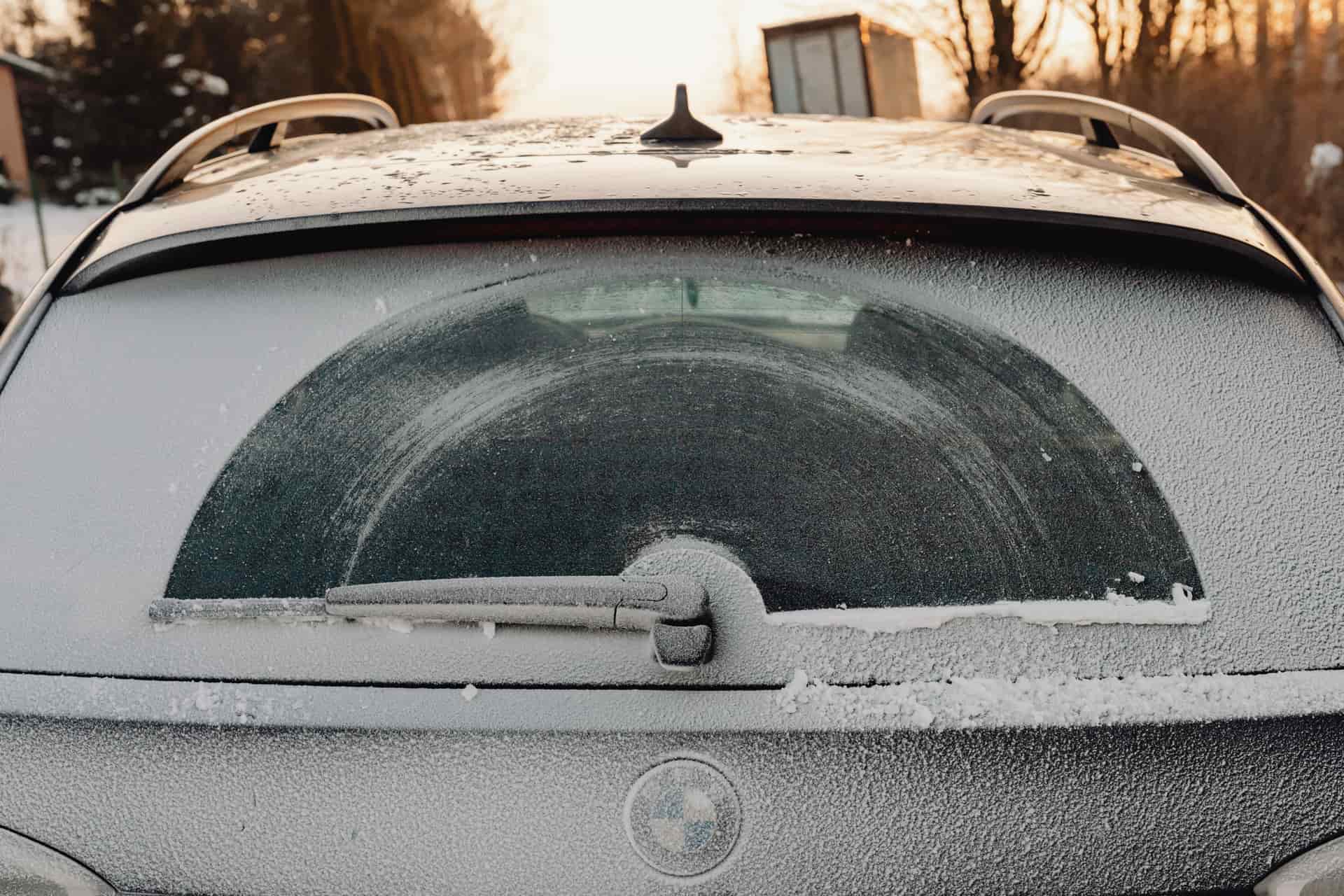
Never pull a frozen wiper and never switch it on. Run the defroster on full and spray de-icer along the blade, then wait a minute and lift gently. To prevent it, use a cover that tucks over the wipers, or lift the arms off the glass, or slip socks over the blades.
Why they bond in the first place
A wiper blade is a soft rubber edge pressed against glass by a spring. That contact line is exactly where water collects: rain runs down the windshield and sits under the blade, snowmelt pools there, and the blade holds it against the glass rather than letting it run off.
When the temperature drops, that trapped film freezes and glues the rubber to the glass along its entire length. The blade is not simply on ice - it is in it.
Conventional framed blades have a second problem stacked on top: slush packs into the joints of the frame and freezes it rigid, so even a freed blade cannot follow the curve of the windshield. That is a construction issue and it is what winter-specific blades are designed around - the blade comparison is here.
Freeing a bonded wiper without breaking it
- Start the engine and set the defroster to full. Warm glass releases the blade from underneath, and that is the gentlest way this ends.
- Spray de-icer along the length of the blade, working the nozzle at the contact line rather than at the middle of the rubber.
- Wait a full minute. Longer than you want to. The blade is bonded along its entire length and the chemistry needs to reach all of it.
- Lift the arm gently, straight away from the glass. If it resists at all, stop and give it another thirty seconds.
- Once free, wipe the blade edge with a cloth to remove grit and refreezing water before you drop it back.
- Check the wipers move freely by hand before you switch them on.
Do notswitch on a wiper that might still be frozen
The motor is strong enough to move the arm and not strong enough to know the blade is stuck. Best case the rubber tears off the frame. Worst case you strip the wiper linkage or blow the fuse, and now you have no wipers at all on a bad day. Ten seconds of checking by hand is the whole precaution.
Four ways to prevent it, ranked
The lifting-the-arms debate
It is free, it works, and it looks slightly odd. The objections are real but small: leaving the arm springs under tension all winter is not ideal for them, and an arm standing upright can be caught by wind and snap back against the glass, which is one of the few ways to actually crack a windshield from the outside.
If you park somewhere sheltered, lift them. If you park somewhere exposed, use socks instead - same effect, nothing standing up in the wind.
Two habits that help
- Do not park with the wipers mid-sweep. Let them return to their rest position at the base of the windshield before you switch off. A blade parked mid-glass has nothing sheltering it and it is also where the ice is thickest.
- Turn the wipers off before you switch off the engine. Many cars return the blades to park automatically, but if the switch is left on and the blades freeze overnight, they will try to move the moment you start the car - which is the failure this whole page is about.
If it keeps happening
Repeated bonding is often a blade problem rather than a weather problem. Hardened, aged rubber holds water at the contact line where a fresh blade sheds it, and a conventional frame gives slush somewhere to pack. If your blades are more than a year old, replacing them fixes more than you expect.
The other half of the answer is keeping water off the glass in the first place, which is the same routine that keeps frost off the windshield - how to prevent frost overnight.
What to buy, and what to skip
We haven't tested these
No lab, no borrowed units, no free samples. What we did do: pull every published spec into one table and work out what the numbers mean on a cold morning. Everything below traces to a published spec sheet, a manual, or a standard we can point you at - and if a figure isn't published, we say so instead of estimating it. The full method is here.
Heads up: we earn a commission if you buy through the links on this page, at no extra cost to you. It never changes a ranking - here is how we pick and how the site is funded.
1. The prevention
FrostGuard Deluxe Full-Coverage Windshield Cover, XL, 41 x 68 in

The one cover here that prints its dimensions on the listing, and the only one that covers the wipers and the side mirrors as part of the same product. Security panels tuck inside the doors so it cannot be lifted off the glass.
Best for: Almost everyone who parks outside
What the maker publishes
- Size
- 41 x 68 in, published by the maker
- Covers
- Windshield, wiper blades and side mirrors
- Material
- Polyester, per the maker
- Anchoring
- Fit-Fast straps plus security panels that shut in the doors
- Fits
- Described as ideal for SUVs and trucks of most makes
- Warranty
- One year, per the maker
- Rated temperature
- Not published by the maker
What works
- A published measurement is the single most useful thing in this category, and most competitors give you a vehicle list instead
- Wiper and mirror coverage in one product removes the two jobs a plain windshield cover leaves you
- Security panels inside the doors are what stop a cover leaving in the wind or with a passer-by
What doesn't
- At 41 x 68 in it is generous for a compact car - measure your glass before assuming bigger is better
- Polyester holds water, so it wants somewhere to dry rather than going straight into the trunk
- No published cold-temperature rating
Skip this if: you park in a garage. This solves an outdoor problem and nothing else.
2. The cure
Prestone AS244 De-Icer for Windshield, Windows and Wipers, 17 oz Aerosol
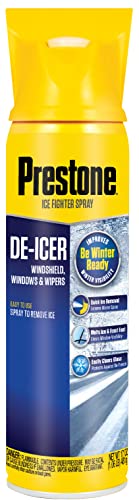
The same formula in a can big enough to do a whole car, and the label explicitly covers wipers - which is where ice actually strands you.
Best for: Whole-car mornings
What the maker publishes
- Size
- 17 oz aerosol
- Rated surfaces
- Windshield, windows and wipers, per the label
- Applicator
- Aerosol
- Active ingredient
- See the product label and SDS
- Rated melt temperature
- Not published by the maker
What works
- 17 oz is enough for the whole glass area rather than one cleared patch
- The label naming wipers matters: freeing a bonded wiper is the job that decides whether you can drive
- Sold in multipacks, which is the right way to buy a consumable you use every cold morning
What doesn't
- Too tall for most door pockets, so it lives in the trunk and is not there when you need it
- No published rated melt temperature
Skip this if: you only ever get light frost. The 11 oz can is cheaper, fits the door, and does that job identically.
3. If the blades are already going
Bosch Snow Driver Winter Wiper Blade
Bosch publishes a tested temperature: -20F. In a category where almost nobody prints a number, a blade that does is the one worth starting from.
Best for: A published cold rating
What the maker publishes
- Rated temperature
- Tested to perform at -20F, per Bosch
- Construction
- Beam - no joints, hinges or exposed metal brackets
- Spoiler
- Aerodynamic grooved spoiler, resists snow and ice buildup
- Fitting
- Click-On adapter system
- Sizes
- 13 in through 26 in - buy your own size
What works
- A jointless beam has no exposed hinge for ice to pack into and lock solid, which is the whole failure mode of a conventional blade in winter
- -20F is a published, checkable figure rather than the word winter on a package
- Made in the sizes you actually need rather than one universal length
What doesn't
- Beam blades cost more than a conventional blade, every time
- You must look up your own driver and passenger sizes - they are frequently different on the same car
Skip this if: your car is due for a new windshield or your wiper arms have weak springs. New blades will not fix chatter caused by a tired arm.
Questions people actually ask
How do I stop my wipers freezing to the windshield overnight?
Keep water off the glass with a cover that tucks over the wipers, or break the contact between blade and glass by lifting the arms or slipping socks over the blades. All three work; the cover is best because it also stops the windshield frosting.
How do I remove ice from windshield wipers?
Run the defroster on full so the glass warms from underneath, spray de-icer along the contact line of the blade, wait a full minute, then lift the arm gently straight away from the glass. If it resists at all, give it another thirty seconds.
Is it bad to lift wipers up in winter?
It works and it is free. The two caveats are that arm springs sit under tension all winter, and an upright arm can be caught by wind and snap back against the glass. If you park somewhere exposed, socks over the blades do the same job more safely.
What happens if you turn on frozen wipers?
The motor moves the arm whether or not the blade is stuck, so the rubber tears off the frame. In worse cases you strip the wiper linkage or blow the fuse, which leaves you with no wipers at all on exactly the day you need them.
Why do my wipers keep freezing to the glass?
Water collects at the contact line between blade and glass and freezes there. Aged, hardened rubber holds that water where a fresh blade sheds it, so if the blades are over a year old, replacing them often fixes the problem on its own.