De-Icers, Washer Fluid & Wipers
Beam vs Winter Wiper Blades
Both designs exist to solve the same failure - a conventional blade whose frame packs with ice until it stops touching the glass. They solve it in opposite ways, and the right one depends on whether your winter is wet or frozen.
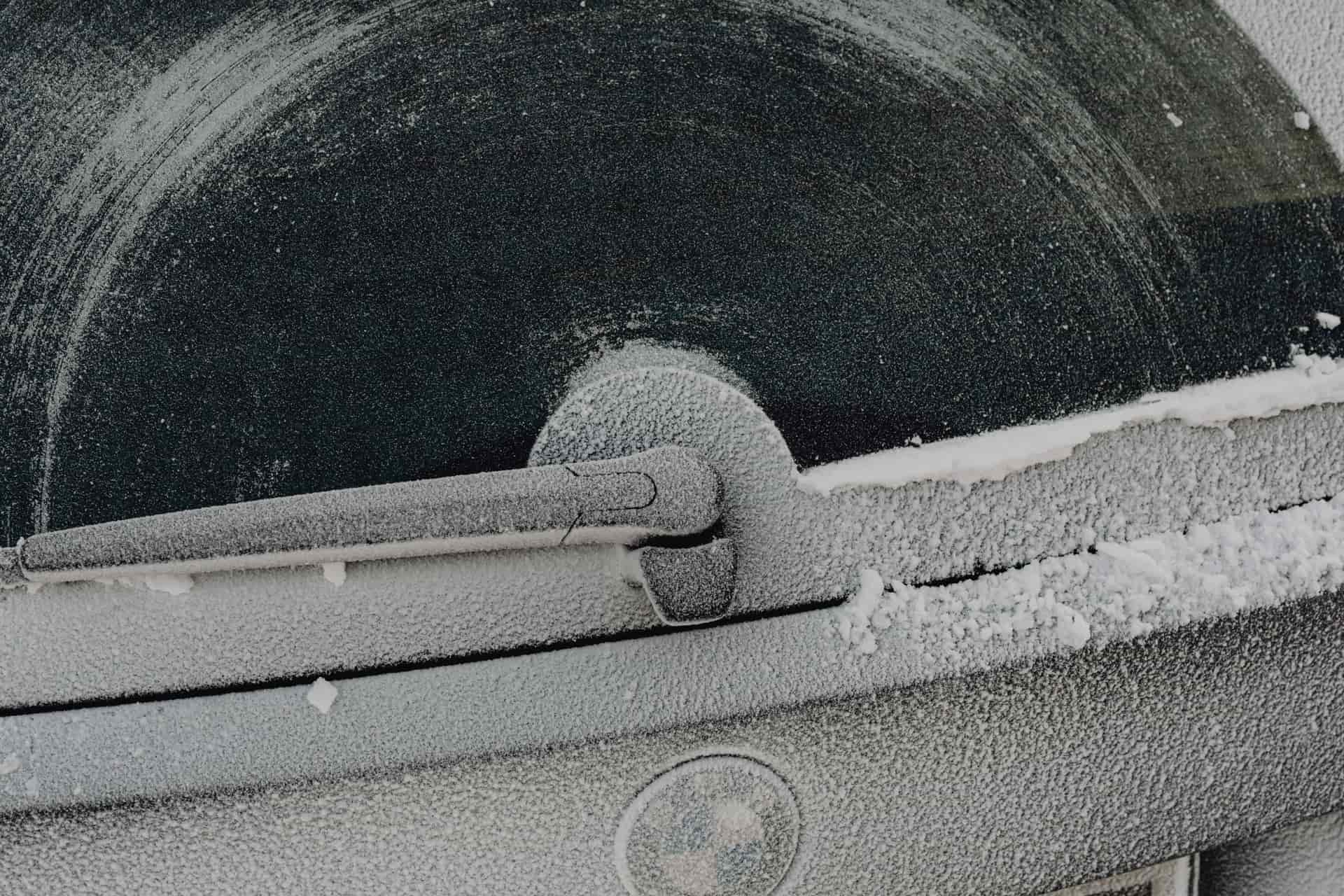
Beam blades are frameless, so there are no joints for slush to pack into and freeze - they are the better year-round blade and the better choice where winter means ice and cold rain. Winter blades wrap a conventional frame in a rubber boot, which sheds heavy wet snow better but has to come off in spring before the boot perishes.
What both designs are fixing
A conventional wiper blade is a metal frame with several hinged claws that distribute the arm's pressure along a rubber strip. In winter, wet snow packs into those hinges and freezes. The frame locks solid, stops flexing to the curve of the glass, and the blade starts skipping - lifting off in the middle or at the ends, leaving arcs of unwiped water in the exact place you look through.
That is the failure both of these designs exist to prevent. They just take opposite routes: one removes the frame, the other covers it.
The two designs side by side
The case for beam
A beam blade is a single curved strip with a tension spring built along its length, so the pressure is spread evenly from end to end rather than concentrated at four or six claw points. There is no external frame at all.
The winter advantage follows directly: there is nowhere for slush to lodge and freeze. The blade that leaves your driveway is the same shape as the blade arriving at work. The premium versions add a protective shell over the wiping edge aimed at the road grit and salt spray a winter windshield carries constantly.
The honest limitation: a beam has a broad flat body, and in genuinely heavy wet snow material can build up on that body and add weight. It handles ice better than a booted blade and deep wet snow slightly worse.
The case for a winter blade
A winter blade is the conventional design with the problem wrapped rather than removed. The boot is a smooth rubber sleeve over the whole frame, so wet snow slides off instead of packing in, and the makers state exactly that - a winter jacket design that resists snow and ice build-up.
Where it genuinely wins is heavy, wet, sticky snow. The heavier construction pushes through a loaded windshield that would lift a lighter blade off the glass, and the smooth boot has no texture for snow to grip.
The costs are real and worth stating: they are noisier at highway speed, they add drag, and the boot is rubber left in the sun. Run one through a hot summer and it will be cracked and hard by the following winter - which is why a winter blade is a seasonal component, not a fit-and-forget one.
Check the arm before you check anything else
Wiper blades are sold by length and by arm connector, and both have to match. Every listing on this page is a single size - 22 inches, chosen so the comparison is like for like - and yours may well be different, often with a different length on each side.
- Measure both blades, or look them up for your exact year and trim. Driver and passenger sides are frequently different lengths.
- Identify the arm connector. Hook arms are most common, but side lock, pin and bayonet fittings all exist, and a beam blade sold for hook arms will not fit a side lock arm - the premium blade here states that restriction explicitly.
- Do the rear wiper separately. It is usually a different fitting entirely and it is the one people forget until it tears.
Do notleave winter blades on through the summer
The rubber boot is the whole product and it is the part that perishes. A summer of UV and heat leaves it cracked and stiff, and a stiff boot stops the frame flexing - which is precisely the failure the boot existed to prevent. If you buy booted blades, plan on swapping them in spring.
What about heated wiper blades?
They exist, and they are a genuine third category - a heating element inside the blade that melts ice off the rubber. Worth knowing about and hard to recommend right now: the consumer market is thin, the systems that do exist cost several times a good conventional blade, and most require wiring into the vehicle rather than clipping on.
For almost everyone the money is better spent on a good blade of either design plus the thing that stops ice reaching the wipers at all - stopping wipers freezing to the windshield covers that, and a windshield cover does it for less than one heated blade.
The short version
Beam for most people. It handles ice better, it works all year, it is quieter, and there is no seasonal swap to remember. Choose a winter blade instead if your winters are heavy wet snow rather than freezing rain, and accept that you are committing to taking them off in spring. Whichever you pick, replace both fronts together, check the arm fitting before ordering, and remember that new blades on a dirty, treated windshield will judder - that is the glass, not the blade. The full product picks are in the winter wiper blade roundup.
What to buy, and what to skip
We haven't tested these
No lab, no borrowed units, no free samples. What we did do: pull every published spec into one table and work out what the numbers mean on a cold morning. Everything below traces to a published spec sheet, a manual, or a standard we can point you at - and if a figure isn't published, we say so instead of estimating it. The full method is here.
Heads up: we earn a commission if you buy through the links on this page, at no extra cost to you. It never changes a ranking - here is how we pick and how the site is funded.
1. Best beam
Bosch 22A ICON Premium Beam Wiper Blade, 22 in

A one-piece beam with a powder-coated shell over a soft rubber core and a tension spring that pulls the blade to the curve of the glass. No external frame means no hinges for slush to pack into and freeze.
Best for: A beam blade that handles winter
What the maker publishes
- Type
- Beam blade, one piece
- Size
- 22 in - sold by size, check your fitment
- Rubber
- ClearMax 365 soft core with a powder-coated shell
- Tensioning
- DynamicFit tension spring arcing across the whole curve
- Arm fitment
- 9x3 mm and 9x4 mm hook arms; not side lock or pin arms
What works
- No exposed frame joints, which is precisely where a conventional blade collects ice and stops conforming to the glass
- Even pressure across the full length rather than at a handful of pressure points
- The protective shell over the wiping edge is aimed at exactly the road grit and salt a winter windshield carries
What doesn't
- Hook arms only - side lock and pin arm fitments are explicitly excluded, so check your arm type first
- More expensive than a conventional blade in the same size
- A beam blade has no rubber boot, so heavy wet snow can still build up on the blade body
Skip this if: your winters involve heavy wet snow rather than ice. A booted winter blade sheds that better.
2. Best winter blade
Bosch 47722 Winter Wiper Blade, 22 in

A conventional frame wrapped in a rubber boot - the classic winter blade. The boot is the whole point: it covers the joints where snow packs, and the maker states it resists snow and ice build-up and fights freeze-up.
Best for: Heavy wet snow
What the maker publishes
- Type
- Framed winter blade with a rubber boot
- Size
- 22 in - sold by size
- Boot
- Winter jacket design resists snow and ice build-up, per the maker
- Stated effect
- Fights freeze-up, streaking and smearing
- Conditions
- Stated as excellent for extreme winter conditions
What works
- The boot seals the frame joints that a bare conventional blade lets ice into, which is the specific failure it exists to prevent
- Heavier construction pushes through wet snow that lifts a lighter blade off the glass
- Bosch prints what it is for rather than selling it as an all-season blade
What doesn't
- A boot adds bulk and drag, and most winter blades are noticeably noisier at highway speed
- Rubber boots perish in summer sun, so this is a blade you swap seasonally rather than run all year
- Most expensive blade on this page in the same size
Skip this if: you leave one set of blades on all year. A boot left through a hot summer will be cracked by the next winter.
3. Beam on a budget
Bosch 22CA Clear Advantage Beam Wiper Blade, 22 in

The same one-piece beam idea from the same maker at roughly half the price of the premium line. It is the cheapest way to get frame-free construction, which is the property that actually matters in freezing slush.
Best for: Beam construction on a budget
What the maker publishes
- Type
- Beam blade, one piece
- Size
- 22 in - sold by size
- Construction
- Frameless beam
- Rubber technology
- Not published by the maker
- Arm fitment
- Check your arm type before ordering
What works
- Frame-free construction at close to conventional-blade money
- Same brand and the same basic geometry as the premium line
- The property that matters in winter - nowhere for ice to pack - is structural, not a coating that wears off
What doesn't
- Does not publish the rubber technology the premium line does, so longevity is less documented
- No rubber boot, same as any beam blade
- Cheaper beams tend to lose tension sooner, which shows up as streaking at the edges of the sweep
Skip this if: you replace blades every two or three years rather than annually. The premium line documents its rubber for a reason.
4. Booted on a budget
PEAK Snow Beast Winter Windshield Wiper Blade, 22 in

The same booted winter design at roughly half what the premium winter blade costs. If you are going to swap blades seasonally anyway, buying the cheaper boot and replacing it more often is a defensible strategy.
Best for: A booted blade at half the price
What the maker publishes
- Type
- Framed winter blade with a boot
- Size
- 22 in - sold by size
- Season
- Winter specific
- Published rubber spec
- Not published by the maker
- Stated temperature range
- Not published by the maker
What works
- Roughly half the price of the premium booted blade, which suits a component you replace each season anyway
- Same structural advantage - the boot covers the joints where ice packs
What doesn't
- Publishes little beyond the winter designation - no rubber spec, no temperature range
- Same summer-perishing problem as any boot, so it is still a seasonal blade
- Cheaper winter blades are the ones most often reported as noisy, and a boot is already the noisy option
Skip this if: noise bothers you. Booted blades are loud and the cheap ones are loudest.
Questions people actually ask
Are beam wiper blades better in winter?
Generally yes. A beam blade has no external frame, so there are no hinges for slush to pack into and freeze - which is the specific failure that makes conventional blades skip in winter. They also work year round.
What is the difference between a winter wiper blade and a regular one?
A winter blade is a conventional framed blade wrapped in a rubber boot. The boot covers the joints where snow packs and freezes, and sheds heavy wet snow. A beam blade removes the frame entirely instead of covering it.
Are winter wiper blades worth it?
If your winters mean heavy wet sticky snow, yes - the boot sheds it and the heavier construction pushes through a loaded windshield. If your winter is mostly ice and cold rain, a beam blade does the same job without the seasonal swap.
Can I leave winter wiper blades on all year?
You should not. The rubber boot is the product, and a summer of heat and UV leaves it cracked and stiff - which stops the frame flexing, the exact failure the boot exists to prevent. Swap them in spring.
Why do my new wiper blades judder?
Usually the glass rather than the blade. A treated or contaminated windshield changes how the rubber grips, and a tired arm spring or the wrong connector will do it too. Clean the glass properly before blaming new blades.
Do I need the same size blade on both sides?
Often not - driver and passenger blades are frequently different lengths, and the rear wiper is usually a different fitting entirely. Measure both or look up your exact year and trim before ordering.