Will an Ice Scraper Scratch Your Paint?
The tool is almost never the problem. Grit is. Here is what actually marks a car in winter, and the four rules that stop it.
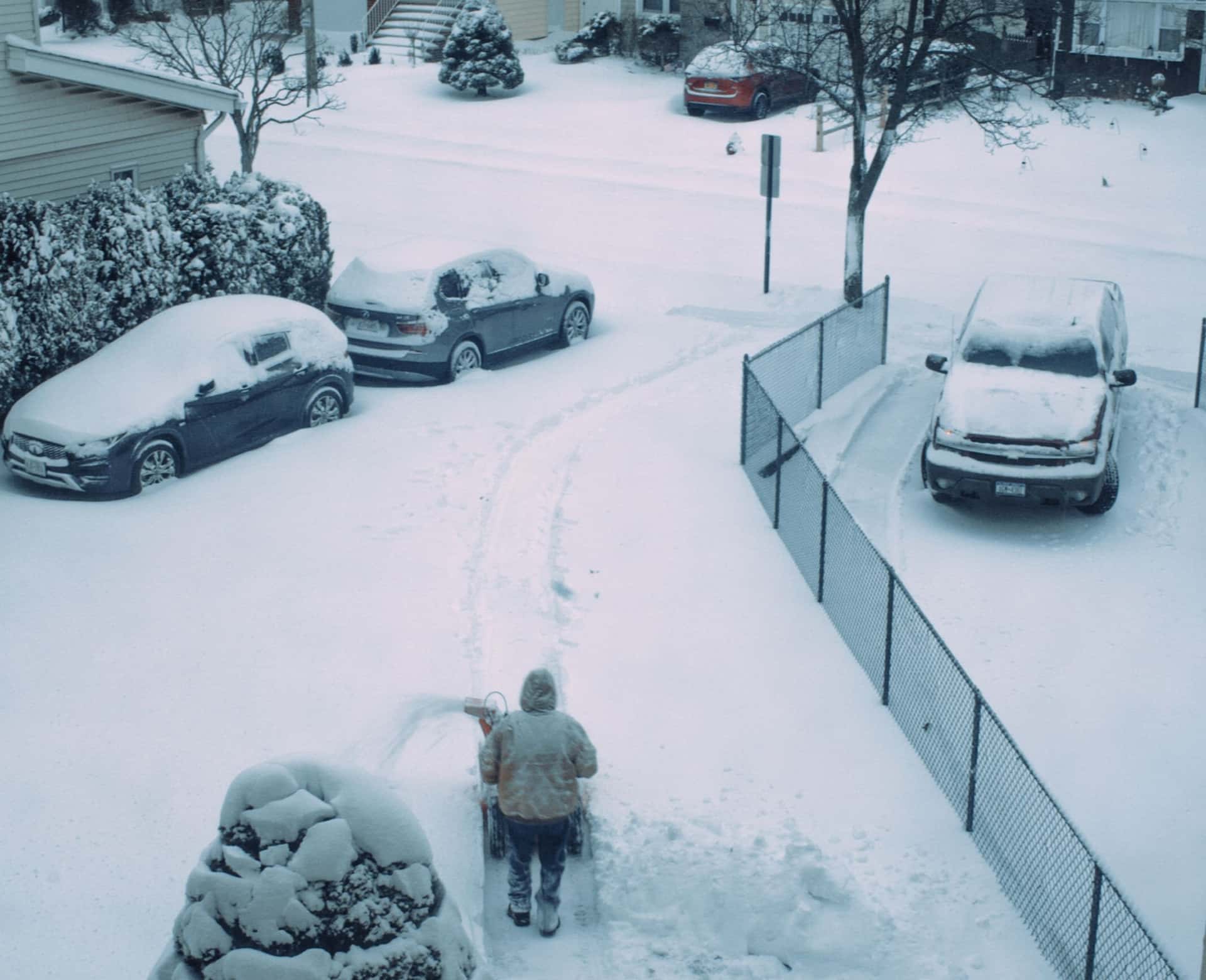
A clean plastic scraper will not scratch automotive glass, because glass is much harder than the plastic. It can absolutely scratch paint, and so can a snow brush - but the thing doing the damage is grit dragged across the clear coat, not the tool itself.
Why glass is safe and paint is not
Automotive glass sits far higher on the hardness scale than the polypropylene a scraper blade is molded from, which is why a clean blade skims across it without leaving a mark. That is also why the glass wins when something harder shows up: a grain of road grit trapped under the blade is harder than the plastic, so the plastic wears and the glass usually does not.
Paint is a different story. Automotive clear coat is a thin polymer layer, and it is softer than a lot of what a car collects on a winter roof - road salt crystals, grit thrown up by a plow, sand from a treated road. Drag any of that sideways across a panel and you get the fine circular marks people call swirl.
The four rules
- Blade on glass only. Never use the scraper end on a painted panel, not even to free a badge or a door handle. Use your hand, warm water, or de-icer.
- Push snow off paint, do not drag it. A brush pushed off the edge of a panel carries the grit away with the snow. A brush dragged along the panel carries the grit along the paint.
- Knock the brush out before you start. If the brush has been sitting in a trunk with road salt and grit, that is what you are about to rub on your car. Two taps against a tire.
- Let chemistry do the bonded ice. The moment you find yourself leaning on a blade, stop. That is the moment damage happens, and it is exactly what de-icer is for.
What actually marks a car in winter
About the no-scratch claims
Several brushes market themselves as no-scratch, and three separate autocomplete variants exist for people searching that exact phrase. It is worth being precise about what the claim can and cannot mean.
Softer bristles genuinely help, because a soft bristle deforms around a grain of grit instead of pressing it into the paint. But no bristle material makes a brush safe when it is loaded with grit and dragged across a panel. Exactly one of the seven products in our scraper roundup publishes its bristle material - split-end polypropylene - so on the other six a no-scratch claim is a claim you cannot check. The technique is the part you control.
Do notscrape the inside of a rear or heated window
The heating elements on a rear window are printed on the interior surface and they are fragile. A scraper breaks the circuit and the whole element stops working. Clear interior ice with the defroster and a soft cloth, never a blade.
If it is already marked
Light swirl in clear coat is polishable, and that is a job for warmer weather - polishing in the cold is unpleasant and most compounds do not work properly below about 50F. Deep scratches you can catch a fingernail in have gone through the clear coat and need touching up rather than polishing.
The genuinely permanent fix is to stop scraping at all. A cover keeps the glass dry so nothing freezes to it, which means the brush never has to touch the car - the cover picks are here.
What to buy, and what to skip
We haven't tested these
No lab, no borrowed units, no free samples. What we did do: pull every published spec into one table and work out what the numbers mean on a cold morning. Everything below traces to a published spec sheet, a manual, or a standard we can point you at - and if a figure isn't published, we say so instead of estimating it. The full method is here.
Heads up: we earn a commission if you buy through the links on this page, at no extra cost to you. It never changes a ranking - here is how we pick and how the site is funded.
1. Brush for paint, blade for glass
AstroAI 27 in 2-in-1 Detachable Snow Brush and Ice Scraper
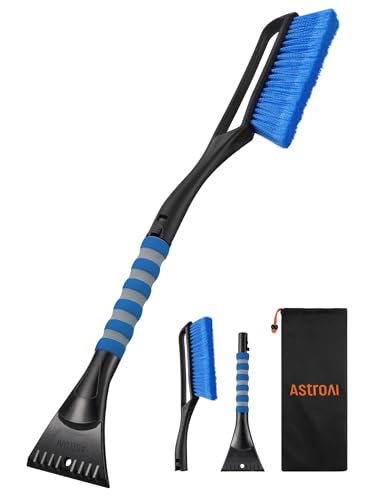
Publishes the three measurements that decide whether a brush suits your car - 27 in overall, an 8.66 in head and a 4.5 in blade - and it comes apart at a push-button buckle so the two halves fit a trunk or a door pocket. Split-end bristles are the detail that matters: they move snow without dragging grit across the paint.
Best for: Most cars
What the maker publishes
- Overall length
- 27 in
- Brush head
- 8.66 in, 4 rows of split-end PP bristles
- Scraper blade
- 4.5 in
- Shaft
- High-strength ABS
- Storage
- Detaches at a push-button buckle; storage bag included
- Extends
- No - fixed length
- Suits
- Cars, SUVs and trucks, per the maker
What works
- Publishing the head width and blade width lets you match the tool to the car instead of guessing from a photograph
- Split-end treated bristles are the honest answer to the scratch question - they flex rather than driving grit into clearcoat
- Detaching into two pieces solves the real problem with a 27 in brush, which is where it lives when it is not January
What doesn't
- Fixed length, so a tall SUV roof or a van still needs a reach you do not have here
- A 4.5 in blade is a normal-car blade - it will clear a windshield, slowly, rather than attack a thick sheet
- Plastic shaft and buckle are the parts that fail first on any detachable brush, and the listing publishes no warranty term
Skip this if: you park under trees or drive something tall. An extendable brush is the right tool for a roof you cannot reach.
2. Rubber blade for wet snow
KeFanta 3-in-1 Heavy Duty Extendable Snow Broom and Ice Scraper, 42 in
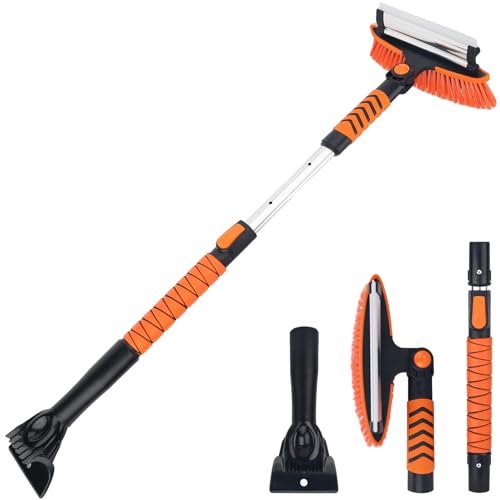
The rubber blade is the reason to buy this one. Wet snow packs into bristles and turns a brush into a mop; a squeegee edge pushes the same snow off in one stroke.
Best for: Heavy wet snow
What the maker publishes
- Adjustable length
- 34 in to 42 in
- Working heads
- Double-layer bristles, rubber blade, ice scraper
- Handle
- Padded grip
- Blade material
- Not published by the maker
- Rated temperature
- Not published by the maker
What works
- Three working surfaces on one shaft means one tool in the trunk instead of three
- The rubber blade is the right tool for heavy wet snow, which is most of what falls near the freezing line
- 34 in collapsed is short enough to actually fit behind a seat
What doesn't
- Three heads on one pole is three things to break, and the pivot always goes first
- No published blade or bristle material, so paint safety comes down to your technique rather than the tool
Skip this if: your snow is usually dry and powdery. A plain brush clears that faster and the extra hardware is dead weight.
3. Chemistry instead of force
Prestone AS242 Windshield De-Icer, 11 oz Aerosol
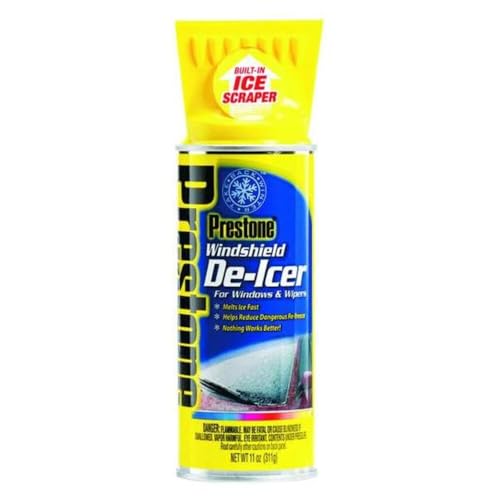
The default de-icer. Small enough to keep in a door pocket, and the cap is a scraper, which means the can and the tool are the same object you are already holding.
Best for: The can that lives in the car
What the maker publishes
- Size
- 11 oz aerosol
- Applicator
- Aerosol spray, scraper cap
- Maker claim
- Melts ice fast and helps reduce refreeze
- Active ingredient
- See the product label and SDS
- Rated melt temperature
- Not published by the maker
What works
- Fits a door pocket, which is where a de-icer has to live to be any use at 7am
- The scraper cap removes the second-tool problem entirely
- Aerosol reaches a wiper cowl and a mirror face better than a trigger bottle does
What doesn't
- 11 oz does not go far on a fully iced windshield - this is a frost can, not a storm can
- Prestone does not publish a rated melt temperature on the listing, so cold-limit claims are not something we can verify for you
Skip this if: you are clearing a whole iced car rather than a patch. Buy the 32 oz trigger bottle and keep this one for the lock and the mirrors.
Questions people actually ask
Will an ice scraper scratch my windshield?
Not if it is clean. Automotive glass is far harder than the plastic a scraper blade is molded from. What can mark glass is grit trapped under the blade, which is why you knock the scraper out before you start rather than after.
Can a snow brush scratch car paint?
Yes, though the bristles are rarely the culprit. Grit picked up from the roof or the driveway is what marks the clear coat when it is dragged sideways along a panel. Push snow off the edge of the panel instead of dragging it along.
Is a foam or rubber squeegee safer than bristles on paint?
On wet heavy snow a rubber blade moves more snow with less contact, which helps. It is not inherently safer if it is dirty - anything dragged across paint with grit under it will mark the clear coat.
How do I remove ice without a scraper and without damaging the paint?
Use the defroster from the inside and a de-icer spray on the outside, then wait. Do not use hot water, a metal tool, or a credit card edge on paint. Waiting thirty seconds for the chemistry is faster than the damage is to fix.
Does de-icer spray damage paint?
The de-icers sold for automotive glass are formulated for use on a car, and the labels name windshields, windows and wipers as intended surfaces. Rinse residue off painted panels when the weather allows, and check the label of anything you are unsure about.