Snow Brushes That Will Not Scratch Your Paint
The fear is real and the usual explanation is wrong. A brush does not scratch paint because the bristles are hard; it scratches because grit gets caught between the bristles and stays there.
Heads up: we earn a commission if you buy through the links on this page, at no extra cost to you. It never changes a ranking - here is how we pick and how the site is funded.
Quick picks
The short answer, before the detail. Tap any row to jump to that write-up, or go straight to the listing to check today's price.
| # | Product | Best for | Price |
|---|---|---|---|
| 1 |  Snow Joe SJBLZD foam broomA foam head instead of bristles, which sidesteps the scratch question rather than managing it. An 18 in push face and a handle that runs 33 to 52 in makes it the one tool here that clears a roof without a ladder. | Best overall | $25.97 - Check on Amazon |
| 2 | 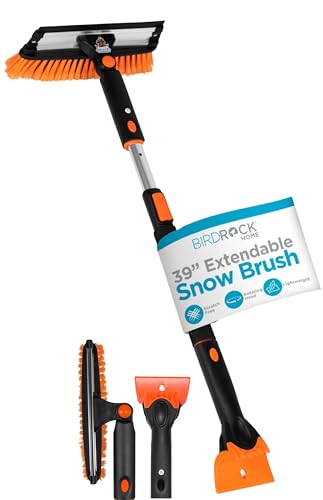 Snow MOOver 39 inA double-sided head with bristles on one face and a squeegee on the other. The squeegee is the part that matters in a thaw, because wet slush smears under bristles rather than moving. | Best for wet slush | $29.95 - Check on Amazon |
| 3 |  SEAAES 45 in extendableThe reach tool. A 45 in pole and a pivoting head are what clear a roof, and a roof full of snow is what slides down onto your windshield at the first stop sign. | Best reach | $29.98 - Check on Amazon |
| 4 | 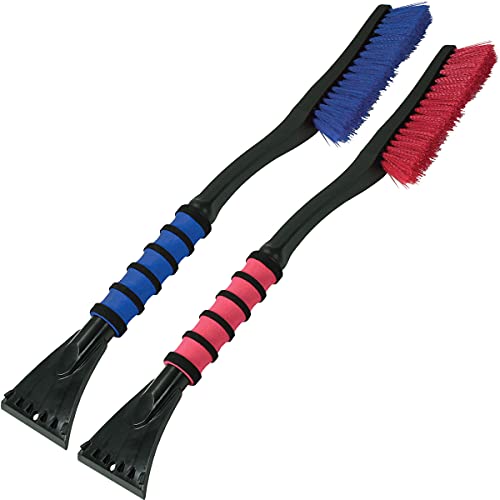 Mallory 532 Cool-ForceFour rows of plush bristles move more snow per stroke than a thin brush, and it arrives as a pair - which is the honest answer to the second car. Fixed length, so it is a sweeping tool rather than a reaching one. | Best for a small car | $30.99 - Check on Amazon |
Three separate autocomplete variants exist for this question - no scratch, for car paint, that will not scratch - which tells you it is the dominant fear in this category. It is also the one where most advice is confidently wrong.
What actually scratches the paint
Not the bristle. Even a stiff polypropylene bristle is far softer than automotive clear coat, and dragging one across a clean panel does nothing.
The damage comes from grit. Road salt, sand and the gray grime thrown up by every other vehicle land on your car and stay there. A bristle brush pushed across that surface collects the grit between the bristles, where it is held rigid by the surrounding bristles - and then you push it along the panel. You have made a sanding block.
Three consequences follow, and they matter more than which brush you buy:
- A dirty brush is the problem, not a cheap one. An expensive brush used on a salty car does the same damage as a cheap one.
- Dense bristles hold more grit than sparse ones. The plush, tightly packed heads that move snow best are also the ones that trap the most.
- Foam has nowhere to trap it. A closed foam face has no gaps between fibers, so grit rolls off rather than being held against the paint.
How we judged these
- Whether the head can trap grit at all. Foam scores highest here by construction, not by claim.
- Whether the maker publishes a paint claim and backs it. A stated non-abrasive material beats a vague scratch-free sticker.
- Reach. The scratch risk rises when you lean across a panel and drag the brush at an angle because you cannot reach the roof.
- Whether it works on wet snow. A paint-safe brush that smears slush is a brush you will abandon for something worse.
What each one publishes
Only one of these publishes a material-based paint claim. That is not because the others are unsafe - it is because the category mostly does not address the question at all, which is why the buyer keeps asking it.
The case for foam, and its real cost
A foam head removes the grit-trapping mechanism instead of managing it. On a salted car in February that is the difference that matters, and it is why the foam broom leads this page.
The cost is honest and worth stating: foam is worse than bristles at flicking dry powder out of panel gaps, wiper wells and around mirrors. It also absorbs water, so it needs to dry rather than going back into a trunk wet. If your snow is usually light and dry, bristles genuinely work better and the scratch risk is lower anyway because there is less grit in dry cold.
The technique matters more than the tool
You can scratch paint with the best brush on this page and avoid it with the worst. Four habits do most of the work:
- Lift snow off, do not scrub it along. Push or lift in one direction away from the car. Back-and-forth scrubbing is what grinds grit in.
- Do the glass and roof first, panels last. By the time you reach the paint most of the loose snow is already gone.
- Knock the brush out between passes. Two seconds. It empties the grit you just collected.
- Never brush a car that is dry and dirty. Snow is a lubricant. A brush on a dry, salty panel is the worst case in this whole article.
The related question - whether the scraper itself will mark the glass - is a different material problem with a different answer, covered in will a scraper scratch your paint and brass vs plastic scrapers.
Do notuse a household broom or a kitchen brush on your car
The bristles are not the issue - the fact that it has swept a floor is. A broom carries embedded grit from every surface it has touched, and none of it has been rinsed out. This is the single most reliable way to put a web of fine scratches across a hood.
The version that avoids the question
Nothing you brush is as gentle as not brushing. A windshield cover means the glass is already clear and the only brushing left is the roof, and a full cover means there is nothing to brush at all. Windshield covers is the cheaper half of that; full car covers is the other.
The short version
Buy the foam broom if your snow is wet and your car spends the winter salted - it is the only one here that removes the mechanism rather than asking you to manage it. Buy the squeegee brush if slush is your normal condition. Buy on reach if your roof is high, since leaning across a panel is its own risk. And whichever you buy, knock the grit out between passes - that habit protects paint better than any purchase on this page.
The picks, one at a time
We haven't tested these
No lab, no borrowed units, no free samples. What we did do: pull every published spec into one table and work out what the numbers mean on a cold morning. Everything below traces to a published spec sheet, a manual, or a standard we can point you at - and if a figure isn't published, we say so instead of estimating it. The full method is here.
1. Best overall
Snow Joe SJBLZD 18 in Snow Broom and Ice Scraper with Foam Head
A foam head instead of bristles, which sidesteps the scratch question rather than managing it. An 18 in push face and a handle that runs 33 to 52 in makes it the one tool here that clears a roof without a ladder.
Best for: Not touching your paint with bristles at all
What the maker publishes
- Head
- 18 in non-abrasive foam
- Handle
- Extends 33 to 52 in
- Scraper
- Built in
- Paint claim
- Non-abrasive, scratch-resistant, stated safe on paint, glass and trim
- Design
- Push broom
What works
- Foam has no bristle tips to trap grit, and trapped grit is the actual mechanism behind brush scratches
- 52 in of reach clears the middle of an SUV roof from beside the vehicle
- A wide push face moves heavy wet snow in far fewer passes than a bristle brush
What doesn't
- Foam is worse than bristles at flicking dry powder out of panel gaps and wiper wells
- A wide foam head is awkward around mirrors and aerials
- Foam absorbs water, so it wants to dry rather than being stuffed back into a trunk wet
Skip this if: your snow is usually dry and light. Bristles move powder better; foam earns its place on wet, heavy snow.
2. Best for wet slush
Snow MOOver 39 in Extendable Snow Brush with Squeegee and Detachable Scraper
A double-sided head with bristles on one face and a squeegee on the other. The squeegee is the part that matters in a thaw, because wet slush smears under bristles rather than moving.
Best for: Slush rather than powder
What the maker publishes
- Length
- Extends to 39 in
- Head
- Double sided - bristles and a wide squeegee
- Scraper
- Detachable
- Grip
- Foam
- Pieces
- 3 - brush head, scraper, telescoping extender
What works
- A squeegee face is the correct tool for wet slush, which is what most brushes handle badly
- The scraper detaches, so one hand can scrape while the brush stays out of the way
- 39 in reaches the middle of most car roofs without standing on anything
What doesn't
- Three separable pieces is three things to lose, and telescoping joints freeze
- 39 in is short for a full-size truck
- Bristle material is not published, which matters if paint safety is your reason for buying
Skip this if: paint contact is your main worry. The bristle material is not published, and a foam head removes the question.
3. Best reach
SEAAES Extendable Snow Brush and Ice Scraper, 45 in
The reach tool. A 45 in pole and a pivoting head are what clear a roof, and a roof full of snow is what slides down onto your windshield at the first stop sign.
Best for: Reaching an SUV roof
What the maker publishes
- Extended length
- 45 in
- Scraper blade
- 5.2 in wide, foam grip
- Brush head
- Pivots 360 degrees
- Bristle material
- Not published by the maker
- Rated temperature
- Not published by the maker
What works
- The extension is the entire point on a tall vehicle: you clear the roof from the ground instead of standing on the sill
- A 5.2 in blade takes fewer passes across a windshield than the 3 in blade on a typical glovebox scraper
- The pivoting head lets you pull snow down the glass rather than push it sideways into the wiper cowl
What doesn't
- Long-handled tools live in the trunk, so this is the tool you do not have when you are parked somewhere else
- No published bristle material and no cold rating, so how the plastic behaves at 0F is not something the maker will tell you
Skip this if: you drive a low sedan and park in a garage. A 45 in pole is a lot of trunk for a roof you can already reach.
4. Best for a small car
Mallory 532 Cool-Force 26 in Snowbrush with Ice Scraper, 2 Pack
Four rows of plush bristles move more snow per stroke than a thin brush, and it arrives as a pair - which is the honest answer to the second car. Fixed length, so it is a sweeping tool rather than a reaching one.
Best for: Deep, light snow
What the maker publishes
- Type
- Fixed-length snowbrush with chisel scraper
- Length
- 26 in
- Extends
- No
- Scraper blade
- 4 in chisel
- Bristles
- Four rows, plush
- Quantity
- 2 brushes
- Warranty
- 90 days, per the maker
What works
- Four rows of bristles clear a wider path per stroke, which is what shortens the time you stand outside
- The 4 in chisel blade is published, so you know what you are getting rather than guessing from a photo
- Two in the box means the second car is solved in the same purchase
What doesn't
- Fixed 26 in, so a tall roof is out of reach - this is a car brush, not a truck brush
- A plush brush is gentle but slow on wet, heavy snow that has started to set
- 90 days is a short warranty for a tool that lives outside
Skip this if: you mostly deal with frost rather than snow. A brush is the wrong tool for a thin layer of ice.
Questions people actually ask
Do snow brushes scratch car paint?
The bristles do not - they are far softer than clear coat. What scratches is road grit trapped between the bristles and then dragged across the panel. A dirty brush on a salted car is the real risk, regardless of price.
What is the best snow brush that will not scratch paint?
A closed foam head, because there are no gaps for grit to lodge in. The Snow Joe foam broom is the one here that publishes a material-based paint claim rather than a vague scratch-free sticker.
Is a foam snow brush better than bristles?
On a salted car with wet, heavy snow, yes - foam cannot trap grit and moves wet snow in fewer passes. On dry powder, bristles are better at flicking snow out of panel gaps and around mirrors.
How do I use a snow brush without scratching my car?
Lift snow away in one direction rather than scrubbing back and forth, do the glass and roof before the painted panels, knock the grit out of the brush between passes, and never brush a car that is dry and dirty.
Can I use a household broom to clear snow off my car?
No. The problem is not the bristle material, it is that a broom carries embedded grit from every floor it has swept and none of it has been rinsed out. It is the most reliable way to put fine scratches across a hood.