Brass vs Plastic Ice Scrapers
Putting metal on your windshield sounds like the worst idea in winter car care. The materials say otherwise, and the reason is a single fact about hardness that almost nobody states.
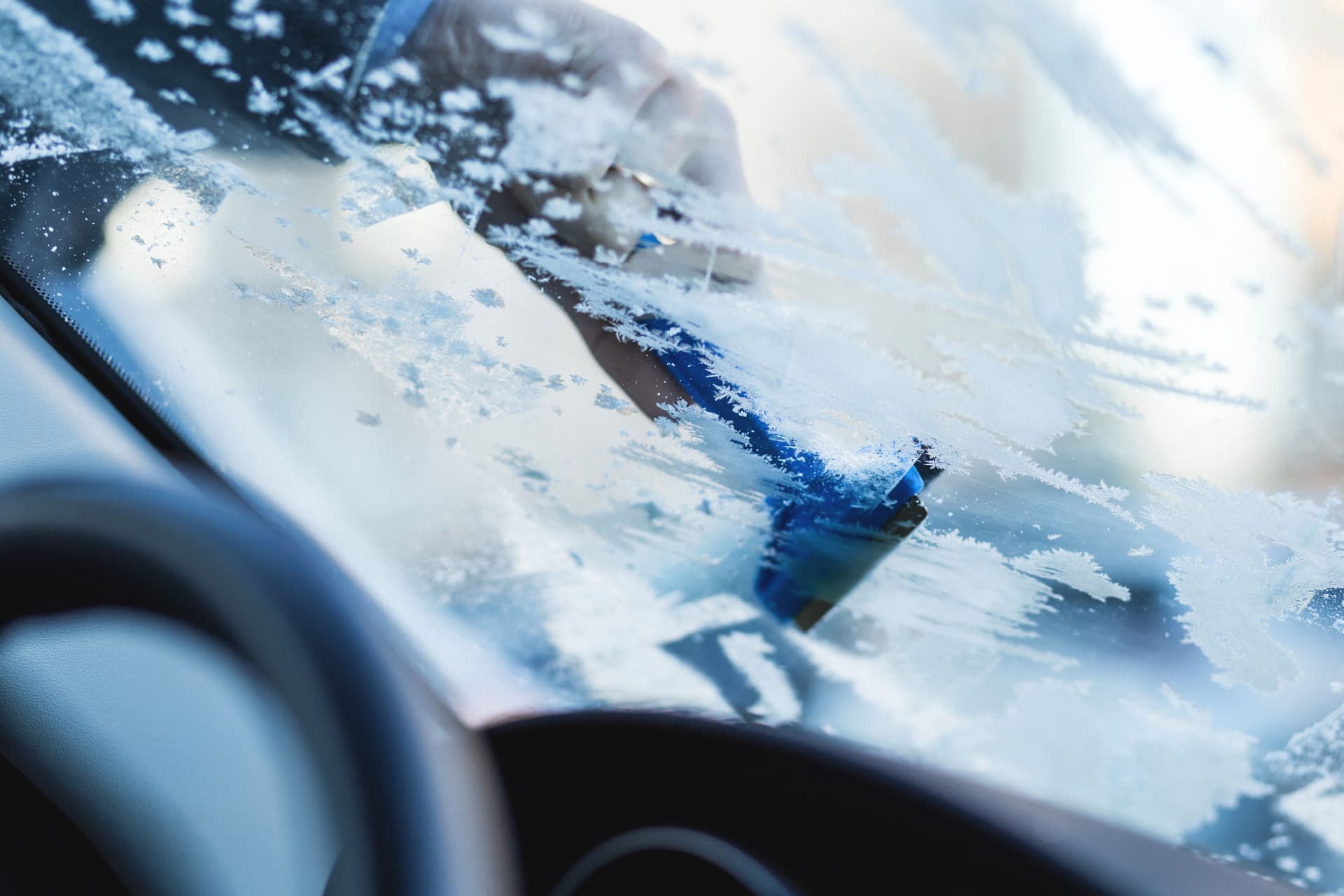
Brass is softer than automotive glass, so a brass blade cannot scratch the windshield - that is a material fact, not a marketing claim. Plastic is also softer than glass, but it goes brittle in deep cold and it chips, and a chipped plastic edge holds grit. Brass on glass, plastic anywhere you might touch paint or trim.
The one fact that decides this
Automotive glass is harder than brass. When two materials are dragged against each other, the softer one loses. That is why a brass blade wears down against ice and glass rather than cutting into them, and it is the reason a metal scraper can be the conservative choice rather than the reckless one.
The Snow Joe listing states this outright - brass is naturally softer than automotive glass - which is the difference between a specification and a slogan. Several competing brass scrapers assert scratch-free as a guarantee without saying why. The mechanism is the same either way; one of them is telling you how it works.
What plastic gets right, and what it does not
Plastic is softer than glass too, so on a clean windshield a plastic blade is perfectly safe. Its problems are about durability rather than hardness.
- It goes brittle when cold. The colder it gets, the more a polypropylene edge chips rather than flexes - and cold is when you use it.
- A chipped edge holds grit. A nick in the blade becomes a pocket, and a pocket full of road sand dragged across glass is how plastic scrapers eventually do mark windshields.
- It wears blunt. A rounded blade skates over ice instead of getting under it, which is when people start pressing harder - and pressing harder is the actual risk.
The counterweight is real: plastic is cheap enough to replace every season, and it is the safer choice near paint, rubber and plastic trim, where brass is harder than the surface rather than softer.
The two side by side
The rule that follows from all of it
Brass for the windshield and the side glass. Plastic for anything where the blade might wander onto a painted pillar, a rubber seal, a mirror housing or a trim strip.
That is not a compromise, it is the correct use of each material. The mistake is treating brass as a universal upgrade: on the glass it is genuinely better, and on the A-pillar it is a tool that is harder than the surface you just touched.
Do nottake a brass blade anywhere near paint or trim
The property that makes brass safe on glass makes it unsafe on everything softer. Keep it on the windshield, keep it flat, and do not use it to chip ice off a door edge, a mirror housing or a wiper arm. That is what the cheap plastic scraper in the door pocket is for.
Technique beats material either way
- Warm the glass first. Thirty seconds of defroster and the bond releases; then the blade is lifting slush rather than cutting ice. This halves the force you use regardless of blade material.
- Keep the blade flat. A blade held at a steep angle concentrates force on one edge. Flat spreads it.
- Push, do not chip. Chipping is where a scraper hits a bug-strike chip in the glass and turns it into a crack.
- Rinse the blade if the car is gritty. Same grit problem as a brush, smaller surface.
The complete method, including where de-icer actually helps, is in how to remove ice from a windshield.
The short version
Own both. A brass blade for the windshield, where its hardness works in your favor and where it will still be sharp in three winters. A cheap plastic scraper in the door pocket for everything else, replaced whenever the edge nicks. The total is under twenty dollars and it is the right answer to a question most people resolve by buying one of each anyway.
What to buy, and what to skip
We haven't tested these
No lab, no borrowed units, no free samples. What we did do: pull every published spec into one table and work out what the numbers mean on a cold morning. Everything below traces to a published spec sheet, a manual, or a standard we can point you at - and if a figure isn't published, we say so instead of estimating it. The full method is here.
Heads up: we earn a commission if you buy through the links on this page, at no extra cost to you. It never changes a ranking - here is how we pick and how the site is funded.
1. The brass answer
Snow Joe Brass Blade Ice Scraper
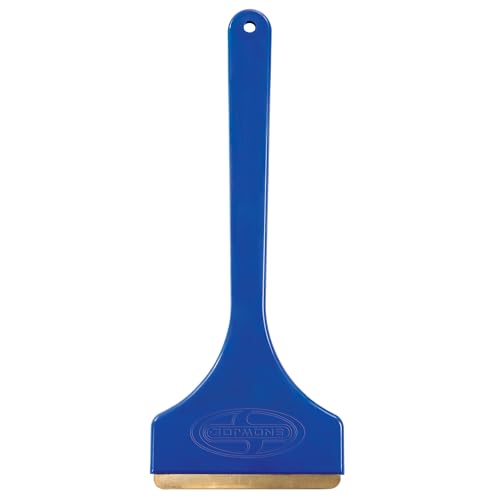
Brass is softer than glass, and that single material fact is the entire argument for this category. The listing says so plainly rather than making a vague scratch-free claim.
Best for: Glass you do not want to risk
What the maker publishes
- Blade
- Solid brass
- Why brass
- Brass is softer than automotive glass, per the maker
- Handle
- Contoured ergonomic grip
- Size
- Glovebox sized - dimensions not published
- Rated temperature
- Not published by the maker
What works
- The maker states the mechanism rather than just the claim, which is the difference between a spec and a slogan
- Small enough for a door pocket, which is where a scraper has to be to get used
- Cheap enough to buy one for each car without thinking about it
What doesn't
- Brass is softer than glass and harder than paint and trim - keep it on the glass and off the pillars
- No published blade width or overall length
- A short scraper means kneeling and reaching on a big windshield
Skip this if: you need reach. A brass blade on a short handle is a glass tool, not a roof tool.
2. Brass with a cold rating
Zeluga 25-555 Brass Blade Ice Scraper Combo

The only scraper here that publishes a temperature at all - it states use down to -30F - and a reinforced polystyrene handle that is meant to survive being dropped on frozen concrete.
Best for: Genuinely hard freezes
What the maker publishes
- Blade
- Brass
- Stated temperature
- Works in extreme cold, stated to -30F
- Handle
- Reinforced polystyrene
- Corrosion
- Stated not to rust, crack or chip
- Colors
- Five, chosen for visibility in snow
What works
- A published cold figure is almost unheard of in this category and this one states -30F
- High-visibility colors matter more than they sound when a black scraper is lying in white snow
- Brass does not corrode the way a cheap steel blade does after a season of salt
What doesn't
- Scratch-free is stated as a guarantee rather than explained, unlike the softer-than-glass reasoning elsewhere
- No published blade width or handle length
- Polystyrene is impact resistant but it is still plastic at the joint, which is where scrapers break
Skip this if: you want the cheapest brass blade. The mechanism is the same; this one adds a cold rating and colors.
3. The plastic answer
Hopkins SubZero 16621 Ice Crusher Ice Scraper

A short two-ended scraper: a straight blade for frost, a chipper for the ice a blade skates over. This is the one you keep in the car you did not plan to be scraping.
Best for: The door-pocket scraper
What the maker publishes
- Type
- Handheld scraper, no brush
- Working ends
- Frost blade one end, ice chipper the other
- Grip
- Oval foam
- Length
- About 11 in per the listing
- Blade material
- Not published by the maker
What works
- Short enough to live in a door pocket, which is the only place a scraper is reliably useful
- The chipper end does something a flat blade cannot: it breaks a bonded sheet instead of riding over it
- Cheap enough to keep one in every vehicle, which is the honest answer to most scraper questions
What doesn't
- No brush, so it does nothing about the six inches of snow sitting on top of the ice
- Short handle means your hand is on the glass and your sleeve is in the snow
- A chipper is the part of a scraper most likely to mark trim if you slip
Skip this if: you routinely deal with real snow depth rather than overnight frost. This clears glass; it will not clear a car.
4. For bonded ice
Hopkins 16721 Bear Ice Scraper

A clawed face breaks ice a flat blade slides across. It is also the fastest way to mark trim if your hand slips, so treat it as the specialist rather than the default.
Best for: Ice bonded on for days
What the maker publishes
- Type
- Handheld scraper with claw face
- Brush
- None
- Blade material
- Not published by the maker
- Length
- Not published by the maker
- Rated temperature
- Not published by the maker
What works
- Genuinely effective on thick bonded ice, the one job a flat blade is bad at
- Small and cheap enough to be a second scraper rather than your only one
What doesn't
- A claw concentrates force on a small area, which is exactly what puts a mark in trim when you slip
- No brush and no reach
- Nothing about the material is published, so you are trusting technique rather than the tool
Skip this if: you are worried about paint. Aim a de-icer at bonded ice instead and let the chemistry do the work.
Questions people actually ask
Will a brass ice scraper scratch my windshield?
No. Brass is softer than automotive glass, so when the two are dragged against each other the brass wears rather than the glass. That material fact is the entire reason brass scrapers exist.
Is a brass or plastic ice scraper better?
Brass on the windshield, plastic everywhere else. Brass stays sharp and does not go brittle in deep cold, but it is harder than paint and trim. Plastic is safe near paint and chips as it gets cold.
Why do plastic ice scrapers scratch glass sometimes?
Because the edge chips in cold, and a nicked edge becomes a pocket that holds road grit. It is the trapped grit dragged across the glass that marks it, not the plastic itself.
Can I use a brass scraper on my car's paint?
No. The property that makes brass safe on glass makes it unsafe on anything softer, which includes paint, rubber seals, mirror housings and trim. Keep a plastic scraper for those.
How long does a brass ice scraper last?
Far longer than plastic. Brass does not rust and wears very slowly against ice, so the blade stays effective across multiple seasons, where a plastic edge typically blunts or nicks within one.