Cold Starts, Batteries & Jump Starters
Can You Jump Start a Hybrid?
Yes, and the pack you need is smaller than the one you would buy for a gas car - because a hybrid's little auxiliary battery is not turning a starter motor against cold oil.
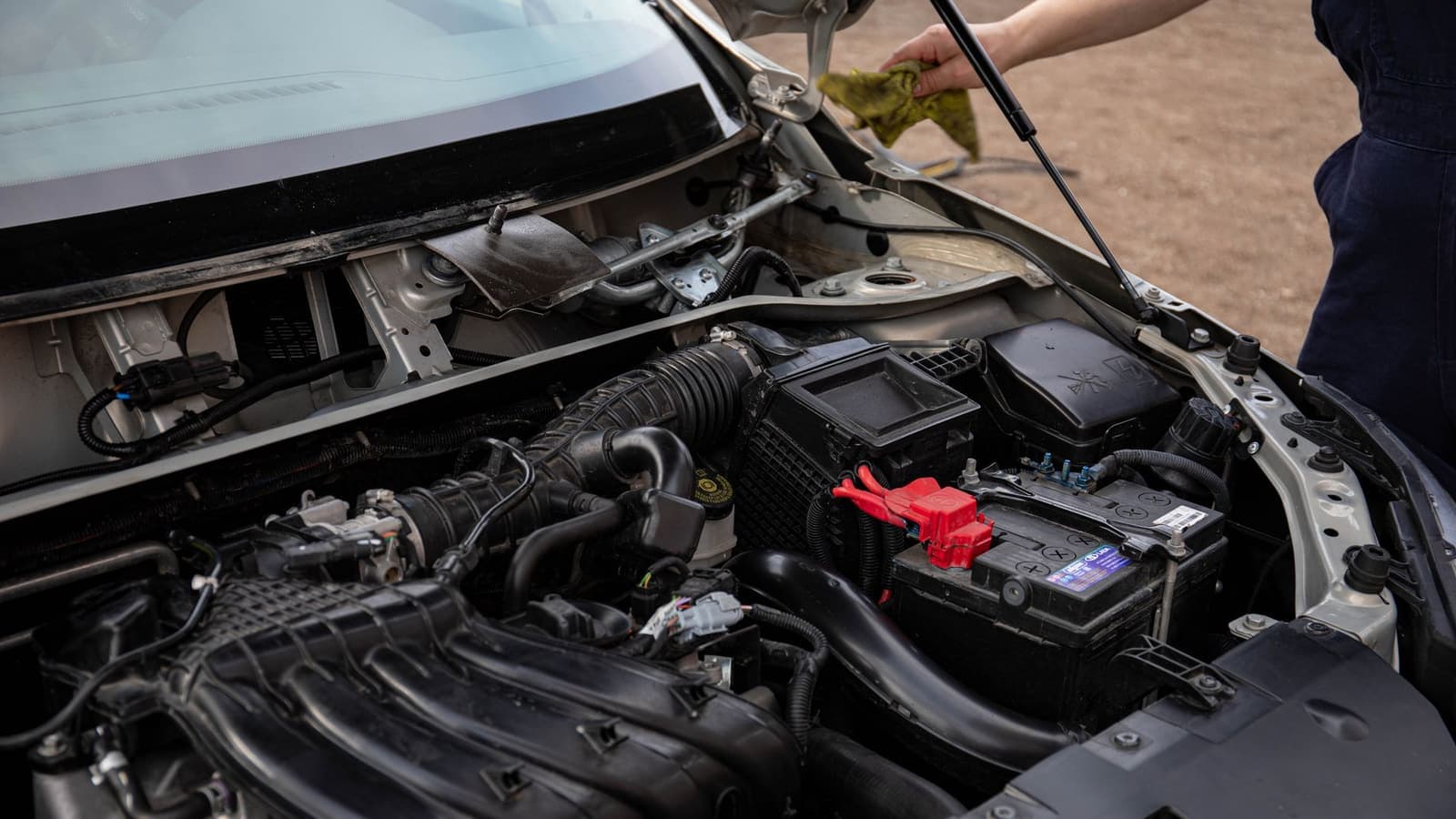
Yes. A hybrid has an ordinary 12V auxiliary battery and that is the one you jump - never the high-voltage traction pack. A small lithium pack like the NOCO Boost GB40 is the right tool and it is plenty, because you are waking up computers and relays rather than cranking a starter motor. The one hard rule: never use another hybrid or an EV as the donor vehicle.
This is the question hybrid owners ask in the first cold snap, and the internet answers it badly in both directions - either "never touch a hybrid" or a blithe "it is just like any car". The accurate answer sits in between and is worth getting right, because the parts involved are expensive.
A hybrid has two batteries and they do unrelated jobs
The US Department of Energy describes the low-voltage auxiliary battery in a hybrid as the one that "provides electricity to start the car before the traction battery is engaged", and that also "powers vehicle accessories". The traction battery pack separately "stores electricity for use by the electric traction motor".
There is also no alternator in the conventional sense. DOE describes a DC/DC converter that "converts higher-voltage DC power from the traction battery pack to the lower-voltage DC power needed" to run accessories and recharge the auxiliary battery.
Two consequences follow, and they are the whole page:
- The battery that leaves you stranded is the small one. A flat auxiliary battery means the car cannot complete the sequence that engages the traction pack, so a vehicle with a nearly full traction battery sits there dead.
- You need less jump starter, not more. The auxiliary battery's published job is to get the car to the point where the traction battery takes over. It is not being asked to spin a starter motor through cold 5W-30.
How we judged what to buy for this
The criteria here are different from ordinary pack sizing, and deliberately so:
- Protection first, capacity second. On many hybrids the jump point is not a pair of exposed battery posts in open air - it is a terminal in or beside a fuse box, surrounded by electronics. Reverse polarity or a spark there is a worse outcome than it would be on a 2004 sedan. Spark-proof and reverse-polarity protection are the features we weighted highest.
- Small enough to live in the cabin. The failure here is a battery that went flat from sitting, which means the pack gets used in a driveway after a cold week. A pack in the glovebox is warm; a pack in the trunk is not.
- A published rating, even though you need little of it. We still only picked packs that publish engine displacement figures, because a maker that publishes nothing has told you nothing.
- Prevention counted as a pick. A hybrid's auxiliary battery is small, and small batteries go flat from sitting faster than big ones. A maintainer is on this list for that reason.
The four rules, and one of them is absolute
AAA is unusually direct on this and worth quoting rather than paraphrasing. On jump starting an electrified vehicle, it says you "should only attempt to jump-start an EV's 12-volt battery with a combustion-engine vehicle or jumper pack", and that you "should never jump-start an EV with another EV or hybrid vehicle" - which "could cause catastrophic damage to the electrical systems on both the dead and jumping vehicles".
- Jump the 12V battery only. Never attempt anything with the high-voltage pack. AAA: doing so "could severely damage the battery or electrical system".
- The donor must be a conventional vehicle or a jump pack. Not another hybrid. Not an EV. This is the rule people break because the hybrid in the next space looks like the obvious volunteer.
- Use the jump point your manual names. On a lot of hybrids the 12V battery is not under the hood at all - it is in the trunk or under a seat - and the maker provides a dedicated terminal in the engine bay instead. Your owner manual has the location and the order; follow its order, not a generic one.
- Do not use your hybrid to jump someone else. There is no alternator to carry the load, just a DC/DC converter sized for accessories. Lending a jump is how you turn their problem into a repair bill of your own.
Do notconnect anything to the orange cables, connectors or covers
Orange is the industry marking for high-voltage wiring on electrified vehicles. It is not a jump point, it is not a ground, and nothing you own belongs anywhere near it. If the 12V terminal you are looking for is not clearly marked and described in your manual, stop and call for roadside assistance - that call is cheaper than either of the alternatives.
Why hybrid 12V batteries go flat in winter in the first place
Two reasons, and both are about a small battery rather than a cold one.
First, capacity. The auxiliary battery in a hybrid is sized for the job DOE describes - starting the car and running accessories - not for cranking an engine. A physically small battery has less reserve, so the same week of parasitic draw that a big truck battery shrugs off can flatten it.
Second, how it gets charged. There is no alternator spinning whenever the engine runs; there is a converter that tops the auxiliary battery up while the car is in use. A hybrid that does ten-minute trips on electric power, in the cold, with the heater and the lights and the seat warmers running, is not having a generous conversation with its small battery. The mechanism is the same one in how often to start your car in winter, which is worth reading because the usual folk remedy - idling it in the driveway - is the wrong move on a hybrid for a different reason: it may simply run on electric power and never charge anything.
Which is why a maintainer is a pick on this page. Battery maintainer vs charger covers the difference, and the maintainer is the one you want: a sub-two-amp device that holds a small battery full for months.
What else changes on a hybrid in the cold
Jump starting is one item on a longer list. Winter car care for EVs and hybrids covers preconditioning, range loss and defrosting, and how long to warm up your car has the hybrid answer, which is different from the gas one because the engine may not be running at all.
The part worth repeating here: on a hybrid, the cheap preventive measures matter more than on a gas car, because the component that fails is a twelve-volt battery that costs less than a tank of fuel and strands you just as thoroughly.
The short version
Yes, you can jump start a hybrid. Jump the 12V auxiliary battery at the terminal your manual names, use a conventional car or a jump pack as the source, and never use another hybrid or EV. A 1000A-class pack with spark-proof and reverse-polarity protection is the right buy, and it is a smaller pack than the same driver would need for a gas V6. If the car sits during the week, a maintainer is the better purchase of the two.
What to buy, and what to skip
We haven't tested these
No lab, no borrowed units, no free samples. What we did do: pull every published spec into one table and work out what the numbers mean on a cold morning. Everything below traces to a published spec sheet, a manual, or a standard we can point you at - and if a figure isn't published, we say so instead of estimating it. The full method is here.
Heads up: we earn a commission if you buy through the links on this page, at no extra cost to you. It never changes a ranking - here is how we pick and how the site is funded.
1. Best overall for a hybrid
NOCO Boost GB40 12V 1000A UltraSafe Portable Lithium Jump Starter
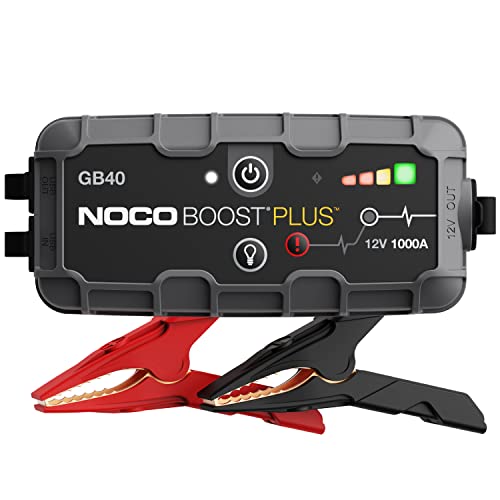
The sizing benchmark for the whole category, because NOCO prints the engine displacement each model covers on the box: 1000 peak amps, up to 6.0L gas and 3.0L diesel, 20 starts per charge. Half the peak amps of packs that cover a smaller engine, which is the entire argument against shopping on peak amps.
Best for: Most cars, once you size on the engine rating
What the maker publishes
- Peak amps
- 1000A
- Gas engines
- Up to 6.0L, per NOCO
- Diesel engines
- Up to 3.0L, per NOCO
- Starts per charge
- Up to 20, per NOCO
- Weight
- 2.4 lb
- Recharge time
- 3 hours, per NOCO
- Protection
- Spark-proof and reverse polarity, per NOCO
- Housing
- IP65 rated
- Warranty
- 1-year limited
- Operating temperature range
- Not published by the maker
What works
- Publishes both engine ceilings and the number of starts per charge, which together are the only figures in this category you can check against your own car
- IP65 and a 2.4 lb body make it the size that genuinely stays in the glovebox, where a lithium pack belongs in winter
- Spark-proof and reverse-polarity protection matter most exactly where the terminals are awkward - a fuse-box jump point or a battery under a seat
What doesn't
- 3.0L diesel is a car-diesel ceiling, not a truck one, and the gas figure stops short of a V8
- No published operating temperature range, which is the spec that would tell you what 1000A becomes at 10F
- Costs more than packs printing four times the peak amps - you are paying for the published rating, not the headline
Skip this if: your engine is over 6.0L gas or 3.0L diesel. Size up rather than hoping; that is what the published rating is for.
2. Smallest that still publishes ratings
AstroAI S8 Car Battery Jump Starter, 1500A

Publishes 6.0L gas and 3.0L diesel for well under fifty dollars, and weighs less than a pound. It is also the only pack here whose own listing tells you to mind the temperature when storing it, which is the honest note the category usually omits.
Best for: The most engine per dollar
What the maker publishes
- Peak amps
- 1500A
- Gas engines
- Up to 6.0L, per the maker
- Diesel engines
- Up to 3.0L, per the maker
- Weight
- 0.95 lb
- Size
- 7.9 x 4.5 x 3.7 in
- Protections
- 8, including reverse polarity and overcurrent
- Boost mode
- Detects a battery below 9V automatically
What works
- Both engine ceilings are published, which is the spec that actually decides whether a pack will start your car
- Under a pound and glovebox sized, so it stays in the warm part of the vehicle
- The listing itself carries a cold-storage warning - a maker being straight about lithium in winter is rare enough to count
What doesn't
- 3.0L diesel is a car diesel, not a truck diesel
- A smart boost mode that engages below 9V is useful and also means a deeply flat battery may need the manual route
- No published number of jumps per charge
Skip this if: you drive a diesel truck. The published 3.0L ceiling is the answer and it is not close.
3. Lightest, and publishes cranking amps
Weego 44s 2100A 12V Lithium Car Battery Jump Starter

The only pack we have found that publishes cranking amps as well as peak amps - 440 CA against 2100 peak - which is the figure that actually predicts a start. It also publishes a weight under one pound and engine ratings of 7L gas and 3.5L diesel, so you can check it against your own car rather than trusting a headline number.
Best for: Most cars, and a glovebox
What the maker publishes
- Peak amps
- 2100A
- Cranking amps
- 440 CA, per the maker
- Gas engines
- Up to 7L, per the maker
- Diesel engines
- Up to 3.5L, per the maker
- Weight
- Under 1 lb, per the maker
- Charge retention
- Holds a charge for months, per the maker
- Protection
- Anti-spark, reverse polarity and surge protection
- Build
- Stated to resist water, dust and dirt
What works
- Publishing a cranking amps figure is almost unheard of in this category, and cranking amps is the number that decides whether a cold engine turns - peak amps has no standard behind it at all
- Under a pound means it genuinely lives in the glovebox, which is inside the heated cabin - and where a lithium pack is stored matters more than any number on the box
- Holding a charge for months addresses the real failure of these packs, which is reaching for one in January and finding it flat
What doesn't
- 3.5L diesel is a car-and-van ceiling, not a truck one, and the gas figure of 7L is mid-pack rather than generous
- Priced right at the top of the sub-$100 bracket, which buys fewer amps than the cheap packs claim
- Lithium still delivers least current when it is cold, so the published figures assume a pack that has not been sitting in a freezing trunk
Skip this if: you drive a diesel pickup. The 3.5L diesel ceiling is the number that matters and it is not close.
4. The fix that stops it happening
Battery Tender Junior 12V, 750mA Charger and Maintainer

The cheapest intervention in this whole section. A battery that is kept topped up does not develop the cold-weather problem in the first place, and a maintainer costs a fraction of a battery.
Best for: A car that sits
What the maker publishes
- Type
- Automatic float charger
- Voltage
- 12V
- Rated output
- 750 mA
- Chemistry support
- Check it covers AGM if that is what your car has
- Requires
- Power where you park
What works
- Prevention rather than replacement, at a small fraction of a battery price
- Removes the specific failure of a car that sits unused for two cold weeks
- Modern units float automatically instead of cooking a full battery
What doesn't
- Needs an outlet where you park, which rules out most street parking
- Not every maintainer handles AGM correctly - check before you plug it into one
Skip this if: you park on the street or drive daily. This solves a storage problem, not a commuting one.
Questions people actually ask
Can you jump start a hybrid car?
Yes. A hybrid has a conventional 12V auxiliary battery, and that is the one you jump - at the terminal named in your owner manual. You never jump the high-voltage traction pack. AAA says you should only jump an electrified vehicle's 12-volt battery with a combustion-engine vehicle or a jumper pack.
What size jump starter do I need for a hybrid?
Less than you would need for a comparable gasoline car. A 1000 peak amp class pack is ample, because the 12V battery's published job is to start the car before the traction battery is engaged rather than to crank a starter motor. Prioritize spark-proof and reverse-polarity protection over capacity.
Can you jump start a hybrid with another hybrid?
No. AAA states you should never jump-start an electrified vehicle with another EV or hybrid, because it could cause catastrophic damage to the electrical systems on both vehicles. Use a conventional combustion-engine car or a portable jump pack.
Can you use a hybrid to jump start another car?
Avoid it. A hybrid has no conventional alternator - a DC/DC converter steps power down from the traction pack to run accessories and recharge the 12V battery, and it is sized for that, not for a second vehicle's starter motor.
Why does my hybrid's 12V battery keep dying in winter?
Because it is a small battery that is charged by a converter while the car is in use, not by an alternator whenever the engine turns. Short cold trips with the heater, lights and heated seats running do not give it much back, and a small battery has little reserve to start with.
Where is the jump start terminal on a hybrid?
It varies by model, which is why the owner manual is the answer here. On many hybrids the 12V battery is in the trunk or under a seat and the maker provides a dedicated jump terminal in the engine bay instead. Follow your manual's location and connection order rather than a generic procedure.
Sources
- AAA - Jump-starting an EV: take these precautions to prevent damage
- US Department of Energy, Alternative Fuels Data Center - How do hybrid electric cars work
- Amazon listing - NOCO Boost GB40 1000A jump starter
- Amazon listing - AstroAI S8 1500A jump starter
- Amazon listing - Weego 44s 2100A lithium jump starter
- Amazon listing - Battery Tender Junior 12V maintainer