Emergency Kits, Traction & Recovery
Traction Mats vs Snow Chains
Three products that look like the same category and solve three different problems. Buying the wrong one means being prepared for a situation you are not in.
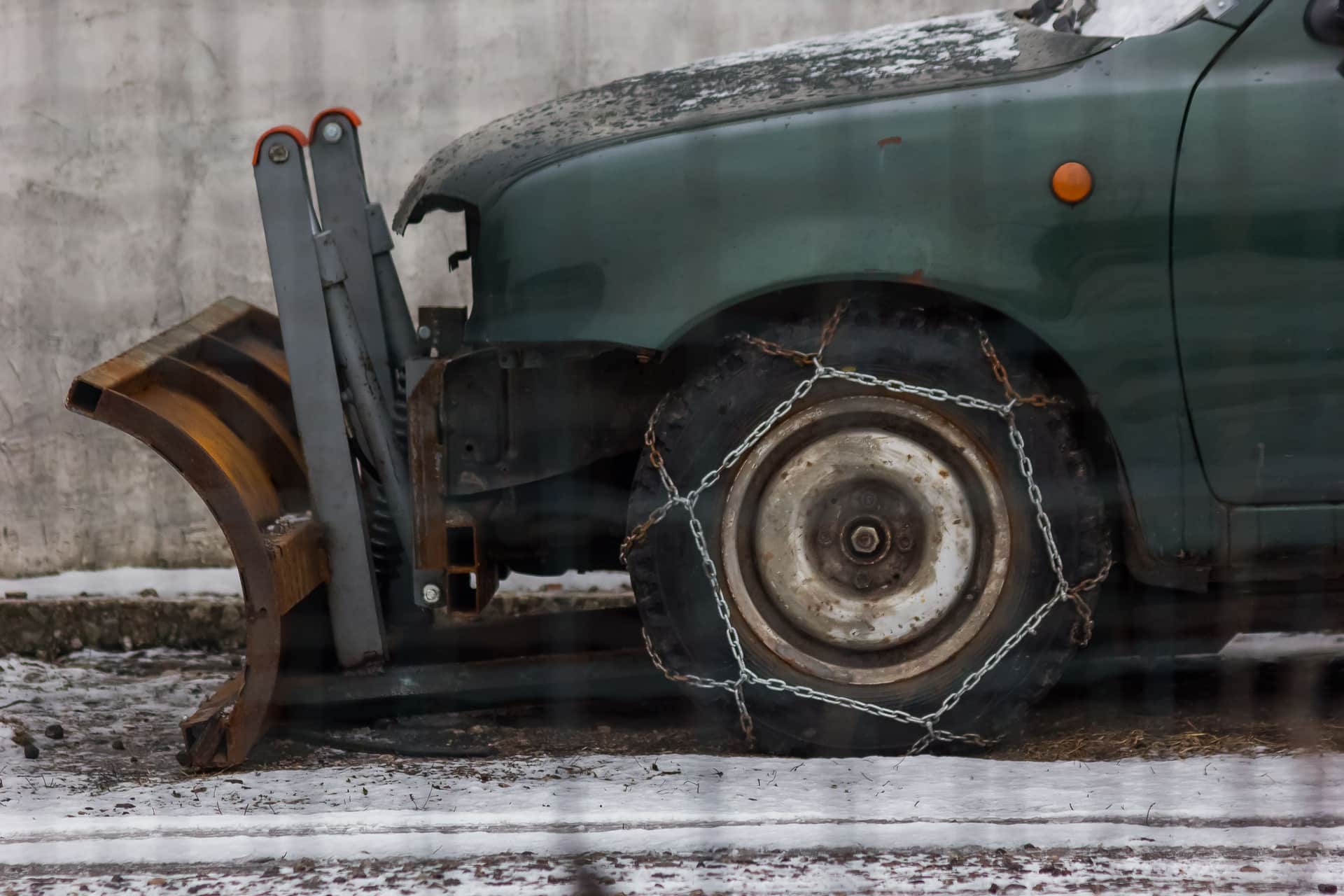
Traction mats recover a stuck car and then come off. Chains let you drive on snow and ice and are what a chain-control sign is legally asking for. Snow socks sit between them: much easier to fit than chains, far less durable, and their legal standing varies by state.
They are not alternatives
The mistake is treating these as three price points for the same thing. They are three different products.
- Mats are a recovery tool. You are stationary and stuck. You put them under the wheels, drive off them, and pick them up. You do not drive on them.
- Chains are a driving aid. You fit them and drive for miles, at reduced speed, on snow and ice. They are the reference standard for traction.
- Socks are a lighter driving aid. Fabric covers you drive on, much easier to fit than chains and much quicker to wear out.
If you get stuck in your own driveway twice a winter, mats. If you drive a mountain pass, chains. Buying chains for the driveway problem means owning something you will never fit; buying mats for the mountain means arriving at a chain-control checkpoint with the wrong equipment.
Side by side
The legal point that overrides preference
Chain-control requirements are posted by road authority and they vary by state and by road. When a sign requires chains, it is a legal requirement for that road at that moment, and it is not a suggestion you can substitute your judgment for.
Whether snow socks satisfy such a requirement is a state-by-state question and it can also depend on the specific level of restriction in force. That is a legal question about where you are driving, not a product question - so check the requirement for your route before you rely on socks, rather than reading a product listing and assuming.
Traction mats never satisfy a chain requirement. They are not a driving aid.
The chain risk people do not check
Some vehicles do not have enough clearance between the tire and the strut, the fender liner or the brake line to run chains at all. When that is the case, the owner manual says so explicitly.
Fitting chains to a vehicle the manufacturer prohibits them on damages exactly what you would expect: struts, liners, and occasionally brake lines. Check the manual before you buy chains, not after. This is one of the few places on this site where the wrong purchase can cost real money.
Do notfit chains without checking your tire size
Chains are sized to the tire, and the size is on the sidewall rather than the door sticker if anyone has changed the wheels. A chain that is too large flails against the bodywork at speed and a chain that is too small will not go on at all.
Where snow socks genuinely make sense
They are a real product with a real niche: occasional, short, slow use where fitting chains would be miserable and is not legally required. A steep icy driveway. One unexpected snowy stretch on a route you drive dry the rest of the time.
Their weakness is durability. They abrade fast on bare pavement, so a few miles of clear road consumes a chunk of their life. They are not a season-long solution and they are not a substitute for winter tires.
What most people should own
- Traction mats, in a pair, at least 39 in. This covers the situation almost everybody actually encounters: stuck in snow, on a flat surface, needing to get moving once.
- A folding shovel, because mats work far better after you have cleared snow away from the tires.
- Chains only if you drive routes with posted chain control, and only after checking your owner manual permits them.
- Socks if you have a specific short slow problem, and after checking they are accepted where you drive.
The mats picks are in the traction mat roundup, and if you are stuck right now, start here instead of buying anything.
What to buy, and what to skip
We haven't tested these
No lab, no borrowed units, no free samples. What we did do: pull every published spec into one table and work out what the numbers mean on a cold morning. Everything below traces to a published spec sheet, a manual, or a standard we can point you at - and if a figure isn't published, we say so instead of estimating it. The full method is here.
Heads up: we earn a commission if you buy through the links on this page, at no extra cost to you. It never changes a ranking - here is how we pick and how the site is funded.
1. The recovery tool
JOJOMARK Tire Traction Mats, 2-Pack, 39 in

Two 39 in tracks is the sensible default. Length is what matters: a short mat gives one wheel rotation of grip, which is often one rotation short.
Best for: Most stuck cars
What the maker publishes
- Length
- 39 in each
- Quantity
- 2
- Surfaces
- Snow, ice, mud, sand
- Load rating
- Not published by the maker
- Material
- Not published by the maker
What works
- 39 in gives more than one wheel revolution of grip, which is usually the difference between moving and digging deeper
- Two mats covers the two driven wheels, which is what you need on a normal front- or rear-drive car
- Works in mud and sand too, so it is not a three-month-a-year purchase
What doesn't
- No published load rating, and load rating is what stops a mat folding under a heavy vehicle
- No published material
- Mats fire out backwards under a spinning wheel - stand clear, always
Skip this if: you drive something heavy. Buy mats that publish a load rating.
2. The driving aid
Passenger Car Snow Chains
The most traction available and the most hassle. Chains work when nothing else does, they are what chain-control signs mean, and fitting them in the dark is genuinely miserable.
Best for: Deep snow and chain-control roads
What the maker publishes
- Type
- Metal chain or cable
- Fitting
- Requires correct tire size - measure before buying
- Speed limit
- Typically 30 mph or less - follow the product instructions
- Clearance
- Some vehicles prohibit chains - check the owner manual
- Legal status
- The reference standard for chain-control requirements
What works
- Best traction of anything here, in deep snow and on ice
- The thing chain-control signs are actually asking for
- Reusable for years if you rinse and dry them
What doesn't
- Must match your tire size exactly, and the size is on the tire sidewall, not the door sticker
- Some vehicles have too little clearance for chains at all - the owner manual will say so and ignoring it damages struts and liners
- Fitting them cold, wet and in the dark is the worst job in this whole guide
Skip this if: your owner manual prohibits chains on your vehicle. That is a clearance limit, not a suggestion.
3. The middle option
Textile Snow Socks for Tires
Fabric covers that slip over a tire. Far easier to fit than chains with cold hands, and far less durable - they wear out on bare pavement in miles, not seasons.
Best for: A short, slow, legal fix
What the maker publishes
- Type
- Textile tire cover
- Fitting
- Slips over the tire, no tensioning
- Speed limit
- Low - follow the specific product rating
- Durability on bare pavement
- Poor - they abrade quickly
- Legal status as a chain substitute
- Varies by state and by road sign - check locally
What works
- Genuinely easy to fit compared with chains, which matters when your hands are numb
- Light and small enough to keep in the trunk permanently
- No metal to damage a wheel or a fender liner
What doesn't
- They wear out fast on any bare pavement - drive a mile of clear road and you have used up a chunk of their life
- Whether they satisfy a chain-control requirement is a state-by-state question, not a product question - check before you rely on them
- Lower load and speed capability than chains, always
Skip this if: you are heading into a posted chain-control area. Verify what the sign requires; do not guess with a product that may not qualify.
Questions people actually ask
Are snow socks better than chains?
No, but they are far easier to fit and gentler on wheels. Chains give the best traction available and are what chain-control signs require. Socks are for occasional slow use where chains would be miserable and are not legally required.
Do traction mats count as snow chains?
No. Traction mats are a recovery tool you drive off and pick up, not a driving aid, and they never satisfy a chain-control requirement. If a sign requires chains, mats are the wrong equipment.
Are snow socks legal instead of chains?
It varies by state and sometimes by the level of restriction in force. That is a legal question about your route rather than a product question, so check the requirement where you are driving instead of relying on a product listing.
Can snow chains damage my car?
They can if the vehicle does not have adequate clearance between the tire and the strut, fender liner or brake line. The owner manual states whether chains are permitted, and fitting them where they are prohibited damages exactly those parts.
What is the easiest traction aid to fit in the cold?
Traction mats, by a wide margin - you lay them against the tires and drive off. Snow socks are the easiest of the driving aids. Chains are the hardest to fit and also the most effective once they are on.