Cold Starts, Batteries & Jump Starters
Lithium vs Lead-Acid Jump Starters
The category went lithium almost entirely, for good reasons. In deep cold the old chemistry still has an argument, and it is worth knowing what it is.
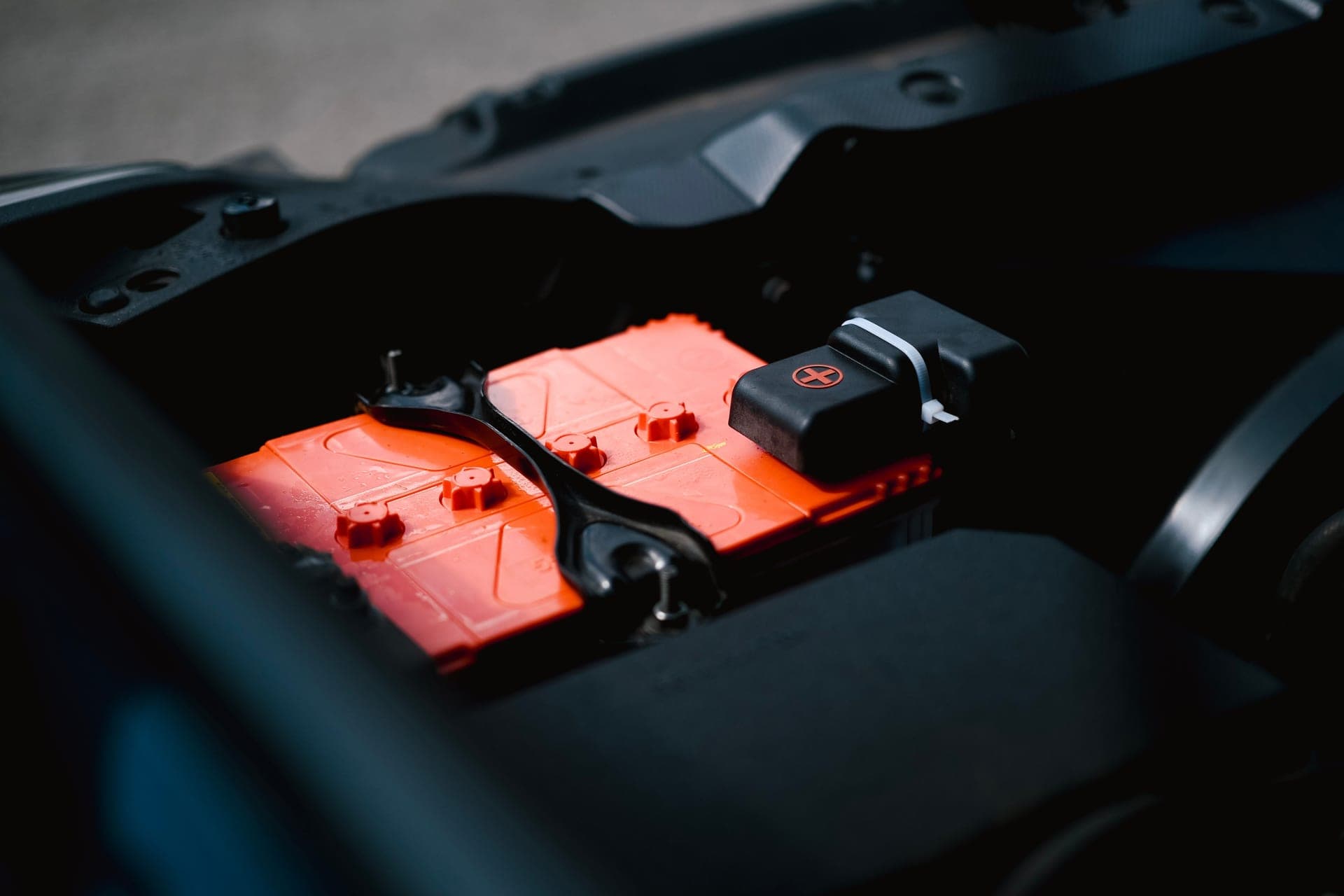
Buy lithium and store it in the cabin. Lithium packs are small enough to keep somewhere warm, which offsets most of their cold-weather output loss. Lead-acid boosters hold up better in the cold but are heavy enough that they live in a cold trunk, which cancels most of the advantage.
Why the category went lithium
Ten years ago a portable jump starter was a sealed lead-acid battery in a plastic case with a handle. They worked, and they were heavy, bulky and needed regular charging or they sulfated and died.
Lithium packs replaced them almost entirely because the energy density is dramatically better. A pack the size of a paperback now delivers current a lead-acid unit five times its weight used to. It also holds charge for months rather than weeks, and it doubles as a phone power bank.
The cold-weather trade-off
Lithium chemistry loses deliverable current at low temperature. The internal resistance rises, which means less current available at exactly the moment you want maximum current. Lead-acid also loses capacity in the cold - every battery does - but it is less dramatic about it in the short high-current bursts a jump start needs.
Here is the thing that makes this less decisive than it sounds: a lithium pack is small enough to live in the glovebox. A lead-acid booster is not, so it lives in the trunk, at outside temperature.
The lithium pack in the cabin has spent the night at cabin temperature and is therefore warmer at the moment of use than the lead-acid unit that spent it in the trunk. In practice, storage location matters more than chemistry.
Side by side
Pre-heat functions
Some lithium packs now include a pre-heat mode that warms the cells before attempting a jump. It is a direct answer to the cold-output problem and it is worth having if the maker publishes it.
Note the qualifier. None of the packs in our jump starter roundup publishes an operating temperature range on its listing, and where a feature is not documented we do not credit it. Check the manual for the specific model you are considering.
The practical answer
- Buy lithium. The size advantage is what lets you store it somewhere warm, and that is the single biggest lever on cold performance.
- Keep it in the cabin from November - glovebox, door pocket or under a seat. Not the trunk.
- Charge it in October and again in January. A pack at 30 percent in the cold may not have enough left to crank a cold engine.
- Buy a pack rated well above your engine size. Headroom is what absorbs the cold-weather loss.
- If you want something that cannot be neglected, carry cables as well - they have no chemistry to worry about at all.
Do notleave a lithium pack in a hot car all summer
Heat is worse for lithium cells over time than cold is. A pack that spent July on a dashboard has aged more than one that spent January in a glovebox. Store it indoors over the summer and put it back in the car in the fall.
The verdict
Lithium, kept warm, charged, and rated above what your engine needs. The chemistry debate is real but it is second to the two things you control: where the pack lives and whether it has charge in it. Both of those are habits rather than purchases.
What to buy, and what to skip
We haven't tested these
No lab, no borrowed units, no free samples. What we did do: pull every published spec into one table and work out what the numbers mean on a cold morning. Everything below traces to a published spec sheet, a manual, or a standard we can point you at - and if a figure isn't published, we say so instead of estimating it. The full method is here.
Heads up: we earn a commission if you buy through the links on this page, at no extra cost to you. It never changes a ranking - here is how we pick and how the site is funded.
1. The lithium answer
Weego 44s 2100A 12V Lithium Car Battery Jump Starter

The only pack we have found that publishes cranking amps as well as peak amps - 440 CA against 2100 peak - which is the figure that actually predicts a start. It also publishes a weight under one pound and engine ratings of 7L gas and 3.5L diesel, so you can check it against your own car rather than trusting a headline number.
Best for: Most cars, and a glovebox
What the maker publishes
- Peak amps
- 2100A
- Cranking amps
- 440 CA, per the maker
- Gas engines
- Up to 7L, per the maker
- Diesel engines
- Up to 3.5L, per the maker
- Weight
- Under 1 lb, per the maker
- Charge retention
- Holds a charge for months, per the maker
- Protection
- Anti-spark, reverse polarity and surge protection
- Build
- Stated to resist water, dust and dirt
What works
- Publishing a cranking amps figure is almost unheard of in this category, and cranking amps is the number that decides whether a cold engine turns - peak amps has no standard behind it at all
- Under a pound means it genuinely lives in the glovebox, which is inside the heated cabin - and where a lithium pack is stored matters more than any number on the box
- Holding a charge for months addresses the real failure of these packs, which is reaching for one in January and finding it flat
What doesn't
- 3.5L diesel is a car-and-van ceiling, not a truck one, and the gas figure of 7L is mid-pack rather than generous
- Priced right at the top of the sub-$100 bracket, which buys fewer amps than the cheap packs claim
- Lithium still delivers least current when it is cold, so the published figures assume a pack that has not been sitting in a freezing trunk
Skip this if: you drive a diesel pickup. The 3.5L diesel ceiling is the number that matters and it is not close.
2. Lithium with a display
HULKMAN Alpha85 Portable Jump Starter, 2000A

A 3.3 in screen showing charge state and error codes. At 6am in the dark, a device that tells you why it is refusing to do anything is worth the extra bulk.
Best for: Seeing what is going on
What the maker publishes
- Peak current
- 2000A
- Engine rating
- Up to 8.5L gas, 6.0L diesel
- Jump starts per charge
- Up to 60, per HULKMAN
- Display
- 3.3 in screen for status, battery level and errors
- Operating temperature range
- Not published by the maker
What works
- The screen removes the guesswork that makes jump starters frustrating - it tells you whether the clamps are wrong or the pack is flat
- 60 jumps per charge is the highest published figure here
- 8.5L gas rating covers anything you are likely to be standing next to
What doesn't
- A screen is another thing to fail, and cold LCDs get sluggish
- No published operating temperature range on the listing
Skip this if: you want the smallest thing that works. NOCO makes a smaller pack and you will be more likely to keep it in the car.
3. The no-chemistry option
EPAuto 4 Gauge x 20 Ft Heavy Duty Booster Cables
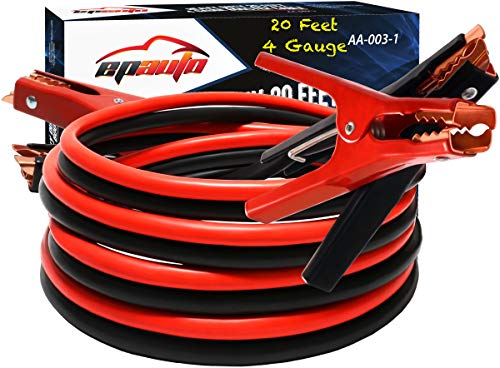
Cables have no battery to go flat and no cells to lose current in the cold. Their weakness is that they require a second car, and at 6am in an empty lot there is not one.
Best for: Never needing a charge
What the maker publishes
- Gauge
- 4 AWG - lower number is thicker; 2 AWG is the step up for a truck
- Length
- 20 ft, which is inside the useful 16 to 25 ft range
- Cold performance
- Copper does not lose capacity in cold; PVC insulation stiffens
- Charge required
- None
- Requires
- A second running vehicle
What works
- Nothing to charge, nothing to maintain, and no cold-weather derating on the conductor itself
- Far cheaper than any lithium pack
- Will still work in ten years, sitting in the same trunk
What doesn't
- Useless without a second vehicle and a willing driver
- Thin cheap cables are genuinely dangerous - they get hot and they will not carry cranking current
- Insulation stiffens in deep cold and the cables become unwieldy
Skip this if: you park alone or commute at odd hours. That is exactly the situation cables cannot solve, and it is the reason jump packs exist.
Questions people actually ask
Do lithium jump starters work in cold weather?
Yes, with reduced output. Internal resistance rises as the cells get colder, so less current is available. The practical fix is storage: a pack kept in the cabin overnight performs noticeably better than one kept in the trunk.
Is a lead-acid jump starter better in the cold?
Per unit temperature it holds up somewhat better, but it is heavy enough that it lives in a cold trunk while a lithium pack can live in a warm cabin. In practice the lithium pack is warmer at the moment of use, which cancels most of the advantage.
What is a pre-heat function on a jump starter?
A mode that warms the cells before attempting a jump, which directly addresses lithium's cold-output loss. It is worth having where the manufacturer publishes it - check the manual, since the feature is often absent from the listing.
How cold is too cold for a lithium jump starter?
None of the packs we looked at publishes an operating temperature range on its listing, so the honest answer is to check the manual for the specific model. Keeping the pack in the cabin rather than the trunk makes the question far less pressing.